Sports

The PWHL is a Historic Moment for Women’s Hockey and Women’s Sports In General, and it’s been a long time coming

On New Year’s Day, 2024, in the historic Maple Leaf Gardens in downtown Toronto, the puck dropped to start a landmark game between teams from Toronto and New York City. After decades of instability and years of infighting, womens’ professional ice hockey had achieved a new milestone: one league to unite them, one league to rule them all. The puck drop marked the official on-ice start of the brand-new Professional Women’s Hockey League, a league in which all of the top women’s players from the USA and Canada could finally, at long last, have the competition they’ve always deserved.

Let’s talk about how we got here.


Women have played ice hockey as long as there’s been ice hockey to play. Dating back to the late 1880s, the women in the family of Lord Stanley (the Stanley Cup Stanley) were known to be avid hockey players, right along with the men. Most famously, Lord Stanley’s daughter Isobel Stanley took to the game fondly and served as both an early promotor and ambassador of the sport, as well as one of – if not the first – organizers of women’s hockey games in Canada. [1]

Hockey back then, for both men and women, was primarily if not exclusively an amateur pursuit, in line with much of the world of competitive sports at the time. Hockey turned professional comparatively early for most sports, in 1904 with the consolidation of several amateur teams into the International Hockey League in Michigan’s upper peninsula. [2] While that league itself didn’t last long, the puck was in motion for professional hockey – at least for men – and eventually saw the emergence and formation of the NHL in 1917.

For women, though, professionalism wasn’t just out of the cards, it was nowhere near the horizon, as those early, semi-organized and regional tournaments of the era of Isobel Stanley were essentially the limit of women’s hockey for decades. Local and regional associations held tournaments for amateur women’s teams, but these proved frequently unstable with teams and associations perpetually coming and going on both sides of the border. Canada found more stability and longevity in general, due to the massive popularity ice hockey found there, with two organizations in particular carrying the torch for women’s hockey in between world wars. The Ladies Ontario Hockey Association, formed in 1922, made for the most formalized women’s hockey body to date, and rare for the time, saw players from a working class background take charge. This group made an unsuccessful push for official recognition for women’s hockey players from the Canadian Amateur Hockey Association in 1923. That recognition which ultimately wouldn’t happen until 1982. As Canada entered the 1930s, it began to feel the effects of the Great Depression and gradually over the decade, the LOHA slowly fizzled out. [3]

Parallel to the LOHA, the Dominion Women’s Amateur Hockey Association was formed in 1933 with the goal of forming a national organization for women’s hockey. Their lofty ambitions included a national championship tournament, all-star tours of Europe, and a bid to make women’s ice hockey a demonstration sport at the 1940 Winter Olympics planned to be held in Sapporo, Japan. Unfortunately, the DWAHA failed to achieve their goals before the Great Depression and outbreak of World War 2 interrupted their plans and led to their dissolution around 1940. [3]

From then onward, little succeeded to push for national, organized hockey for women in the USA or Canada, and the massive baby-boom-era sexist pushback against women saw more than just hockey players discriminated against. That is, until the 1970s.


The civil rights movement in the continent giving rise to second wave feminism brought with it a renewed vigor for women’s equality in athletics. Canada saw the rise of the Ontario Women’s Hockey Association in 1975, while in the States, the Ivy League’s university athletic programs added women’s ice hockey teams, bringing women’s hockey to heights it hadn’t seen since the 1930s. The next major turning point was just around the corner with the creation of the Abby Hoffman Cup in 1982, the first truly national championship for women’s hockey on either side of the border. [4] With Leeman Taylor in charge of the OWHA as their first salaried employee, the tournament gained corporate sponsorship and women got official recognition at the Canadian Amateur Hockey Association.

South of the border, the college game kept growing under the banner of the Eastern Association of Intercollegiate Athletics for Women. From its creation in the mid 1970s and thanks in no small part to the push to coeducationally integrate in then Ivy League, the EAIAW grew to feature 9 collegiate teams by 1978, and in 1984, the previously men’s-only ECAC Hockey integrated by absorbing the EAIAW and became the first collegiate conference to host a full women’s hockey tournament. [5]

With both nations reaching new heights in the mid-80s, talks began to take things international, and create a world championship for women in ice hockey. The international sanctioning body for ice hockey, the IIHF, at the time did not sanction any women’s events at any level, and despite the major push from the OWHA, weren’t willing to roll the dice. Instead, the OWHA led by director Fran Rider pushed to hold it themselves. On April 21, 1987, the Canadian Women’s National Team made their debut against Switzerland to begin the World Women’s Hockey Tournament. [6] Over the next 5 days, the aforementioned teams joined by those from the United States, Netherlands, Japan, and Sweden, along with an all-Ontario selection, competed in a 21-game round robin tournament to seed a 4-team playoff bracket. Canada and the United States topped the table, followed by Ontario and Sweden. In the knockout rounds, Canada won 8-2 over Sweden and Ontario shocked the United States 5-4 to qualify for the finals. The USA would blank Sweden 5-0 in the bronze-medal game, and the Canadian national side would defeat their compatriots 4-0 to win the gold. [7]

Despite shaky moments, the last-minute withdrawal of a West Germany side over disagreements regarding body checking (which was banned in Canada for women), and a paltry budget, the tournament succeeded, and put women’s hockey on the international stage. The IIHF took notice, and began planning for an official IIHF Women’s World Championship, to be held in 1990. [6]

Fast forward to March of 1990. Fran Rider once again stepped up to organize the tournament (despite the withdrawal of the CAHA), and eight national sides made their pilgrimage to the Ottawa Civic Centre. Canada and the United States were once again joined by Japan, Sweden and Switzerland, and found new foes in sides from Finland, Norway, and West Germany (back as the IIHF agreed to allow body checking). [8] Divided into two groups of four teams, Canada and Sweden topped Group A while the United States and Finland led Group B. Canada and the USA both won their semifinals to make the gold medal game, where Canada prevailed 5-2 to repeat as champions and win the first official gold medal. [9]

The success of this further pushed the envelope for women in hockey, and caught the eye of the International Olympics Committee. The IOC, seeing the rising tide and support for women on the ice, added women’s hockey to the in-planning 1998 Winter Olympics, to be held in Nagano. [10]


Outside of the international arena, women’s hockey continued to grow, boosted by the attention drawn by the major events. College hockey added more teams and another conference in Hockey East, and women gained a league of their own in 1992 in Canada with the Central Ontario Women’s Hockey League. Despite still remaining firmly amateur, the level of organization and play alike kept pushing higher and higher. Still, though, outside of the Abby Hoffman Cup, there were no national leagues in either country. But they didn’t need to wait long; another new zenith of attention in the Winter Olympics would change everything.

February of 1998 saw the first Olympic recognition for women in ice hockey, with 6 competing teams in Nagano: Canada, the United States, Finland, Sweden, Japan, and China. As had been the case in the 1992, 1994, and 1997 IIHF championships, Canada and the USA dominated, making the gold medal game. In front of a crowd of 8,626, the USA stunned the 5-time champions to win the first Olympic gold medal, bringing even more attention to the women’s game in the United States, and motivating Canada to take an unheard-of step: launching a professional league. [11]

Canada had in the COWHL a decently strong, decently run league. But it was fully amateur, it struggled to retain teams, and held a rather narrow footprint in Central Ontario. The COWHL had contracted to just 3 teams by the 1997-1998 season. The league then regrouped, brought in new investors, and rebranded as the National Women’s Hockey League. [12]

The newly-reinvigorated NWHL would feature eight teams across Ontario and Quebec, giving women the chance to make (some) money playing hockey in Canada for the very first time. The dream had finally been realized. The league continued to grow and expand westward, incorporating Alberta and British Columbia over the following seasons, before the cost issues of supporting the national footprint led the league to split into the NWHL and new Western Women’s Hockey League. [13] The WWHL would then itself continue to expand its reach, including Saskatchewan and the first professional American team, the Minnesota Whitecaps. The two leagues co-existed and co-operated well enough despite the perpetual tensions that exist in any sports leagues at this level, with one unlikely event bringing them closer together and closer to hockey fans across the continent.


Ask any hockey fan who won the 2005 Stanley Cup and they’ll give you a very unusual look. The NHL, having struggled with collective bargaining negotiations between its players and owners since the early 1990s, saw the collective bargaining agreement negotiated between players and teams in 1995 expire on September 15, 2004. What then followed was one of the most monumental events in the history of the sport. Owners and players found themselves at an impasse with the owners unwilling to negotiate with the requests of the players, causing the lockout to continue well through the end of 2004 and into 2005. On February 16, 2005, five months into the lockout, the NHL canceled what would have remained of its season. [14]

While the NHL was locked out, Canada’s women’s leagues found themselves as the highest level of hockey being played in many of their home cities, leading to a lawsuit fighting to award the Stanley Cup not to the NHL champion, but to the champion of the women’s interleague series. While the lawsuit ultimately failed, it did lead to the creation of another championship trophy named after a governor-general of Canada, the Clarkson Cup. Issues between the leagues, and between the designers of the physical trophy and Hockey Canada (a renamed CAHA), saw the cup ultimately not awarded, but the precedent for a major women’s championship trophy, akin to the Stanley Cup, was set. [15] The increased attention also highlighted issues the players, teams, and owners had with the state of women’s professional hockey in Canada, leading to the collapse of the NWHL after the 2006-2007 season after multiple failed attempts to merge the two leagues in Canada. [16]

For the 2007-2008 season, the NWHL would be reorganized as the fully-amateur Canadian Women’s Hockey League, featuring the same Ontario/Quebec footprint as a counterpart to the WWHL across Alberta, BC, and Minnesota. [16] The idea of a championship trophy awarded to the interleague champion persisted, using the Abby Hoffman Cup, until the issues surrounding the Clarkson Cup were resolved in 2009. The unstable stasis between the CWHL and WWHL continued through the 2011 Clarkson Cup, after which the WWHL merged with the CWHL, once again uniting professional hockey under a single banner. [17]

With all of this happening (mostly) in Canada, opportunities for American players were limited. They could either try and play in Canada, or… well, find some local amateur team to play for. And even for those playing in Canada, the money wasn’t much. There were bonuses and incentives, expenses covered, sponsorship deals, yes, but none of the salaries one would expect as a professional athlete. That would soon change.


A former player for Northwestern University, Dani Rylan, found a way to change things. After meeting with players and investors, Rylan launched the National Women’s Hockey League (yes, same name as the other one) in March of 2015 with a budget estimated at $2.5 million, higher than any league that had yet taken the ice. This professional American league would initially feature four teams in hockey hotbeds in the northeast: the Boston Pride, Buffalo Beauts, Connecticut Whale, and New York Riveters. While the salary cap was a modest $270 thousand, the $10 thousand minimum per-player was at that point the highest guaranteed minimum salary women had ever seen in ice hockey. [18]

The league saw some initial highs with sponsorship deals with Dunkin’ Donuts, a successful outdoor game between Buffalo and the CWHL’s Montreal Canadiennes, and the awarding of the first Isobel Cup to the Boston Pride in March, but ended up burning through money, which would unfortunately become a recurring trend. Ahead of the second season, the NWHL announced they were cutting minimum salaries in half, cutting the above-minimum salaries by similar amounts, and switching to a ticket-based revenue split to compensate. Despite gaining partnerships with NHL teams and arenas, the league struggled to address questions over their finances and investors. [19] This, too, would prove to be a recurring theme.

While the NWHL was celebrating the end of its 4th season, up in Canada, the CWHL was in trouble. Only, nobody outside of the league office knew it.

Following the merger between the CWHL and WWHL, Canadian pro women’s hockey found a period of relative stability. The CWHL added teams in Boston, continued to grow across Canada, and even added two teams based out of China as part of China’s own push to grow hockey domestically. They also added dedicated player salaries, following the NWHL, and began discussing the possibility of a cross-border merger, rallying behind the #OneLeague movement. [20] The 2019 Clarkson Cup finals came and went, successfully, with Calgary taking the honors, but only days later, the league suddenly announced they were shutting down immediately. Whether the blame lie with investors, a failed restructuring, dilution of the talent pool across the border, competition between leagues, ultimately, it didn’t matter. The CW[7] https://www.iihf.com/en/news/18481/ww-30-story-12HL tried to follow the NWHL’s lead, and paid the ultimate price. [21]

In the aftermath, the NWHL announced plans to add two new teams in Toronto and Montreal over the coming seasons, but neither would be ready for the upcoming 2019-20 campaign. They also announced that their partnerships with two NHL teams, the Buffalo Sabres and New Jersey Devils, had ended as well. This led to another painful revelation: the league could not afford to pay the full-time salaries the players had requested, nor offer any benefits on top of their contracts, like medical insurance. To say this disappointed the players is an understatement. During all of this, they formed a union, the Professional Women’s Hockey Players Association, to advocate collectively for living wages, training programs, and essential benefits, which they hoped could be served in a single, united, American and Canadian league. [22] With the NWHL unable to meet their demands, the members of the PWHPA withdrew from the league and formed their own independent competition directly controlled by the union.


September of 2019 saw the PWHPA launch their Dream Gap Tour, a traveling series comprising rotating teams named after designated captains rather than franchises or cities. The series would hold 4 to 6 games in a given city across two days, treating each event as a mini-tournament showcase than a traditional league structure. [23] While the schedule was ultimately cut back due to the state of the world in March 2020, the series managed to hold 6 showcases and sent a selection to the 2020 NHL All-Star Game, including a women’s 3-on-3 game for the first time. [24] To put a cap on their high profile series, 4 PWHPA players were also invited to the double-A men’s ECHL’s all-star tournament, taking the ice alongside their male counterparts with one woman on each of the 4 men’s teams. Two women, Kali Flanagan and Annie Pankowski, scored goals in the tournament, whole Gigi Marvin registered an assist. [25]

During the height of the pandemic, the NWHL offered their first major response to the PWHPA, by beginning their Canadian expansion. On April 22, the NWHL announced that they were expanding to Toronto for the upcoming season, while still looking for owners for 4 of the 5 existing teams. The season was initially planned to be a 20-game slate for all 6 participating teams, but very quickly, once again due to 2020, the league had to push back the start of the season, and ultimately settled for a shortened bubble campaign to be held in Lake Placid, NY. [26] The players who hadn’t defected to the PWHPA’s Dream Gap Tour raised concerns about their salaries being affected by truncating the season, leading the NWHL to guarantee full-season salaries for however much of the season would be played, and even guaranteed salaries for players who opted out of play. [27] Despite their best efforts and precautions, the NWHL’s COVID bubble season was interrupted in its first week, with the withdrawal of the Metropolitan Riveters due to an outbreak among their ranks. The schedule was adjusted, but that lasted only days as the Connecticut Whale also had to withdraw on February 1. Two days later, the NWHL suspended the season. [28]

The pandemic also interrupted the parallel PWHPA Dream Gap Tour, which had pivoted from the captain-based teams to 5 hub-based, sponsor-named teams representing Calgary, Minnesota, Montreal, New Hampshire, and Toronto. The tour also planned to track standings and award a championship trophy, the Secret Cup (sponsored by Secret deoderant), but that too got set to one side after the whole world’s front fell off. [29]

Following both sides’ 2021 campaigns, the NWHL had some big news. The league found new owners for all of the league-owned teams, brought in new investors, and announced a doubling in the salary cap to $300 thousand per team. Along with this, the league rebranded as the Premier Hockey Federation, a fresh name for a fresh start. [30] This reinvigorated league managed to start pulling players from the PWHPA, who were unfortunately struggling to promote their Dream Gap Tour. The PHF also launched another new team in Montreal, and ahead of the 2022-2023 season, announced another major monetary milestone. For the upcoming season, the salary cap would increase again, to $750 thousand, and players would have full health insurance coverage. Along with these major wins, players would gain a 10% equity ownership of their teams, a targeted move aimed directly at the PWHPA. [31]

The moves worked. The PWHPA took notice of where the PHF was heading, reorganized as a formal union, and came back to the negotiating table following their respective 2022-2023 seasons. During the discussions, the PHF announced that the entire league had been bought out in anticipation of creating a new league in conjunction with the PWHPA. While the players union celebrated their massive victory, the players signed with the PHF but unaffiliated with the union were left in the cold, as they would not be included in negotiations. That said, the PWHPA did look out for their fellow players, and negotiated a payout of either 1/2 of the agreed 2023-24 salaries, or $5 thousand, whichever was more, for all of the former PHF players. Those players would also receive the payout from their 10% equity, and if they were unable to sign with a team for the 2023-24 season, they would receive another $10 thousand compensation payment. [32] From the negotiations and the ashes of the PHF, a new league would emerge, at last. Welcome to the Women’s Professional Hockey League.


The WPHL immediately worked to learn from the mistakes of its predecessors. Before teams were announced, the league had a collective bargaining agreement signed with the renamed PWHLPA, now officially representing all players in the nascent league. And while the initial salary cap was believed to be only $1.265 million, down from the $1.5 million the PHF had offered for 2023-24, the CBA included an annual 3% raise for 8 years, meaning they would reach that $1.5 million mark by 2029, and more importantly, had it guaranteed in writing in contract, a first for professional women’s hockey. [33] While at the high end, some star players would be taking a substantial pay cut, the average salary of $55 thousand and minimum of $35 thousand marked new high water levels for compensation for women in hockey, without factoring in the annual growth. The agreement also included benefits, not just health care, but for housing, traveling, relocation, transportation, and more, all long-desired standard issue benefits for professional athletes that had, till then, only been on offer for men in ice hockey. [34] And even more important than the contracts or salaries, the league would be the one, singular, united league for women in North America, bringing the warring leagues period of the past decades to an end, at long last.

Following a successful signing period and draft, the league announced their own original six. Toronto, Montreal, and Ottawa would host teams in Canada, while Boston, New York, and Minnesota would in the United States. [35] After a very poorly received announcement for team names (which included, among others, the Boston Wicked and Ottawa Alert), the league announced that they would debut with purely geographic names, with each team being referred to as PWHL followed by their location (e.g. PWHL Toronto, PWHL Minnesota). [36] The players would let their hockey speak for themselves.

Anticipation for the league grew. The PWHL signed deals with Canada’s three largest sports broadcasters in TSN/RDS, CBC, and Sportsnet, announced a free-for-all YouTube option for the rest of the world, and signed partnerships with Air Canada and Canadian Tire. Games began selling out weeks before the season even began across all 6 markets, with multiple games outselling the previous North American record crowds for professional women’s hockey by more than double. [35] Everyone was ready for the puck to drop, to finally officially unify women’s hockey as a major professional sport.

Toronto hosted New York at the Maple Leaf Gardens on New Years Day, and when the puck hit the ice, the PWHL had arrived. 10 minuts, 43 seconds into the first period, New York broke through with Ella Shelton scoring, fittingly, with an assist from the second NWHL’s first ever first overall pick, Alex Carpenter. Carpenter would add a goal of her own in the 3rd, followed by two more form Jill Saulnier and Kayla Vespa as New York blanked Toronto 4-0. The full-capacity crowd of 2,537, despite watching their home team lose, was electric, celebrating the success of their local legends playing for the opponents.

The following day in Ottawa at the TD Gardens, Montreal prevailed 3-2 in overtime in front of a world record breaking crowd of 8,318. That record only lasted four days, as Minnesota’s first game at the Xcel Energy Center against Montreal drew 13,316 fans through the gates. Through the first five games, three were listed as sellout crowds, and Toronto has already sold out their entire home season. The PWHL has found a recipe for local engagement that their predecessors could only dream of.

It’s always impossible to predict how well a sports league will continue to succeed, but all of the right pieces are here for the PWHL, and with it, women’s professional hockey has found an unprecedented level of strength to start this new adventure. Even if things ultimately end up changing in the coming years, New Years Day of 2024 will go down as a major milestone.


Sources

Purely Speculation: A Non-Existent League

It’s become a recurring joke, bordering on meme territory, that the weird world of American soccer relies heavily on rumor, anonymous sources, and outright speculation. So much is said, maybe not publicly, but far more than is actually done. Not that it’s a bad thing, it’s in line with routine punditry found among any sport. However, the jokes of “60-90 days” or “sources say” or “announcement for an announcement” have increasingly permeated soccer culture.

Maybe that’s why Asbury Park FC is a thing. If you’re unfamiliar, Asbury Park FC is a fake team, an anti-team, a parody of modern soccer and modern professional sports. There’s a website where jerseys and scarves are sold, and occasional news updates of fake player transfers. But there’s a heavy joke-y nature to the whole thing. It’s very punk rock satire.

This has me thinking about rumor and speculation and the disconnect from reality. Asbury Park FC isn’t a thing, but it’s definitely a thing. And there are dozens of teams around the country that were announced, named, and never signed a player. What if that were the entire game? What if the entire point of a league was to not actually exist? No players are signed, no tickets are sold, no balls are kicked, but that doesn’t prevent the existence of statistics tracking goals scored, game day attendance, and team standings.

This is something of a thought experiment, and I’ve yet to fully convince myself that this idea isn’t completely stupid. It’s at least somewhat amusing to me, and gives me complete creative freedom, but at the same time, it’s inherently pointless.

And maybe that’s the point.

So. What the hell, let’s see where this train of thought goes.

For this, I feel the need to establish some sort of basic rules for myself to remain consistent for whatever this ends up being. The league needs to have a name and branding, for certain. There needs to be a process for team announcements. Everything is going to be as real as a fake endeavor can possibly be. Even if it’s parody, or fan fiction, or the logical extension of “Whose Line?” scoring, it’s not anarchy. And where would American soccer be without the existence of and reliance on arbitrary regulations?

First up: the name. Hypothetical Soccer League, known as the H-League for short. This is as straightforward as something this arbitrary can be. The logo is a combination of a question mark, a lightbulb, and a key hole. As per industry standard, all of these elements represent some flavor of obligatory nonsense. The question mark represents the speculation and quasi-rhetorical questions found everywhere in soccer media, the lightbulb represents the idea of creating a new league or team, and the key hole represents the secrecy and anonymity maintained by the media. The “H” in the center is indicative of a dead filament, representing failed plans, and it also stands for “Hypothetical”. Poetry.

.League Wide.png


Of course, there will be teams, and those are sure to be announced in the coming days/weeks/months, and I’ll let you know when those announcements are coming, but for now, this is all.

Requiem for a Team: Rayo OKC

This is the start of a new series I’ve been working on called “Requiem for a Team”. These pieces will be historical accounts of the teams that have failed, folded, self-relegated, or otherwise run into trouble.


I first started reporting on the situation in Oklahoma City in the spring of 2014 for Reckless Challenge. At the time, we were hearing reports of a possible war for OKC between the USL and NASL, but things go back even further, and I’m taking this opportunity to tell the whole story.

For a number of years, the only major soccer game in Oklahoma City was the women’s Oklahoma City FC in the WPSL. Founded in 2007, this team began play in 2008 and in 2009 was taken over by local businessman Sean Jones and sports marketing firm Sold Out Strategies, run by local businessman Brad Lund. On Valentines Day 2013, this group, along with a new entity OKC Pro Soccer LLC run by another local businessman, Tim McLaughlin, announced a team in the Premier Development League, sharing the OKCFC branding of the WPSL club. They would play at the 5,000 seat soccer stadium on the Oklahoma City University campus in uptown OKC.

This was the highest level of men’s soccer in Oklahoma City in nearly fifteen years, with the market having previously been served by the Slickers, Stampede, Warriors, Spirit, and Alliance at various levels of indoor and outdoor soccer. The most recent outdoor team in the market, the Oklahoma City Slickers, folded in 1996.

This PDL team was the planned starting point for an eventual USL-Pro team, however, in the spring of 2013, a competing USL-Pro bid emerged from a rival ownership group, Prodigal LLC, run by Bob Funk Jr. Bob Funk and Prodigal are known locally for operating the American Hockey League’s Barons and for being the former owners of the AAA baseball RedHawks. The OKCFC group of Lund and McLaughlin, believing they would likely lose out in the USL PRO application process to the arguably more experienced Prodigal-backed group, began exploring options to receive rights to own and operate an NASL franchise in Oklahoma City. Both teams also wound up competing for rights to use the same downtown OKC stadium, Taft Stadium.

On June 17th, OKCFC scored a rare win, earning the right to use Taft Stadium as their home venue with whatever pro franchise they could get. However, with the change of plans to pursue an NASL team instead of a USL-Pro team, USL issued a cease and desist order, citing a noncompete clause for all clubs in the USL system. They argued that OKCFC are contractually forbidden to move from the USL-run PDL to NASL. OKCFC countered with a lawsuit against USL, claiming that the noncompete clause in the contract was unenforceable. USL announced an expansion team for Prodigal on July 2nd, and the NASL countered by awarding a team to OKCFC on July 25th.

Cut forward to November of 2013, when the Prodigal group announced their branding, Oklahoma City Energy FC, and their home venue of Pribil Stadium, on campus at local Bishop McGuiness High School. Shortly thereafter, the Energy announced an affiliation partnership with Sporting KC of MLS, along with head coach, recently retired Sporting goalkeeper Jimmy Nielsen. The Energy FC planned a much more ambitious timeline than OKCFC, intending to take the field in the spring of 2014, while OKCFC intended to wait until the 2015 season.

This was the first serious blow to Sold Out Strategies and co, with the Energy possibly getting an entire year’s head start. Early into 2014, things began to fall apart for OKCFC, with Tim McLaughlin and his OKC Pro Soccer group leaving to join up with Prodigal and Energy FC. McLaughlin took with him the lease to Taft Stadium, giving the Energy yet another coup.

OKCFC responded by moving their semi-pro PDL team to the NPSL, avoiding working with USL any further, and put out statements claiming that Energy FC’s plans did not impact their own goals. Brad Lund and Sold Out Strategies returned to the picture, and despite claims that they were still pursuing their goals with NASL, no major news came out regarding OKCFC in 2014, save for their WPSL and NPSL sides.

The next major announcement came in August of 2015, when NASL commissioner Bill Peterson revealing in an interview that the league had moved on from both the Oklahoma City franchise, as well as the other stillborn 2014 expansion team, the Virginia Cavalry. However, only 11 days later, news broke on ESPN that a club in Spain’s top league was given permission to invest in OKCFC. This club was eventually revealed to be Rayo Vallecano, based in Madrid’s working class neighborhood of Vallecas. Rayo Chairman Raul Martin Presa took control of the franchise, and in November 2015, NASL announced that this joint venture, Rayo OKC, would begin play in 2016.

The Rayo OKC group consisted initially of Rayo Vallecano and their chairman Presa, former OKCFC owner Sean Jones, and Brad Lund’s Sold Out Strategies. The team hired former San Antonio Scorpions head coach Alen Marcina, a man with an NASL championship under his belt, and secured the rights to use Miller Stadium on the Yukon High School campus west of Oklahoma City.

Marcina began assembling a squad, combining a number of MLS, NASL, and USL veterans with the attention-grabbing signings of Derek Boateng, USA veteran Robbie Findlay, and Greek superstar Georgios Samaras. Rayo OKC started their NASL campaign with an impressive home crowd, drawing over 6,400, 800 more than the Energy managed the previous week. Despite only winning 3 games in the 10 game Spring season, Rayo averaged right under 5,000  for their first five home games, with Energy FC around 500  more across the same span of time. They finished a respectable, if unremarkable 8th out of 11 in the NASL Spring season, and seemed to be holding up heading into the summer break. But then, Rayo Vallecano was relegated from La Liga in May of 2016, leaving a lot of questions to be answered come July.

The Fall season saw fortunes fluctuate wildly for Rayo. Losing only 1 of their first 7 fall games and sitting 3rd on the table wasn’t enough to keep the crowds coming in, with average attendance dropping down to 3,866, nor was it enough to keep things stable off the field. Rumors emerged of increased demands from Presa, and the changes he made were enough to motivate both head coach Alen Marcina, investment partners Sold Out Strategies, and a number of other front office staff to part ways with the team. Among his demands, the team would have to bus to every away game (even out to Edmonton and New York City) to save money, and the appointment of staff from Vallecano on tourist visas to take over operations.

A brief sidebar on the bus demands. The closest team to Rayo OKC is the Indy Eleven, and that’s a 12 hour bus ride under ideal circumstances. Minnesota United is slightly further still, Jacksonville and North Carolina are 18 hours away, the Rowdies nearly 20, Miami and Fort Lauderdale at around 22, the Cosmos and Fury almost a full day’s drive, Edmonton over 28 hours away. And most ridiculously, Puerto Rico, which is an island in the Caribbean, and there’s no way in hell you can drive a bus to Puerto Rico, no matter how demanding a Spanish businessman may be.

Further rumors painted a bleak picture, with most of the office staff leaving after paychecks bounced more than once, and only 5 people sticking around for gameday operations by August 7th. The appointment of Gerard Nus as the new head coach didn’t start well either, with the team losing four of his first five games.

And this isn’t even the most ridiculous thing that happened involving Rayo OKC that fall. Following the massive shakeup in early August, minor partner Sean Jones, a staple of OKCFC since 2009, departed the team, fearing that he would lose his investment, and under cover of darkness, took half of the artificial field Rayo used from storage. Jones had purchased the turf at the beginning of the year, and Rayo had failed to compensate him for the field, so he took fourty of the ninety-two pallets of turf and locked them in a warehouse. The team had allegedly failed to communicate with him regarding his investment or the team’s future, and he planned to sell the turf in an attempt to minimize his losses. He had learned from a third party that the team was planning to sell the turf, and it was in his best interests to keep it secure.

Negotiations followed, with the team actually communicating directly, and after a week and a half of discussion, a settlement was reached and the turf was returned. But the crowds never did. The first home game under Gerard Nus drew only 1,251, and the first game after the turf fiasco, a depressing 924. The average over the last six home games plummeted down to 1,284. This tanked their overall average attendance to 3,210, compared to the Energy’s 4,950. By now, the writing was on the wall.

Rayo OKC made the playoffs by finishing fourth in the combined standings, but went out 2-1 in the first round versus the eventual champion Cosmos. The last post made to Rayo’s website and social media concerned congratulating the Cosmos and discussing the end of the year best 11. Gerard Nus stepped down after that, and returned to Spain, and nothing more has come from the team.

We do know that at some point from late November to early December, all of the players and staff were released and the phones disconnected, and the team was not represented at the NASL’s board of directors meeting in Atlanta. The league confirmed in January that the team was gone.

As for Sold Out Strategies and the WPSL Oklahoma City FC team? They’ve hired new coaching staff and continue to play in the WPSL.


That’s all for this installment of “Requiem for a Team”. I’m aiming to get back into more written content, and finally get the next chapter of MLS Origins finished. Watch this space for more.

MLS Origins – Part 0 – The Four Drafts

MLS Origins – Building the rosters for the inaugural MLS season

I’ve decided to write this series to take a look at the decisions made by the league and teams ahead of the first MLS season, mainly the events surrounding the original roster creations. This is some of the league’s history that has yet to be covered in a way I found really satisfying, and I intend to take a more personal look at each player that was selected and how they fared both before, during, and after their time in MLS.

MLS used four different sorts of drafts to build the initial rosters, the Allocations where each team received four “marquee players”, the Player Draft which gave teams a chance to draft from the pool of 250 MLS-selected players, the College Draft for drafting college players and the Supplemental Draft for drafting other American professional players. The last two live on in a combined state as the MLS SuperDraft.

Before we dive into the ten teams and who they selected, we first need to explain the four drafts a bit more, as well as get some context for the state of professional American soccer in 1995.


In 1995, the professional soccer scene in the United States was mainly limited to the indoor National Professional Soccer league and Continental Soccer League, and the outdoor American Professional Soccer League , by then renamed to A-League, and the USISL Professional League. The APSL suffered from the fact that, with the demise of Canada’s CSL in 1992 (not to be confused with the current CSL based in Ontario), it had admitted three Canadian teams which ran afoul of FIFA regulations governing division 1 status. Leagues were not permitted to cross national borders at the time. Additionally, the league was struggling to retain teams. USISL was growing, reaching a ludicrous 55 teams in 1995, while that same year the A-League fielded only 6. While the A-League was considered the higher quality league, money and teams were flying out the door, and with FIFA refusing to sanction them, the United States were left without a true D1-quality league.

Until MLS, that is.

By now, I’m sure you all know a good amount about the origin of MLS, but if not, go read Beau Dure’s “Long Range Goals”, which does a better job of documenting the actual birth of the league better than I could. Long story short, people came together, contracts were signed, teams were created, and work was done.

So now, we jump to October of 1995. MLS is a go, we have ten teams around the country, and a number of USMNT and other notable American players have signed with the new league. Great! The next step: turn these teams into a reality by actually building the rosters. We introduce now the men tasked with such, the inaugural class of MLS managers.


First up, the Colorado Rapids. who chose journeyman Englishman Bob Houghton, who by then had managed 8 teams in 3 different countries and became notable for winning the Allsvenskan three times and the Svenska Cupen four times with Swedish side Malmö FK. He previously coached the Toronto Blizzard in the North American Soccer League during their final three seasons, losing the championship game the final two years.

Next, the Columbus Crew. Their initial manager was Finnish-born Timo Liekoski who by then had spent the bulk of his soccer career in the United States initially as a college player, later coaching a number of NASL teams from the mid seventies through the league’s demise. At one point, he was fired twice in less than 12 months for dismal starts to seasons. His most recent experience before MLS had been with the USA Olympic national team, preparing them for the 1996 Olympics. He again was fired from this post after two winless tournaments.

The Dallas Burn decided to look local, and settled on Dave Dir who had by then already been working for MLS in charge of scouting and creating the player pools I’ll be analyzing. He had achieved notable success at Regis University and with the APSL’s Colorado Foxes.

DC United had arguably the strangest choice of manager, a man who had achieved the bulk of his athletic success in lacrosse, even winning the 1974 World Lacrosse Championship with the American national team, before finishing second to Canada four years later. He later dedicated himself to coaching soccer, coaching at the University of Virginia for 18 seasons and winning five national championships, before working with the U-23 American national team. This man’s name? Bruce Arena.

Kansas City, still known as the Wiz, signed NASL-era veteran player-manager Ron Newman, also famous for the 10 championships in 11 years won by his indoor soccer San Diego Sockers. He hired his son Guy Newman to assist. By this point in time, Newman’s coaching legacy was already cemented with his 1992 induction to the National Soccer Hall of Fame.

The Los Angeles Galaxy went with a familiar name in the state of California, German-American Lothar Osiander, best remembered for his brief stint in charge of the USMNT in the mid eighties. He had spent time with the Atlanta Ruckus immediately prior to the formation of MLS, winning A-League Coach of the Year after his only season.

New England went with a frankly inexperienced manager in Irishman Frank Stapleton, whose only managerial experience came as player-manager for Bradford City. He was sacked from both roles following three mediocre seasons in the English third tier league. As a player, though, he was known for successful times at Manchester United and Arsenal, and for captaining the Irish national team.

The New York/New Jersey MetroStars made what seemed to be one of the more astute managerial decisions, hiring South African-born Italian international Eddie Firmani, who had spent years playing in Italy and had coached in England, the NASL, and the middle east. Most notably, he coached some of the peak New York Cosmos teams, and won a total of four NASL titles.

For San Jose, the managerial choice seemed logical to any long-time Bay Area Soccer fans. After bouncing around England for years, Laurie Calloway had played for and later managed the original Earthquakes, and had been at the helm of the San Francisco Bay Blackhawks during their CONCACAF Champions’ Cup run, making it all the way to the finals against Club America. His team was at that point the most successful American team yet in CONCACAF competition.

And finally, we come to the Tampa Bay Mutiny, who signed the colorful Dutchman Thomas Rongen away from the recently defunct second incarnation of the Fort Lauderdale Strikers. Rongen played a number of games both outdoor and indoor through the eighties in the United States, and by 1995 had spent over a decade coaching teams at various levels throughout Florida. With the Strikers, from 1989 through 1994, Rongen was manager, coach, player AND captain simultaneously, and led his team to the 1989 ASL title and national championship win.


With our manager class introduced, we move now to the first of our four player drafts, the 1996 MLS Inaugural Allocations.

Starting in January of 1995, MLS began signing notable US internationals and other notable American professionals to league-level contracts, designating these players as “marquee players”, eventually totaling 40 such players. With the intention of parity, the league planned on allocating four marquee players each to the ten inaugural franchises. The first player to sign such a contract was Tab Ramos, veteran of two World Cups for the USMNT and then on loan to Mexican side Tigres UANL. 39 players followed Ramos, representing a total of eleven countries from four continents.

Rather than allowing each team to select their players, the league did the actual decision-making, sending each team their four players although Dave Dir, soon to be manager of the Dallas Burn, had a hand in the decision process. The allocation process occurred shortly before the actual drafts took place, in early 1996. Each team was guaranteed at least one USA international and one foreign international.

The Colorado Rapids received three USMNT players in Marcelo Balboa, Dominic Kinnear, and Roy Wegerle, as well as South African international Shaun Bartlet.

Columbus got two American internationals named Brian, Brians Maisonneuve and Bliss. They also received Uruguayan international Adrian Paz and on loan received South Africa’s Doctor Khumalo from the Kaizer Chiefs.

Following MLS’s early strategy of marketing to Hispanic fans, the Dallas Burn were sent three players of Latino background along with their obligatory USMNT man in Mark Santel. The other three were Mexican legend Hugo Sanchez, Colombian veteran Leonel Alvarez, and Uruguayan youth international Washington Rodriguez.

DC United received two American internationals, Jeff Agoos and John Harkes, and two Bolivian internationals, Berthy Suarez and Marco Etcheverry, widely considered one of Bolivia’s best ever.

Kansas City got three American internationals; Missouri native Mike Sorber, Greek-born Frank Klopas, and Yugoslavian-American Predrag Radosavljević, better known as Preki from his indoor soccer days. Rounding out their allocation was Zimbabwean international Vitalis Takawira.

The Galaxy were given the same “Market to Hispanic Fans” treatment as Dallas, receiving three Latino players along with American Dan Calichman. Joining him were the flamboyantly eccentric Mexican international Jorge Campos, Salvadorean international Mauricio Cienfuegos, and journeyman Ecuadorean international Eduardo Hurtado.

The Metrostars were sent Italian international Roberto Donadoni along with a trio of Americans; Tab Ramos, the first to sign with MLS, Tony Meola, and Damian Silvera.

New England, like NYNJ, received the other allocated Italian international Giuseppe Galderisi, along with three Americans; Mike Burns, Jim St. Andre, and 1994 World Cup standout Alexi Lalas.

San Jose got a pair of Nigerian internationals in Benedict Iroha and Michael Emenalo, along with a pair of American World Cup veterans in John Doyle and Eric Wynalda.

And finally, the Tampa Bay Mutiny, yet another market where MLS employed its Latino marketing ploy, received Mexican international Martin Vasquez, who soon switched to the USMNT, along with Colombian legend Carlos Valderrama. Joining them was another pair of American internationals in Cle Kooiman and Roy Lassiter.


The next step in building the rosters was the Inaugural Player Draft, which took place over two days in early February 1996. This gave every team 16 picks to choose from a pool of 250 players MLS had invited to tryouts, ranging from indoor soccer players to Americans playing abroad to standout professionals from the various leagues across North America. Unlike in the following two drafts, there was no trading of picks nor any passing. Each team used all their picks, for a total of 160 selected players.

Following that was the College Draft, which took place on March 4th, in which teams had three rounds to select any amateur players from the NCAA soccer system. This round saw picks traded along with, and in some cases for, players taken in the previous draft.

The final draft, the Supplemental Draft, took place immediately following the College Draft. Once again, this draft encompassed three rounds with each team receiving a pick in each round, although trading and one pass, Colorado with the penultimate pick, meant that not every team left with three players.


With all the explanation out of the way, what follows will be team-by-team breakdowns of each of the 26 picks, and the careers of every chosen player. I’ll be looking at teach player’s career before MLS, their time spent in Major League Soccer, and their careers afterward, along with a bit of history of how the 1996 season unfolded. Stay tuned!

Small Fish, Big Pond 4 – Keep on Knockin’

1989 brought with it a new competition for the Caribbean Football Union, and the Antiguans, fresh off their OECS win the year prior, were eager to keep winning. The CFU Championship was no more, replaced by the Caribbean Cup: a bigger, more prestigious competition that gave the winner a berth for the CONCACAF Gold Cup. That tournament, then, offered the top two finishers qualification to the World Cup!

This gave the island nations of CONCACAF a much easier route to the international stage.

Sponsored by Shell, the final tournament was to be held in Barbados; the title sponsor was based there and the island had an international airport. The tournament consisted of a qualification group stage and a finals group stage, with the winners of both finals groups meeting in the championship final. Qualifications consisted of three groups, and the Benna Boys were placed in Group C.

The group stage was formatted where the winners of each group, plus the best two runners up, plus the hosting Barbuda, would qualify for the finals.

The tournament began for the Antiguans on April 23, 1989, with a fixture against regional powerhouse Jamaica. Luckily, Antigua was to play host, with the home field advantage St. Johns provided. Details are sparce, but we do know this: after only 22 minutes of play, Antigua led Jamaica 1-0, thanks to a goal by the legendary Everton Gonsalves. The Benna Boys kept the Jamaican side score less up to the final whistle. Yes, you read that right, Antigua managed to beat a team who had finished as high as 6th in CONCACAF play.

The Benna Boys kept the momentum going for their second fixture, to be played away in Dominica on May 13th. Again, not much is known, but again the Antiguans triumphed! 1-0 after 90 minutes! Antigua was leading the group!

Antigua and Barbuda had two remaining fixtures in group play: home against St. Lucia on May 21st, and away against Guadaloupe at some point that June. Unfortunately, records from Caribbean soccer are sparce, and not only do we not have scores for these two events, but we don’t even know when the second one was played. We do know that Guadaloupe won the group with 3 wins and a loss, and Antigua finished second with the same record. It came down to the unknown goal differential.

Grenada took Group A with 3 wins and 1 draw, while Saint Vincent and the Grenadines took group B with the same record.

The second placed teams consisted of three teams with identical 3 win, 1 loss records, with the two advancing decided on goal differential. Trinidad and Tobago finished second in Group A with a +14 goal differential, while Netherlands Antilles finished second in Group B with a +6 goal differential. Antigua’s goal differential isn’t known, but it was the lowest of the three, meaning that despite winning 3 of their matches, the Benna Boys would fail to qualify for the finals. Eventually, Trinidad and Tobago beat Grenada 2-1 to win it, but that’s not what we’re here for.

One of these days I really want to go to the CFU archives and dig through and see if I can’t find some of this missing data. It’s been an unfortunately recurring theme. I don’t know if it’s poor record keeping or a lack of tournament prestige or what, but there’s quite a lot of information missing that I’d love to have.

Anyway, with the disappointing loss on tiebreakers, the Antiguans were done for 1989. But, 1990 brought with it a new decade and another edition of the Caribbean Cup.

For the 1990 tournament, Antigua and Barbuda were placed in Zone C for qualification, one of four groups consisting of four teams each. The winner of each group would advance; no more second place tiebreaker nonsense.

Their competition began on April 14th, playing away on the island of Bermuda.

Six minutes in, the local boys went up 1-0 over the Benna Boys off a Sheridan Ming goal. Two minutes later, Antigua equalized, courtesy of Dion Greenaway. The half ended level at one goal a piece.

Two minutes into the second half, the one and only Everton Gonsalves worked his magic once again to give his country the lead for the first time. For thirty long minutes, the scoreline remained 2-1 in favor of the visitors, but in the 77th minute, Bermudan Corey Hill equalized. Antigua were unable to capitalize on the remaining 13 minutes, and the match ended, 2-2. Still, not a bad result at all.

Their second match was played away in Barbados, on April 29th. The first half saw no score, but 9 minutes into the second half, Adrian Hall put Barbados into the lead, one which they preserved. Antigua lost, 1-0.

Their final match was played at home a month later, hosting St. Lucia on May 27th. Earl Jean put the Lucians ahead in the 22nd minute, and added another in the 54th, to shut down Antigua and eliminate them from the tournament. For the second year in a row, Antigua finished second in it’s group.

Consistent as it may be, it meant for another year, no finals appearance. Fortunately for the Antiguans, though, they managed to make it to the OECS final in their smaller regional tournament, and on November 9th, they narrowly edged out Dominica at home, winning the tournament for the second time with a final score 2-1.

That was it for the Benna Boys until 1992. But more on that later.


State of Arena Soccer – Part 1 – 2013-2014 MISL Season

It was recently reported that the USL operated Major Indoor Soccer League is no more, due to 6 of the 7 teams departing to join the rival Professional Arena Soccer League, with the remaining league changing it’s name to Major Arena Soccer League, or MASL. With that, came the information that the 2014-2015 season will be contested by 24 teams, 6 from MISL, 16 returning PASL teams, one revived team in the Tacoma Stars, and one expansion club, the Brownsville Barracudas. Four PASL teams and one MISL team are presumed to have folded.

To set the stage for the first season of unified arena soccer, I’ll be documenting the history of the uniquely North American spin on the beautiful game, and the revolving door of leagues and teams. Today, here’s a brief summary of the 2013-2014 MISL season.

For older leagues, numbers will be used to describe which generation used that particular name. MISL1 will refer to the original, while MISL will refer to the current league.


Seven teams contested the season, featuring two new clubs. Two teams failed to return.

FOLDED:

The Chicago Soul had a short history, playing only one season. They made the playoffs, but their early exit combined with only 1,565 average attendance and other financial woes meant that the Chicago market would be without MISL soccer for the 2013-2014 season.

The Wichita Wings were an attempted rebirth of the original Wings who played 22 years before folding in 2001. This team fared worse, managing only two seasons before declining attendance and a lack of playoff soccerm among other things, led to a swift demise.

RETURNING:

The Baltimore Blast were founded in 1992 as the Baltimore Spirit. They were a constant presence in the old NPSL2, and after joining the MISL2 in 2001 won 4 championships in 6 years. They entered the season as reigning champions, having slaughtered the Missouri Comets 21-12 and 8-6 in the two game championship series. Coach Danny Kelly returned for yet another year. The team had an insane regular season, winning 17 of 20 games, scoring 309 points and allowing only 101, good for 1st overall and playoffs.

The Milwaukee Wave are, and have been, the oldest continuously operating pro soccer team in North America, having been founded in 1984. Across their long history spreading several leagues, they’ve managed to win 6 championships, having lost another 4 in the finals. Head coach Keith Tozer returned for his 22nd consecutive season at the reigns, leading the Wave to an impressive 16-4 record, good for 2nd overall and playoffs thanks to 324 points for, 203 against.

The Missouri Comets, founded in 2010, are named for the former Kansas City Comets of MISL1 fame. Coach Kim Røntved was fired to start the season after losing in the championship series, with Vlatko Andonovski hired as replacement. Missouri finished 14-6, in 3rd place with a league leading 329 points for, and 217 against.

The Rochester Lancers, also founded in 2010, hired Josh Rife as coach, after previous coach Jim Hesch led the team to a 10-16 record. Rife suffered an even worse first season, as the team went 6 and 14, with 216 points for and 280 against. They finished 5th, just out of the playoffs.

The Syracuse Silver Knights, founded in 2011, are the youngest of the returning teams. They kept original coach Tommy Tanner, who took them to their first playoff berth with a 12-8 record. That’s good for 4th overall, the final playoff berth.

NEW TEAMS:

The Pennsylvania Roar brought the indoor game to the town of Reading, but coach Eric Puls and his new team only managed to win 1 game. They only scored 105 points, while allowing a league high 375, and cemented their place at the bottom of the table early.

Fellow expansion side St. Louis Ambush didn’t fare much better, only winning 4 games. Player Odaine Sinclair did win rookie of the year, but with 186 points for and 348 against, could only manage 6th, just above the Roar.


Attendance wise, Rochester were top, despite no playoffs, with an average of 7,347.

Almost-undefeated Baltimore were second with 6,123 average.

St. Louis fans managed to look past their team’s on the field woes to the tune of 5,636 on average.

Milwaukee dipped slightly from the previous year, but still posted a respectable 4,906.

Missouri followed closely with another slight drop, managing 4,180.

Syracuse, despite their success on the field, could only average 2,869.

But poor Roar. Not only did they only win one game, but they had barely half of Syracuse’s attendance, with a dismal average of only 1,549.4 unanswered in the 2nd quarter


The playoffs began with Baltimore leveling Syracuse 20 to 7, and the Comets flattening the Wave 20 to 6.

Fortunes changed for the second game in both series, with Milwaukee winning 12 to 9 over Missouri, and Baltimore losing 6 to 9 against the Silver Knights.

That meant a 15 minute mini-game in both semifinal brackets.

In the first tie breaker, Missouri won 6 to 2, advancing over the Wave.

The second saw Baltimore win 4 to 3 despite a late game 3 point goal for Syracuse.

This meant Baltimore would face Missouri in the championship series.

Game 1 saw the Comets start and finish strong, scoring 6 unanswered points in the 3rd quarter.

Baltimore responded at home with a dominant 19 to 4 win, with 11 unanswered in the first half. This forced another 15 minute tiebreaker, with Missouri winning both the minigame and the championship 6 to 4, off a 14th minute goal.

It was Missouri’s first championship in the current team’s four year history.


State of Arena Soccer – Part 0 – Playing Indoors

It was recently reported that the USL operated Major Indoor Soccer League is no more, due to 6 of the 7 teams departing to join the rival Professional Arena Soccer League, with the remaining league changing it’s name to Major Arena Soccer League, or MASL. With that, came the information that the 2014-2015 season will be contested by 24 teams, 6 from MISL, 16 returning PASL teams, one revived team in the Tacoma Stars, and one expansion club, the Brownsville Barracudas. Four PASL teams and one MISL team are presumed to have folded.

To set the stage for the first season of unified arena soccer, I’ll be documenting the history of the uniquely North American spin on the beautiful game, and the revolving door of leagues and teams, but first, a brief summary of what arena soccer really is.


It’s basically soccer mixed with ice hockey.

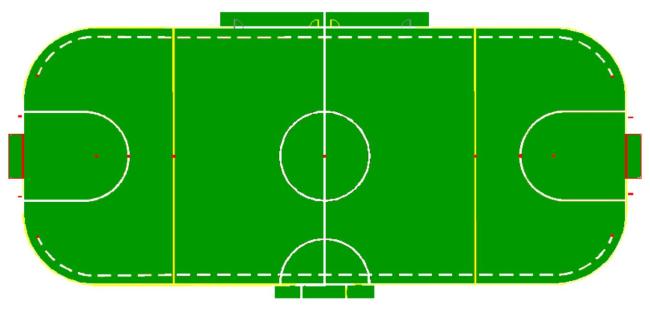
Start off with a hockey rink, boards and everything. Take some synthetic turf, cover the ice, and remove the walls behind hockey’s goal line. Put a goal in each hole in the wall, flush with the boards. Goals are 14 feet by 8 feet and at least 5 feet deep, smaller than outdoors. The field is divided much like hockey, and the hockey offsides rule is used. There’s also a 3 line violation rule, where a defending player kicks the ball past both yellow lines and the white line. It gives possession to the other team, and can result in a 2 minute penalty.


Here’s a rough idea of what the field looks like, courtesy of the PASL rulebook.

Image

Teams consist of five position players plus a goalkeeper. Rules are pretty similar, with goal kicks and corner kicks and penalty kicks all working, but teams are allowed unlimited substitutions, much like hockey, and the same benches are used. Substitutions can happen at any time, and frequently occur during play.

The boards are all in bounds, and playing the ball off them is part of basic strategy.

Arena soccer preserves the hockey penalty box, using soccer style cards to issue penalty time.

A blue card means two minutes in the box, for specific minor fouls. Fouled team plays on a two minute 5-on-4 power play.

A yellow card means five minutes in the box for more severe offenses, but no power play.

A red card means the offending player is gone, just like soccer, with blue card style 2 minute power play following. A designated player occupies the box.

Games consist of four 15 minute quarters. There’s no ties; teams play 15 minute sudden death overtime followed by a 3 man shootout if necessary.

In the MISL, goals are worth two points, with those scored from behind a special three-point arc worth three, much like basketball.

In the PASL, all goals are one point, and there’s no 3 point arc.

For lower leagues, numbers will be used to describe which generation used that particular name. MISL1 will refer to the original, while MISL will refer to the current league.


Small Fish Big Pond 3 – One Little Victory

We last ended in 1986, with the Benna Boys bowing out of Central American and Caribbean Games qualifying after two matches.

1987 brought with it a brief foray into Olympic qualifying, with a pair of draws against the Dominican Republic. Despite neither side winning, the away goals rule took effect, with the Dominican Republic scoring their only goal during the leg hosted in Antigua. An unfortunately early exit from the tournament, and with that, the end of international competition for Antigua in 1987.

However, 1988 was set to be the busiest year yet for the Benna Boys.

March of 1988 brought with it another round of CFU Championship qualifying.

For the home and away series, Antigua would be facing their most recent victims, Dominica, who, despite taking an early lead with an 18th minute goal from Robert Hippolyte, wound up level at half time thanks to a late goal from Steve Hurst, and had their fate sealed with yet another goal at the increasingly legendary feet of Everton Gonsalves in the second half. That win back in 1985 put Antigua through to the next round of qualification, but eventually lost 1-0 to Guadeloupe.

After three years, Dominica was out for revenge, and Antigua was hoping to go two-for-two.

The first match, played away in Dominica, was a relatively tame affair, with the hosts managing to hold the visiting Antiguans to a scoreless draw. The same, however, can’t be said for the leg hosted in Saint John’s.

The match started out rough, with Dominica conceding a penalty in just the 18th minute. Everton Gonsalves made swift work of it, and put the home town favorites up 1-0. Late into the first half, the visiting Dominicans own McIntyre equalized with a goal in the 44th minute.

The teams entered the second half still level, but in the 70th minute, Antiguan player Anthony scored the go-ahead and eventually game winning goal in the first Antiguan victory in over three years.

The Benna Boys were through to the next round.

The CFU Championship finals were scheduled for July of 1988, but before that, another tournament: the CONCACAF Championship, which counted for 1990 World Cup Qualification!

For only the third time in their brief history, Antigua and Barbuda would be fighting it out on the biggest international stage of all! Or, at least, that’s what they planned. But before that, they must qualify.

The two tournaments would overlap, with one qualifying match hosted against Curacao, followed by the three matches of the CFU Championship finals, then the second qualification leg, and then Olympic qualification for the 1988 Summer Games. A very busy summer for the Antiguans.

The Benna Boys had a less than ideal start to the summer, dropping the first qualifying match 1-0 at home against Curacao. Hoping to put this loss behind them, the Antiguans traveled to Martinique for the 1988 CFU Championship Finals. Their first of three matches was against the host nation.

The start of the Finals competition was a high scoring affair, and at the final whistle, Antigua remained level against Martinique with a score of 2-2. The second match, played just two days later, saw Antigua draw long standing rivals Trinidad and Tobago 1-1. Another two days after that saw the Benna Boys conclude the Finals with a third consecutive draw, this time 0-0 against Guadeloupe.

Despite failing to win any of their three matches, Antigua and Barbuda’s three points from three draws was good for second place, behind eventual second time champions Trinidad and Tobago. While it might not seem like much, this was the best finish ever by Antigua in any international tournament. They had only made the finals twice before, and finished last both times.

Hoping to carry this momentum through to their second CONCACAF/World Cup qualification match against Curacao, the Benna Boys traveled to the Netherlands Antilles for what proved to be a much tougher task.

Antigua wound up scoring their only goal as of yet in the tournament, going level at 1-1 in aggregate, but in extra time, eventually conceded three goals, losing 4-1 overall. Not the outcome they hoped for, but after the incredibly busy summer, was still not that bad a result.

Plus, it set up the Benna Boys for something unprecedented.

But first! Some history!

In 1981, the Organization of Eastern Caribbean States was founded with the Treaty of Basseterre. This succeeded the previous West Indies Associated States, a union of islands whose status changed from British colonies to semi-dependent states maintaining association with the United Kingdom in 1967. Due to many of these nations declaring independence, the union became obsolete, leading to the foundation of the OECS.

This organization hosted a soccer tournament in the fall 1988, and Antigua and Barbuda made the final.

This time, instead of a round-robin bracket, there would be a more traditional championship match.

On November 20, 1988, Antigua hosted Saint Lucia for the OECS final, and in front of the home crowd, scored two unanswered goals and won their first ever international championship!

Yes, the Benna Boys finally did it. And while the OECS title might not be as impressive as many other competitions, it’s still a major international victory.

The remaining month of 1988 didn’t see any international play for the Antiguans, but it did see the creation of an new Caribbean championship tournament. The CFU Championship would be folded into the new Caribbean Cup, with the inaugural tournament to be held the following year in Barbados. This would feature three groups and sixteen teams, more participants than any prior Caribbean tournament.

And Antigua was entered.

F1 Class of 2010 Part 2 – Flyaway Flameout

Australia

The Formula 1 circus, including the three new teams, reconvened in Melbourne, Australia, for the second of the four flyaway round to open the season.

One of the weekend’s earliest headlines was news that the Virgin Racing team had discovered a fairly embarrassing problem with their cars, that due to both cars’ failure went unnoticed in Bahrain.

The team realized that the fuel tanks they had built into the VR-01 chassis were too small to complete a race at normal speed, resulting in the team asking the FIA for permission to introduce a redesign. Despite being granted permission, the new chassis would not be ready until May 9th, nearly 6 weeks and three races later. They would have to run underpowered to have any hopes of running at the finish. Not what you want when you’re a young team looking for sponsorship money and results.

The weekend continued relatively free of controversy. In the first Friday practice session, all 6 new cars completed multiple laps, with the Lotus cars leading the freshmen teams and the HRT cars splitting the Virgin Racing entries.

The second session was a bit more hectic, being arbitrarily declared ‘wet’ due to a light rain at the circuit. Hispania’s testing issues once again reared their head with Bruno Senna failing to take the track and Karun Chandhok only completing an installation lap. Virgin Racing’s notoriously unreliable hydraulic systems forced Lucas di Grassi to stop on track without registering a time. The Lotus cars, however, managed to complete another session without any major difficulty.

Saturday’s pre-qualifying practice saw both HRT drivers fall victim once again to the recurring hydraulic problems, while the Virgin Racing team managed to at least get both cars on the time sheet, albeit a second slower than Lotus. The Freshmen class entered qualifying once again without any hope of advancing beyond the first knockout round.

Sebastian Vettel was quickest in all three knockout rounds, taking the pole with a time of 1:23.9. Once again, the Lotus cars of Kovalainen and Trulli topped the newbies, with Q1 times about 2 and a half seconds slower than Vitaly Petrov. Timo Glock, the faster Virgin driver, was around 5 tenths of a second slower than Trulli, with his teammate di Grassi 5 tenths slower still. The HRT cars were seperated by less than 2 tenths of a second and both were within two seconds of the Virgin Cars. Despite all 6 cars being eliminated, the lap times were evidence of clear progress towards the midfield.

All in all, the gap between pole speed and 24th was less than 7 seconds, with the new teams separated by less than two. Sure, the 6 backmarking cars had little chance of scoring points in the top 10, but already the massive gap seen in Bahrain was closing.

Come race day, Virgin elected to start both cars from pit lane, due to a fuel collector issue. During qualifying, this problem forced the team to run more fuel than normally necessary, potentially slowing the cars down. Also planning to start from the pits was the Lotus of Jarno Trulli, after yet another hydraulic issue. However, the issue could not be rectified in time, and Trulli failed to start.

Rain before the start led to the race being declared wet for the first time that season. Every driver opted to switch to intermediate tires. At the start, mayhem ensued with no fewer than 6 drivers involved in contact, eliminating Kobayashi, Hulkenberg, and Buemi from contention on the first lap. The safety car was promptly deployed.

Under full course caution, Bruno Senna retired on lap 4 when his Hispania’s hydraulics once again gave out. Between then and lap 26, Petrov, Sutil, and Vettel all retired, before Lucas di Grassi became the third new car out with yet another hydraulic failure.

Timo Glock carried the hopes of the Virgin Racing team for another fifteen laps, before his suspension gave way on lap 42. That left only Kovalainen and Chandhok as the two remaining new cars.

The last 14 laps remained relatively civil, and both Chandhok and Kovalainen were running at the finish. Heikki and his Lotus managed a respectable 13th place finish, two laps down, while the remaining Hispania in the hands of the rookie Chandhok crossed the line 5 laps and several minutes from winner Jenson Button.

Two races in, quicker in qualifying, two cars finish. Slow progress, but still progress. On to Malaysia for the 3rd round of the season.

Malaysia

Sepang International Circuit played host to round 3, and as is tradition in Malaysia, the weekend was marked by heavy rainfall. In the first Friday practice session, all 6 freshman cars managed more than 15 laps, running within around 7 seconds of the leaders, and even Lotus’ local born test driver Fairuz Fauzy got seat time in Kovalainen’s car, turning 19 laps. The second session saw the new teams run over 20 laps in each car, with Senna, Trulli, and Kovalainen all managing more than 30. The reliability continued through the rain-delayed third session. By the end of Saturday’s practice, the three new teams were running within 6.4 seconds of the leaders, and turning consistent lap times. Compared to the chaotic sessions from the first two rounds, practice remained relatively calm, weather notwithstanding. Normally, I’d be writing about how some ridiculous thing happened in each session, but really, there’s no point because there really wasn’t anything too unusual about the three practice sessions.

And then qualifying happen.

Oh, damn, did it ever happen.

Things started out with  McLaren and Ferrari holding both their drivers in the garage to wait for the track to dry out more, with the knowledge that more rain could be coming. The three new teams did the opposite, choosing to start running laps immediately. This paid off as the rain returned, catching McLaren and Ferrari out in the cold. Rather than looking at the top ten, let’s start from the bottom. The final three places were occupied by Virgin’s di Grassi, and both Hispania’s. None of them managed better than a 1:56. And in position 21… Felipe Massa. With a 1:53.3. In a Ferrari. Ahead of him? It’s not the other Virgin, nor a Lotus; it’s Lewis Hamilton, with a 1:53.05. Next up the order, it’s gotta be one of the freshmen, right? WRONG. It’s Fernando Alonso, in the other Ferrari. He only managed a 1:53.044. And no, I’m not actually reading the top 10. The man who won in Bahrain would start no higher than nineteenth. Ahead of him, in the final elimination spot, was the first of the Loti, with Jarno Trulli managing a respectable 1:52.884. Button, the man on the bubble, narrowly escaped knockout, but did not escape the clutches of the gravel trap, and would not be participating in the next round.

They say fortune favors the bold; in this case, fortune means slaying giants. Advancing to Q2 included the usual Red Bulls, Mercedeses, Williamses, Saubers, Toros Rosso, Renaults, Forces India, and two surprise guests. Yes, in only the third race of the season, Heikki Kovalainen, of Lotus, and Timo Glock, of Virgin, made it into the second round of qualifying. And there was very much rejoicing. Heikki Kovalainen achieved a solid 1:52.875, less than a tenth quicker than his teammate, while Timo Glock, in an amazing turn of events, pulled a 1:52.398. To put that in perspective, he ran quicker than Nico Rosberg in the Mercedes and was within a few tenths of Schumacher. Normality temporarily resumed for the second round, and due to Button’s beaching, the two advancing representatives of the new teams were relegated to the 8th row of the grid. However, both drivers still ran impressive lap times, with Glock hitting 1:52.520 and Kovalainen somehow managing a 1:52.270. And yes, these times were around 3 seconds slower than the Toros Rosso, and yes, neither one made Q3, but they had out-qualified 3 former world champions, and were ahead of both Ferraris and both McLarens. An unbelievable result!

Race day brought with it some much appreciated dry weather, but before the lights went out Pedro de la Rosa lost his engine. Only 23 cars would take the grid.

On lap 3, Trulli and Glock had a close encounter of the crunch kind, and poor Timo, despite his amazing run in qualifying, was out. Over the next ten laps, Kobayashi, Schumacher, and Liuzzi all fell victim to various mechanical issues. Then, things settled down, with 20 laps of clean racing before another mechanical issue. The cyborg from Vyborg, Vitaly Petrov, lost his gearbox, and couldn’t make it back to the Renault pits for them to find it again. Then, back to more clean racing.

The next of the newbies to drop was Heikki Kovalainen with, surprise surprise, hydraulic issues. This time, though, the Lotus team managed to coax some life into the car, and Heikki returned to the track, albeit 9 laps down. In a surprising turn of events, both Hispania cars were running at the finish, along with  both Loti and the Virgin rookie di Grassi, who finished highest in 14th, 3 laps down. Following him were Chandhok and Senna, in 15th and 16th, in the first double-finish for Hispania. Not a tremendous achievement, but given their reliability record, still counts for something, even if they were 3 and 4 laps down respectively. Trulli was the final car classified, despite Heikki running at the finish. The Finn spent so much time getting the hydraulic issues sorted in pit lane that he failed to complete the required 90% of the race. Still, no mechanical-induced retirements for the new teams, and 5 out of 6 cars running at the end. A solid result.

And onward to Shanghai for round 4.

F1 Class of 2010 Part 1 – Fresh Blood

From 2004 to 2008, Formula 1 consisted mainly of the same 10 teams, plus the 2006 addition of Honda’s b-team Super Aguri. These teams, despite swapping owners, names, drivers, and staff, didn’t actually change all that much. Many of the same faces remained on the paddock, and many of the same factories remained in near-constant operation. That is, right up until the 5th race into 2008. As the media circus descended upon the Istanbul Park circuit, there was a noticeable hole in pit lane once occupied by Aguri Suzuki’s organization. That set in motion a two-year mass exodus of quite a few notable names and brands, with Toyota, BMW, and Honda all electing to leave formula one. Honda’s outfit became Brawn for 2009, and then Mercedes for 2010 onwards; BMW’s team reverted to it’s original Sauber branding and operation; and Toyota simply vanished, with their remaining assets later purchased by Serbian businessman Zoran Stefanovic. At that point, there were only 9 teams and 3 engines due to contest the 2010 season. Compare that to the start of the 2008 season, with 11 teams and 6 engine manufacturers, and it’s easy to understand why F1 supremo Bernie Ecclestone issued a call for new blood for the new season, aiming for 13 teams’ participation.

The next season was to mark the beginning of “new f1”, as many had put it, with in-race refuelling being re-banned, as one of several measures intending to cut costs. So-called ‘green’ technology was to feature more heavily than before, and more emphasis was to be placed on reliability and stability, and what better way to show it than to invite several new teams at rather short notice?

From an initial list of 15, Formula One Management selected bids from four organizations to participate in grand prix racing’s highest level: USF1, Campos Meta, Manor Grand Prix, and 1Malaysia Lotus Racing.

Before the season began, already there were changes to be made. Manor was renamed Virgin Racing, to reflect a buyout by Virgin Group and their head Richard Branson. Campos Meta was purchased by Spanish businessman Jose Ramon Carabante, and rebranded to Hispania Racing. 1Malaysia Lotus Racing, operated by Air Asia and Tune Group head Tony Fernandes, remained under the same ownership, but simplified their operating name to Lotus Racing.

USF1, the planned American outfit with headquarters in Charlotte, NC, never made it to the grid. Between design delays, budget issue, an sponsorship shortages, among many issues, the team requested deferred entry, either later that summer or the following season. The answer from FOM was a resounding no, leading to an almost immediate folding of the American team.

The Sakhir Circuit, in Manama, Bahrain, played host to the first round of the 2010 season. Despite USF1’s departure, the other three – Hispania, Lotus, and Virgin – all made it to the first race of the season, despite problems in testing and a whole mess of off-the-track issues. In practice, as in testing, only Lotus managed to run a relatively stable session. Virgin had issues with Luca di Grassi’s car, and Hispania were busy completing initial construction of both cars. But hey, that’s why they give you three practice sessions, and by Saturday’s qualifying, all 6 cars from the freshmen class had at least completed a few dozen laps.

In qualifying, few expected the three new teams to advance beyond the first round, but at the same time, no one was really sure just how far off the pace they would be. Virgin and Lotus, having had a chance to run some testing, were relatively close to each other, but were still around 3 seconds slower than the slowest established team, Toro Rosso. Hispania was another story.

The fastest lap from the first qualifying session was a 1:54.6, from Ferrari’s Fernando Alonso. Toro Rosso’s Jaime Alguersuari was the slowest of the returning teams, with a best time of 1:57. Two seconds separating first and eighteenth is fairly close. But then we get to the newbies. Both Virgins and Loti were within a second of each other, right around the two-minute mark. Bruno Senna, the faster of the two Hispania drivers, only managed a 2:03. His teammate, Karun Chandhok, was nearly two seconds slower, only managing a time of 2:04.9. To put that in perspective, polesitter Sebastian Vettel, with a lap time of 1:54.1, was a whopping 10.8 seconds quicker than the slowest car. He could hypothetically lap Chandhok in less than eleven laps. In a 49 lap race. There existed a very real possibility of Vettel lapping Chandhok on track four times.

Instead, Chandhok spun out of the race less than two laps in. The culprit: one of the curbs on corner exit that, due to his limited practice time, he was unaware of. 5 new cars remained.

On lap 3, Virgin’s di Grassi’s hydraulics failed, as they had many times in testing, which swiftly sidelined him as well. 4 new cars remained.

Several laps later, issues befell the other Virgin car in the hands of Timo Glock. His gearbox decided it wasn’t very happy with it’s current situation, and the best way of rectifying this was to give 3rd and 5th gear the boot. 3 new cars remained.

The next lap, Bruno Senna, in the remaining Hispania, suffered an engine failure after airbox issues led to overheating. 2 new cars remained.

Both Lotus Racing entries managed to make it to the halfway point, the only new team to do so, and both cars continued to run, relatively incident free.

Hydraulic issues sidelined the Lotus of Jarno Trulli just a few laps from the finish, leaving his teammate Heikki Kovalained the only remaining new car.

Heikki finished 15th, last among running cars, and two laps down. But hey, at least he finished.

The results indicated what many had thought all weekend: Virgin was just as quick as Lotus, but nowhere near as reliable, Hispania Racing was woefully slow, and none of the new teams looked to have any chance at a points-paying top 10 position.

Onward to Australia for round 2.