The PWHL is a Historic Moment for Women’s Hockey and Women’s Sports In General, and it’s been a long time coming

On New Year’s Day, 2024, in the historic Maple Leaf Gardens in downtown Toronto, the puck dropped to start a landmark game between teams from Toronto and New York City. After decades of instability and years of infighting, womens’ professional ice hockey had achieved a new milestone: one league to unite them, one league to rule them all. The puck drop marked the official on-ice start of the brand-new Professional Women’s Hockey League, a league in which all of the top women’s players from the USA and Canada could finally, at long last, have the competition they’ve always deserved.

Let’s talk about how we got here.


Women have played ice hockey as long as there’s been ice hockey to play. Dating back to the late 1880s, the women in the family of Lord Stanley (the Stanley Cup Stanley) were known to be avid hockey players, right along with the men. Most famously, Lord Stanley’s daughter Isobel Stanley took to the game fondly and served as both an early promotor and ambassador of the sport, as well as one of – if not the first – organizers of women’s hockey games in Canada. [1]

Hockey back then, for both men and women, was primarily if not exclusively an amateur pursuit, in line with much of the world of competitive sports at the time. Hockey turned professional comparatively early for most sports, in 1904 with the consolidation of several amateur teams into the International Hockey League in Michigan’s upper peninsula. [2] While that league itself didn’t last long, the puck was in motion for professional hockey – at least for men – and eventually saw the emergence and formation of the NHL in 1917.

For women, though, professionalism wasn’t just out of the cards, it was nowhere near the horizon, as those early, semi-organized and regional tournaments of the era of Isobel Stanley were essentially the limit of women’s hockey for decades. Local and regional associations held tournaments for amateur women’s teams, but these proved frequently unstable with teams and associations perpetually coming and going on both sides of the border. Canada found more stability and longevity in general, due to the massive popularity ice hockey found there, with two organizations in particular carrying the torch for women’s hockey in between world wars. The Ladies Ontario Hockey Association, formed in 1922, made for the most formalized women’s hockey body to date, and rare for the time, saw players from a working class background take charge. This group made an unsuccessful push for official recognition for women’s hockey players from the Canadian Amateur Hockey Association in 1923. That recognition which ultimately wouldn’t happen until 1982. As Canada entered the 1930s, it began to feel the effects of the Great Depression and gradually over the decade, the LOHA slowly fizzled out. [3]

Parallel to the LOHA, the Dominion Women’s Amateur Hockey Association was formed in 1933 with the goal of forming a national organization for women’s hockey. Their lofty ambitions included a national championship tournament, all-star tours of Europe, and a bid to make women’s ice hockey a demonstration sport at the 1940 Winter Olympics planned to be held in Sapporo, Japan. Unfortunately, the DWAHA failed to achieve their goals before the Great Depression and outbreak of World War 2 interrupted their plans and led to their dissolution around 1940. [3]

From then onward, little succeeded to push for national, organized hockey for women in the USA or Canada, and the massive baby-boom-era sexist pushback against women saw more than just hockey players discriminated against. That is, until the 1970s.


The civil rights movement in the continent giving rise to second wave feminism brought with it a renewed vigor for women’s equality in athletics. Canada saw the rise of the Ontario Women’s Hockey Association in 1975, while in the States, the Ivy League’s university athletic programs added women’s ice hockey teams, bringing women’s hockey to heights it hadn’t seen since the 1930s. The next major turning point was just around the corner with the creation of the Abby Hoffman Cup in 1982, the first truly national championship for women’s hockey on either side of the border. [4] With Leeman Taylor in charge of the OWHA as their first salaried employee, the tournament gained corporate sponsorship and women got official recognition at the Canadian Amateur Hockey Association.

South of the border, the college game kept growing under the banner of the Eastern Association of Intercollegiate Athletics for Women. From its creation in the mid 1970s and thanks in no small part to the push to coeducationally integrate in then Ivy League, the EAIAW grew to feature 9 collegiate teams by 1978, and in 1984, the previously men’s-only ECAC Hockey integrated by absorbing the EAIAW and became the first collegiate conference to host a full women’s hockey tournament. [5]

With both nations reaching new heights in the mid-80s, talks began to take things international, and create a world championship for women in ice hockey. The international sanctioning body for ice hockey, the IIHF, at the time did not sanction any women’s events at any level, and despite the major push from the OWHA, weren’t willing to roll the dice. Instead, the OWHA led by director Fran Rider pushed to hold it themselves. On April 21, 1987, the Canadian Women’s National Team made their debut against Switzerland to begin the World Women’s Hockey Tournament. [6] Over the next 5 days, the aforementioned teams joined by those from the United States, Netherlands, Japan, and Sweden, along with an all-Ontario selection, competed in a 21-game round robin tournament to seed a 4-team playoff bracket. Canada and the United States topped the table, followed by Ontario and Sweden. In the knockout rounds, Canada won 8-2 over Sweden and Ontario shocked the United States 5-4 to qualify for the finals. The USA would blank Sweden 5-0 in the bronze-medal game, and the Canadian national side would defeat their compatriots 4-0 to win the gold. [7]

Despite shaky moments, the last-minute withdrawal of a West Germany side over disagreements regarding body checking (which was banned in Canada for women), and a paltry budget, the tournament succeeded, and put women’s hockey on the international stage. The IIHF took notice, and began planning for an official IIHF Women’s World Championship, to be held in 1990. [6]

Fast forward to March of 1990. Fran Rider once again stepped up to organize the tournament (despite the withdrawal of the CAHA), and eight national sides made their pilgrimage to the Ottawa Civic Centre. Canada and the United States were once again joined by Japan, Sweden and Switzerland, and found new foes in sides from Finland, Norway, and West Germany (back as the IIHF agreed to allow body checking). [8] Divided into two groups of four teams, Canada and Sweden topped Group A while the United States and Finland led Group B. Canada and the USA both won their semifinals to make the gold medal game, where Canada prevailed 5-2 to repeat as champions and win the first official gold medal. [9]

The success of this further pushed the envelope for women in hockey, and caught the eye of the International Olympics Committee. The IOC, seeing the rising tide and support for women on the ice, added women’s hockey to the in-planning 1998 Winter Olympics, to be held in Nagano. [10]


Outside of the international arena, women’s hockey continued to grow, boosted by the attention drawn by the major events. College hockey added more teams and another conference in Hockey East, and women gained a league of their own in 1992 in Canada with the Central Ontario Women’s Hockey League. Despite still remaining firmly amateur, the level of organization and play alike kept pushing higher and higher. Still, though, outside of the Abby Hoffman Cup, there were no national leagues in either country. But they didn’t need to wait long; another new zenith of attention in the Winter Olympics would change everything.

February of 1998 saw the first Olympic recognition for women in ice hockey, with 6 competing teams in Nagano: Canada, the United States, Finland, Sweden, Japan, and China. As had been the case in the 1992, 1994, and 1997 IIHF championships, Canada and the USA dominated, making the gold medal game. In front of a crowd of 8,626, the USA stunned the 5-time champions to win the first Olympic gold medal, bringing even more attention to the women’s game in the United States, and motivating Canada to take an unheard-of step: launching a professional league. [11]

Canada had in the COWHL a decently strong, decently run league. But it was fully amateur, it struggled to retain teams, and held a rather narrow footprint in Central Ontario. The COWHL had contracted to just 3 teams by the 1997-1998 season. The league then regrouped, brought in new investors, and rebranded as the National Women’s Hockey League. [12]

The newly-reinvigorated NWHL would feature eight teams across Ontario and Quebec, giving women the chance to make (some) money playing hockey in Canada for the very first time. The dream had finally been realized. The league continued to grow and expand westward, incorporating Alberta and British Columbia over the following seasons, before the cost issues of supporting the national footprint led the league to split into the NWHL and new Western Women’s Hockey League. [13] The WWHL would then itself continue to expand its reach, including Saskatchewan and the first professional American team, the Minnesota Whitecaps. The two leagues co-existed and co-operated well enough despite the perpetual tensions that exist in any sports leagues at this level, with one unlikely event bringing them closer together and closer to hockey fans across the continent.


Ask any hockey fan who won the 2005 Stanley Cup and they’ll give you a very unusual look. The NHL, having struggled with collective bargaining negotiations between its players and owners since the early 1990s, saw the collective bargaining agreement negotiated between players and teams in 1995 expire on September 15, 2004. What then followed was one of the most monumental events in the history of the sport. Owners and players found themselves at an impasse with the owners unwilling to negotiate with the requests of the players, causing the lockout to continue well through the end of 2004 and into 2005. On February 16, 2005, five months into the lockout, the NHL canceled what would have remained of its season. [14]

While the NHL was locked out, Canada’s women’s leagues found themselves as the highest level of hockey being played in many of their home cities, leading to a lawsuit fighting to award the Stanley Cup not to the NHL champion, but to the champion of the women’s interleague series. While the lawsuit ultimately failed, it did lead to the creation of another championship trophy named after a governor-general of Canada, the Clarkson Cup. Issues between the leagues, and between the designers of the physical trophy and Hockey Canada (a renamed CAHA), saw the cup ultimately not awarded, but the precedent for a major women’s championship trophy, akin to the Stanley Cup, was set. [15] The increased attention also highlighted issues the players, teams, and owners had with the state of women’s professional hockey in Canada, leading to the collapse of the NWHL after the 2006-2007 season after multiple failed attempts to merge the two leagues in Canada. [16]

For the 2007-2008 season, the NWHL would be reorganized as the fully-amateur Canadian Women’s Hockey League, featuring the same Ontario/Quebec footprint as a counterpart to the WWHL across Alberta, BC, and Minnesota. [16] The idea of a championship trophy awarded to the interleague champion persisted, using the Abby Hoffman Cup, until the issues surrounding the Clarkson Cup were resolved in 2009. The unstable stasis between the CWHL and WWHL continued through the 2011 Clarkson Cup, after which the WWHL merged with the CWHL, once again uniting professional hockey under a single banner. [17]

With all of this happening (mostly) in Canada, opportunities for American players were limited. They could either try and play in Canada, or… well, find some local amateur team to play for. And even for those playing in Canada, the money wasn’t much. There were bonuses and incentives, expenses covered, sponsorship deals, yes, but none of the salaries one would expect as a professional athlete. That would soon change.


A former player for Northwestern University, Dani Rylan, found a way to change things. After meeting with players and investors, Rylan launched the National Women’s Hockey League (yes, same name as the other one) in March of 2015 with a budget estimated at $2.5 million, higher than any league that had yet taken the ice. This professional American league would initially feature four teams in hockey hotbeds in the northeast: the Boston Pride, Buffalo Beauts, Connecticut Whale, and New York Riveters. While the salary cap was a modest $270 thousand, the $10 thousand minimum per-player was at that point the highest guaranteed minimum salary women had ever seen in ice hockey. [18]

The league saw some initial highs with sponsorship deals with Dunkin’ Donuts, a successful outdoor game between Buffalo and the CWHL’s Montreal Canadiennes, and the awarding of the first Isobel Cup to the Boston Pride in March, but ended up burning through money, which would unfortunately become a recurring trend. Ahead of the second season, the NWHL announced they were cutting minimum salaries in half, cutting the above-minimum salaries by similar amounts, and switching to a ticket-based revenue split to compensate. Despite gaining partnerships with NHL teams and arenas, the league struggled to address questions over their finances and investors. [19] This, too, would prove to be a recurring theme.

While the NWHL was celebrating the end of its 4th season, up in Canada, the CWHL was in trouble. Only, nobody outside of the league office knew it.

Following the merger between the CWHL and WWHL, Canadian pro women’s hockey found a period of relative stability. The CWHL added teams in Boston, continued to grow across Canada, and even added two teams based out of China as part of China’s own push to grow hockey domestically. They also added dedicated player salaries, following the NWHL, and began discussing the possibility of a cross-border merger, rallying behind the #OneLeague movement. [20] The 2019 Clarkson Cup finals came and went, successfully, with Calgary taking the honors, but only days later, the league suddenly announced they were shutting down immediately. Whether the blame lie with investors, a failed restructuring, dilution of the talent pool across the border, competition between leagues, ultimately, it didn’t matter. The CW[7] https://www.iihf.com/en/news/18481/ww-30-story-12HL tried to follow the NWHL’s lead, and paid the ultimate price. [21]

In the aftermath, the NWHL announced plans to add two new teams in Toronto and Montreal over the coming seasons, but neither would be ready for the upcoming 2019-20 campaign. They also announced that their partnerships with two NHL teams, the Buffalo Sabres and New Jersey Devils, had ended as well. This led to another painful revelation: the league could not afford to pay the full-time salaries the players had requested, nor offer any benefits on top of their contracts, like medical insurance. To say this disappointed the players is an understatement. During all of this, they formed a union, the Professional Women’s Hockey Players Association, to advocate collectively for living wages, training programs, and essential benefits, which they hoped could be served in a single, united, American and Canadian league. [22] With the NWHL unable to meet their demands, the members of the PWHPA withdrew from the league and formed their own independent competition directly controlled by the union.


September of 2019 saw the PWHPA launch their Dream Gap Tour, a traveling series comprising rotating teams named after designated captains rather than franchises or cities. The series would hold 4 to 6 games in a given city across two days, treating each event as a mini-tournament showcase than a traditional league structure. [23] While the schedule was ultimately cut back due to the state of the world in March 2020, the series managed to hold 6 showcases and sent a selection to the 2020 NHL All-Star Game, including a women’s 3-on-3 game for the first time. [24] To put a cap on their high profile series, 4 PWHPA players were also invited to the double-A men’s ECHL’s all-star tournament, taking the ice alongside their male counterparts with one woman on each of the 4 men’s teams. Two women, Kali Flanagan and Annie Pankowski, scored goals in the tournament, whole Gigi Marvin registered an assist. [25]

During the height of the pandemic, the NWHL offered their first major response to the PWHPA, by beginning their Canadian expansion. On April 22, the NWHL announced that they were expanding to Toronto for the upcoming season, while still looking for owners for 4 of the 5 existing teams. The season was initially planned to be a 20-game slate for all 6 participating teams, but very quickly, once again due to 2020, the league had to push back the start of the season, and ultimately settled for a shortened bubble campaign to be held in Lake Placid, NY. [26] The players who hadn’t defected to the PWHPA’s Dream Gap Tour raised concerns about their salaries being affected by truncating the season, leading the NWHL to guarantee full-season salaries for however much of the season would be played, and even guaranteed salaries for players who opted out of play. [27] Despite their best efforts and precautions, the NWHL’s COVID bubble season was interrupted in its first week, with the withdrawal of the Metropolitan Riveters due to an outbreak among their ranks. The schedule was adjusted, but that lasted only days as the Connecticut Whale also had to withdraw on February 1. Two days later, the NWHL suspended the season. [28]

The pandemic also interrupted the parallel PWHPA Dream Gap Tour, which had pivoted from the captain-based teams to 5 hub-based, sponsor-named teams representing Calgary, Minnesota, Montreal, New Hampshire, and Toronto. The tour also planned to track standings and award a championship trophy, the Secret Cup (sponsored by Secret deoderant), but that too got set to one side after the whole world’s front fell off. [29]

Following both sides’ 2021 campaigns, the NWHL had some big news. The league found new owners for all of the league-owned teams, brought in new investors, and announced a doubling in the salary cap to $300 thousand per team. Along with this, the league rebranded as the Premier Hockey Federation, a fresh name for a fresh start. [30] This reinvigorated league managed to start pulling players from the PWHPA, who were unfortunately struggling to promote their Dream Gap Tour. The PHF also launched another new team in Montreal, and ahead of the 2022-2023 season, announced another major monetary milestone. For the upcoming season, the salary cap would increase again, to $750 thousand, and players would have full health insurance coverage. Along with these major wins, players would gain a 10% equity ownership of their teams, a targeted move aimed directly at the PWHPA. [31]

The moves worked. The PWHPA took notice of where the PHF was heading, reorganized as a formal union, and came back to the negotiating table following their respective 2022-2023 seasons. During the discussions, the PHF announced that the entire league had been bought out in anticipation of creating a new league in conjunction with the PWHPA. While the players union celebrated their massive victory, the players signed with the PHF but unaffiliated with the union were left in the cold, as they would not be included in negotiations. That said, the PWHPA did look out for their fellow players, and negotiated a payout of either 1/2 of the agreed 2023-24 salaries, or $5 thousand, whichever was more, for all of the former PHF players. Those players would also receive the payout from their 10% equity, and if they were unable to sign with a team for the 2023-24 season, they would receive another $10 thousand compensation payment. [32] From the negotiations and the ashes of the PHF, a new league would emerge, at last. Welcome to the Women’s Professional Hockey League.


The WPHL immediately worked to learn from the mistakes of its predecessors. Before teams were announced, the league had a collective bargaining agreement signed with the renamed PWHLPA, now officially representing all players in the nascent league. And while the initial salary cap was believed to be only $1.265 million, down from the $1.5 million the PHF had offered for 2023-24, the CBA included an annual 3% raise for 8 years, meaning they would reach that $1.5 million mark by 2029, and more importantly, had it guaranteed in writing in contract, a first for professional women’s hockey. [33] While at the high end, some star players would be taking a substantial pay cut, the average salary of $55 thousand and minimum of $35 thousand marked new high water levels for compensation for women in hockey, without factoring in the annual growth. The agreement also included benefits, not just health care, but for housing, traveling, relocation, transportation, and more, all long-desired standard issue benefits for professional athletes that had, till then, only been on offer for men in ice hockey. [34] And even more important than the contracts or salaries, the league would be the one, singular, united league for women in North America, bringing the warring leagues period of the past decades to an end, at long last.

Following a successful signing period and draft, the league announced their own original six. Toronto, Montreal, and Ottawa would host teams in Canada, while Boston, New York, and Minnesota would in the United States. [35] After a very poorly received announcement for team names (which included, among others, the Boston Wicked and Ottawa Alert), the league announced that they would debut with purely geographic names, with each team being referred to as PWHL followed by their location (e.g. PWHL Toronto, PWHL Minnesota). [36] The players would let their hockey speak for themselves.

Anticipation for the league grew. The PWHL signed deals with Canada’s three largest sports broadcasters in TSN/RDS, CBC, and Sportsnet, announced a free-for-all YouTube option for the rest of the world, and signed partnerships with Air Canada and Canadian Tire. Games began selling out weeks before the season even began across all 6 markets, with multiple games outselling the previous North American record crowds for professional women’s hockey by more than double. [35] Everyone was ready for the puck to drop, to finally officially unify women’s hockey as a major professional sport.

Toronto hosted New York at the Maple Leaf Gardens on New Years Day, and when the puck hit the ice, the PWHL had arrived. 10 minuts, 43 seconds into the first period, New York broke through with Ella Shelton scoring, fittingly, with an assist from the second NWHL’s first ever first overall pick, Alex Carpenter. Carpenter would add a goal of her own in the 3rd, followed by two more form Jill Saulnier and Kayla Vespa as New York blanked Toronto 4-0. The full-capacity crowd of 2,537, despite watching their home team lose, was electric, celebrating the success of their local legends playing for the opponents.

The following day in Ottawa at the TD Gardens, Montreal prevailed 3-2 in overtime in front of a world record breaking crowd of 8,318. That record only lasted four days, as Minnesota’s first game at the Xcel Energy Center against Montreal drew 13,316 fans through the gates. Through the first five games, three were listed as sellout crowds, and Toronto has already sold out their entire home season. The PWHL has found a recipe for local engagement that their predecessors could only dream of.

It’s always impossible to predict how well a sports league will continue to succeed, but all of the right pieces are here for the PWHL, and with it, women’s professional hockey has found an unprecedented level of strength to start this new adventure. Even if things ultimately end up changing in the coming years, New Years Day of 2024 will go down as a major milestone.


Sources

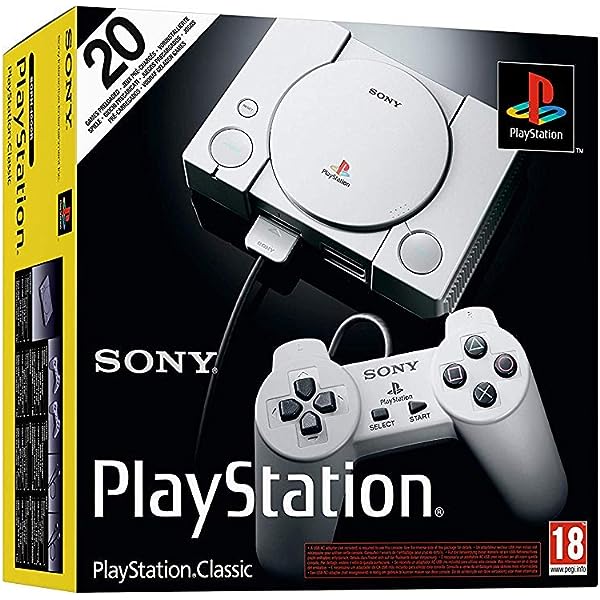
A Rant: Sony didn’t need to ruin the PlayStation Classic, and it could have been great

Look at this nugget.

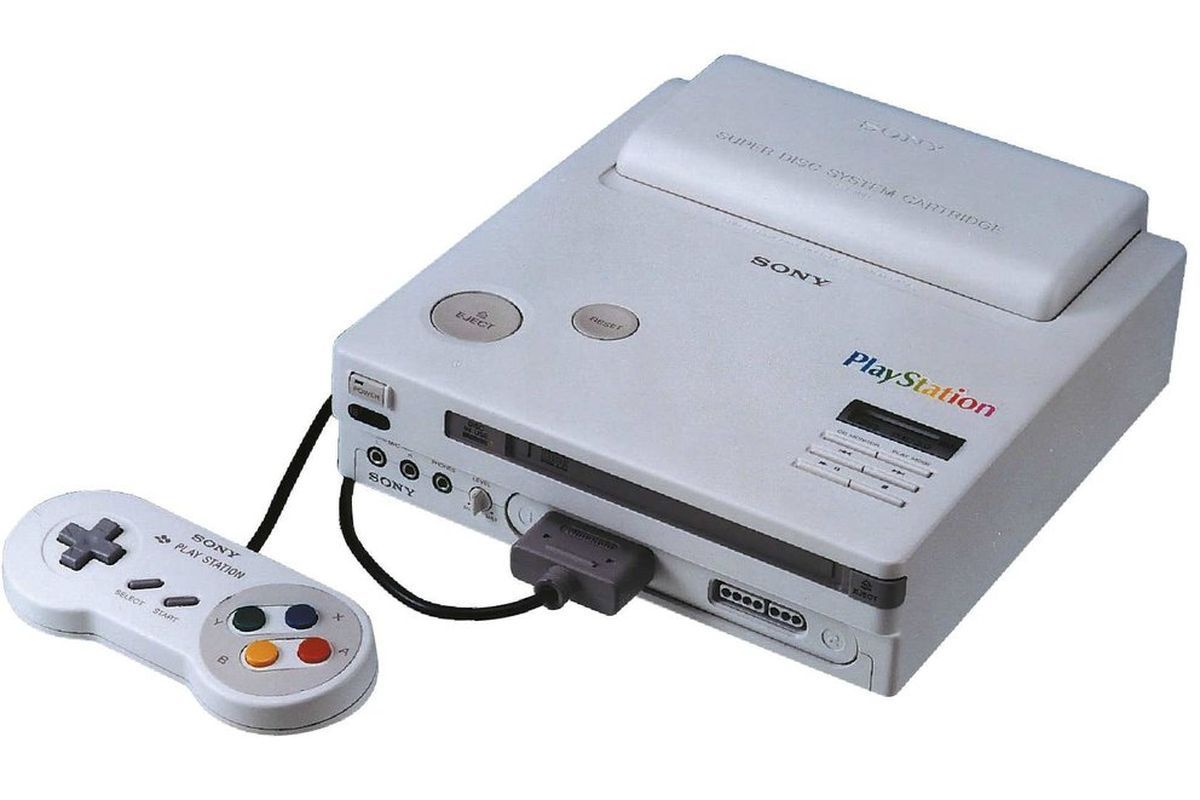
Ah, the PlayStation. Sony’s debut in the world of video game hardware thanks in no small part to a colossal fumble by the once and future kings Nintendo. It sounds like apocrypha, but the old legend is true and we have the proof, thanks to Ben Heck getting his hands on some prototype hardware. Once the final product was released, first in 1994 in Japan and 1995 most everywhere else, it rapidly turned the Nintendo/Sega duopoly into a bona fide three horse race, and would eventually lead Sony to beating Sega out of the market entirely, but that’s yet another story for another day. Maybe when I talk about my custom Dreamcast, we’ll go there.

Anyway.

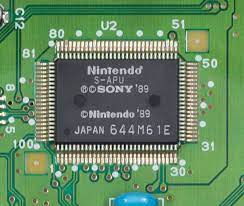
Sony hit it out of the park with the original PlayStation, thanks to Ken Kutaragi’s choices to combine what Sony learned from the MSX with their early and thorough understanding of CD technology and his own experience working with Nintendo as far back as the early days of the Super NES. Did you know that Ken Kutaragi designed the SPC-700 sound chip for Nintendo for the SNES? Now you do! With all of that knowledge and experience wrapped into the PlayStation, it actually doesn’t come as much of a surprise that it was a hit. The lower MSRP compared to the Sega Saturn (not to mention being far, far easier to develop for), the included ability to play the then-still-nascent audio CDs, and Sony courting third-party developers out of the gate with extremely favorable terms had the PlayStation flying off the shelves, and by the end of 1999, it had become the best selling home console in history, and only trailed the Game Boy range for consoles as a whole.

Fast-forward to the late 2010s, and nostalgia is new-in-box, in stores now. Nintendo have dropped miniature, modern recreations of their NES and SNES, complete with built-in (emulated) games, recreated controllers, save states, and HDMI output, to massive hype and fanfare. Sony decides, reasonably, to get in on the same idea (as will Sega, SNK, and NEC, with the mini Genesis, Neo-Geo, and TurboGrafx-16 respectively over the coming years), and puts a plan together for a nostalgia-tinted celebration of the glorious 32-bit era. And there was very much rejoicing! Sony had already won over fans the world over by making not just the PlayStation 2 but also the PlayStation 3 backwards compatible with PS1 discs and memory cards. With the PSP and later the PS Vita, Sony would further support the PS1’s library by releasing emulated versions of games digitally through the PlayStation Store. Sony’s reputation for respecting the fans of their debut platform was unquestionable. Or so we thought.

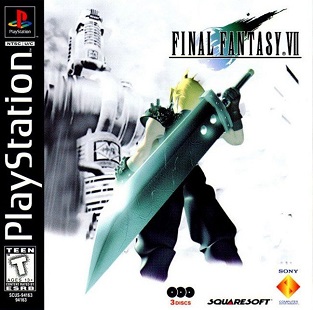
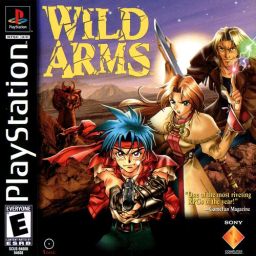
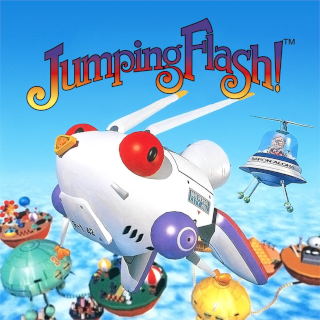
When the first 5 of the planned 20 included games were revealed in September of 2018, the reception was… mixed. Three of them, Final Fantasy VII, Tekken 3, and Ridge Racer Type 4, made perfect sense. FF7 and Tekken 3 were the 2nd and 5th best selling PS1 games of all time, and Ridge Racer (between the original and Type 4) might not have sold as many copies but had just as loyal a following. The other two, Wild Arms and Jumping Flash, drew more confusion than anything, as both had fallen well out of the common canon for the PS1’s library. Neither is a bad title, just, they’re not the sorts of games people think about when they think PS1. But, that’s only the first 5, and you can’t expect them all to be bangers and classics, right?

Right?

The final list dropped a month later, and the reaction went from lukewarm-leaning-positive to downright cross. Sony went from 2 games from the top 20 best sellers among the first 5, to 4 games from the top 20 best sellers among the entire final lineup. Only two more top 20 titles made the cut, those being Metal Gear Solid (#10 all time) and Resident Evil Director’s Cut (#17). Some of the other choices made perfect sense, like the inclusion of Rayman (#21) and Oddworld: Abe’s Oddyssee (#23). Both of those sold well over 3 million copies (which thanks to the PS1 selling around 100 million units, means we can just use percentages to estimate the saturation of the games in the market), meaning that most people nostalgic for the PS1 at least knew about them, if not owned them outright. Totally sensible. Syphon Filter (#52) makes an argument for inclusion off its stellar reception and status as the launching point for a long-lasting successful franchise. Not the worst pick, but hey, I had a copy of it as a kid, I’m one of those people nostalgic for it, and even if I wasn’t, it’s still a good game. We’re still making some sense.

What was far less sensible was the rest of the lineup. The next highest charting games to be included were Battle Arena Toshinden (#85) and Cool Boarders 2 (#87). I had never heard of Battle Arena Toshinden before despite having played multiple other Tamsoft games (and I’m not alone on either point), and Cool Boarders 2 was more famous for living in the shadow of a much more popular series about “boarding”. The only other included games that sold more than a million copies (i.e. 1% of the PS1’s audience) were Intelligent Qube (#100), Twisted Metal (#107), and the aformentioned Ridge Racer Type 4 (#111). That still leaves 8 games included that fewer than 1% of PS1 owners saw fit to purchase.

Oh, no.

I could go on further about how bad the included games list is, but honestly, I don’t feel like it, because pretty much every other game they included was included because it’s part of a successful franchise that got big long after it dropped, or because that game got a remake/port/etc that blew up later, which is pretty much the same reason with the serial shaved off. Not much else to say.

Instead, let’s get angry. I’m going to list off just a few of the bestselling games that Sony didn’t include. Gran Turismo and Gran Turismo 2. The Crash Bandicoot trilogy. The Spyro trilogy. The Tomb Raider trilogy. The Tony Hawk’s Pro Skater trilogy. Right there, that’s 14 games that I had as a kid that all kick ass. That’s a PS1 core library, right there. And that’s excluding a lot of things from JRPGs to Hideo-games, Need for Speed to Parappa, and don’t get me started about MegaMan Legends.

Sony knows this. These games have been re-released on other PlayStation services, and nearly all are currently available (with the exception of THPS and Gran Turismo) right now as PlayStation Classics. Sony is selling these games now, and was selling these games in the same state as emulated files in their ecosystem when the PlayStation Classic launched.

Let me make absolutely certain I make this clear. On the day the PlayStation Classic released in 2018, one could have spent less money to get a dozen more iconic classic PlayStation games than what was included from Sony themselves, on a PS3 or PS Vita.

Oh, and that brings me to another point of annoyance, the price. The MSRP for the PlayStation Classic was $99.99. Yeah, that’s $5 per game, which sounds reasonable in the context of the PlayStation Store downloadable titles, but compare that to the NES Classic ($59.99, 30 games) or the SNES Classic ($79.99, 30 games), and Sony’s decision is baffling. If Sony did something radical with the hardware, maybe the price tag could be justified. But they didn’t. The internal specs are comparable to those of a Raspberry Pi 3, which was widely available at the time for around $35. Even if one were to go to a store like Micro Center, buy a full Raspberry Pi 3 kit, two basic USB controllers, and a 16gb microSD card for storage, they’d have spent less money for a more capable device.

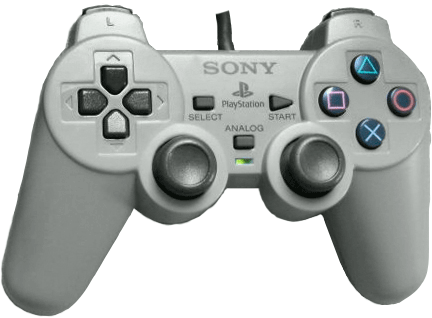
Right, the controllers! Sony didn’t include a throwback to the original DualShock controller, or even its more primitive cousin, the Dual Analog controller. They included two USB-based replicas of the original, all-digital PlayStation Controller. No analog sticks, despite the bulk of the games included supporting them.

But wait, it gets worse! 8 of the 20 games included were actually the PAL versions, not the NTSC versions. If you’re unfamiliar, as TV went colour in the 1950s and 1960s, two different standards for colour broadcasting were developed. (There’s also the Franco-Russian SECAM which is a whole other story but it doesn’t matter here, I’m just pedantically defending against other pedants). NTSC was created for the North American market and later got exported to Japan, whereas PAL was a European standard from the start. The details and differences don’t matter much here, except that the refresh rate for the screen and the inherent frame rate of the game are both derived ultimately from the root frequency of local AC power. In most NTSC regions, the AC frequency is 60Hz, which leads (thanks to some very strange and fascinating math) to an inherent analog refresh rate of 59.94Hz, and timing built around a 30fps framerate. In PAL regions, the AC frequency is usually 50Hz, which gives us a 50Hz analog refresh rate and a framerate of 25fps. For some scenarios with gaming, the games were re-compiled to run faster so that the 25fps gameplay on PAL hardware wouldn’t feel slower, but most weren’t. And for those 8 games on the PlayStation Classic, they’re running at 83.3% speed, making them feel sluggish and laggy. All of these games had native NTSC versions, and on an emulator going through HDMI output, there is literally no need to use the PAL versions at all. There’s no more analog signal or processing going on here, it’s all purely digital. This is extremely, confusing and frankly unacceptable.

It’s also not even the only reason why games feel sluggish on the thing. Sony’s software is running a version of the open-source emulator PCSX-ReARMed, a perfectly cromulent choice, although many features like rewinding or network play, or most of the tweaks and settings used on similar hardware (like the aformentioned RasPi3) are absent. This has led to the community finding ways to get better performance and more features out of the device using custom firmware, something that shouldn’t be functionally required for a product with a $100 MSRP.

And yet, I bought one. Why? Because this thing flopped so hard that within months it was floating around for $30, before a final price cut to $20 at some retailers. I paid $25 at Nebraska Furniture Mart, and yet I still don’t feel like I’ve gotten my money’s worth from the stupid nugget. It’s one of two of my 7 classic mini consoles owned (NES, SNES, Genesis, TG16, Neo-Geo, Commodore 64, and this) that isn’t currently wired into my overkill home entertainment center, mainly because I haven’t been assed to get the thing modded and happy. I’m also planning to stick some extra cooling on the primary SOIC (System-on-a-Chip, combo of CPU and GPU and other things into one chip) as I’ve heard that a basic-ass Raspberry Pi heatsink can make it even happier once it’s modded.

Back to the central point of this rant. Sony knew these things when they developed this product. They knew they had the licensing rights to digitally distribute much more iconic classic games as they were selling and distributing them at the time on other platforms. They knew what games people most often paid to download. They had the NTSC versions, and they had the staff with more knowledge of PS1 emulation on hand to make something better.

And they didn’t.

And it flopped.

And it’s Sony’s own damn fault.

The Techronomicon: Adventures in Nuggeteering Part I

Well hello there, oft-neglected personal site I’m still paying for. It’s been, what, two years and change since the ThinkPad T530 project post? Yep, that’s long enough. More accurately, it was long enough long enough ago that I’m wasting time with this “bit” for an “introduction”. Time to finally shake the rust off and get back on my bullshit.

When I did the T530 project, I knew it was going to be a thing that had approximately a negative chance to end with just one laptop – given that it had already escalated to two during the making of that post. It felt good to get my hands metaphorically and literally dirty under the hood of some ThinkPads, and just the act of taking apart and tweaking old laptops brought back a lot of nostalgia to some of the utter nonsense I lugged around in my teenage era. When most of my friends at the time were rocking netbooks or MacBooks (the two classes circa 2010), I had beasts with Pentium CPUs, IDE hard drives, single cores, and sometimes even batteries. Trash, really. Since that time, I’ve gotten to be a both MacBook-Toting App Developer, and also a real human normal laptop person (allegedly), but I never got to give netbooks a spin during their heyday.

For the unenlightened, Netbooks are (were?) a category of subnotebook (read: tiny laptop) popular from around 2007 through to around 2013 or so. The idea behind the netbook is very much of-its-era, in a time before smartphones became ubiquitous. Netbooks offer an internet-capable device with rather solid battery life in a lightweight package. They usually sport lower-spec, lower-power, and lower-price hardware to achieve this, which helped give them a major advantage in schools. A laptop that’s perfect for doing homework, for $500 or less, was extremely attractive to parents and teachers alike. If this sounds like a ChromeBook, you’re not wrong. ChromeBooks are the direct successor to the Netbook, carrying forward the same ideas, only with a larger variety of sizes, and actually taking the bold step of switching from a full-fat operating system (usually Windows or Linux for Netbooks) for the ultra-light webapp-only Chrome OS. As a result, my thoughts on ChromeBooks are complicated, but that’s a much longer story for another day, and I’ll need to acquire one and actually use it first before passing judgemement. But I digress.

My first properly-hands-on interaction with netbooks came not in their heyday but a decade later, when I found among the e-waste piles a Dell Latitude 2110. This absolute beast, originally released in 2009 for a whopping $389, rocks a single-core, single-thread Intel Atom N470 that even at the time was considered to be slower than dirt. Compared to the lowest-spec MacBook of the time, it boasts around 1/5 the performance for around 1/2 the price. Not great. That said, it was an computer for less than $500 new. Its 10.1 inch, 1024×600 screen can best be described as a 10.1 inch 1024×600 screen, the original storage was an 80gb spinner, and it’s hard-capped at 2gb of DDR2 memory. The keyboard is extremely cramped, the trackpad even moreso. It’s a piece of junk. And I love it dearly.

The Nugget in Question

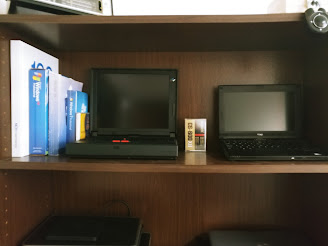
I know you’re thinking right now, what can a laptop like this actually do? The answer won’t shock you; not much. It’s long-obsolete in multiple ways and orders of magnitude slower than even a budget smartphone. But also, it’s still able to do far more than it reasonably should, like run modern versions of 64-bit Linux, something that even I didn’t think was possible when I first found it. This thing has actually been kicking around my junk heaps for years, spending most of its life as a decorative object on a shelf in my office, until I decided to actually give it a go and get my Nuggeteering on.

A brief sidebar: what is nuggeteering? Nugget engineering, using tech skills to get the absolute most out of nugget electronics. And what’s a nugget? I’ll let DankPods explain that for you. In essence though, it’s anything (electronics, cars, instruments, etc) that was never actually all that good, but was still “usable”. Sometimes that word gets stretched a bit (or extremely) thin and pulled narrow, but doing something with a laptop that shouldn’t be able to do anything is extremely, extremely fun.

Back to the Latitude 2110, or as I christened it, “NugBook”. Powering it up for the first time, hearing that rusty-old spinning idiot hard drive screech to life, and seeing the screen come to life, was magical. This thing shouldn’t do anything. I’m surprised the capacitors haven’t all either long-since leaked or gone on strike the second I connected it to power. Imagine my further surprise when I discovered that the battery was completely and totally fine. Like, 80ish-percent of its listed capacity after over a decade. That never happens, and in fact, a cooked battery is the most common discovery with any old laptop I acquire. So, with a good battery, everything seeming functional, and enough spare parts to restore just about anything, I set about reviving the NugBook and dragging it to new heights.

First thing first was getting the bastard opened up. On the bottom, I spied 4 conspicuous Philips screws. “Perfect!” I think to myself, “opening this is going to be so easy.” So I remove the 4 screws, and attempt to pry the bottom cover off. Nothing happens. I go at it with a guitar pick. Still nothing. I bust out my metal spudger used for cracking open iPods. Nope.

Turns out, this thing opens like an idiot, and the 4 screws in the bottom can be ignored for a hot minute in the disassembly.

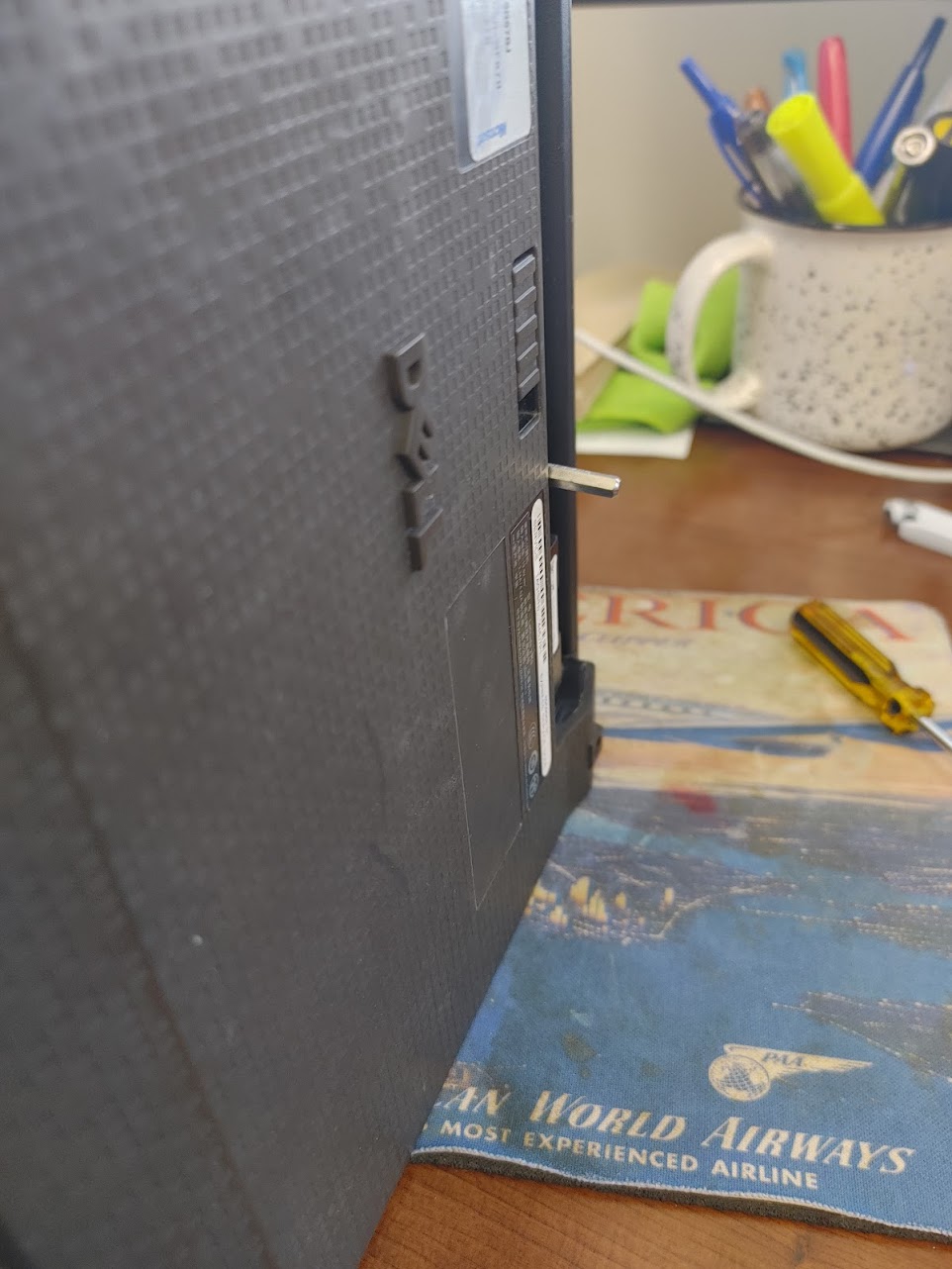
Instead, one is supposed to start by removing the battery, and then removing two hidden screws underneath it that hold the keyboard down. One then takes a long stabby thing and pokes through the screw holes to push the keyboard out. Then, gotta be careful to not pull the keyboard too hard once you have it popped, as the flip-up FFC connector is fragile. Observe:

Once the keyboard is out, note the 3 more screws underneath it. These are the ones that actually hold everything together, and need to be removed before the 4 bottom screws do anything useful. But, once these 7 final screws are out, the laptop’s bottom cover easily slides off, revealing the glorious guts inside.

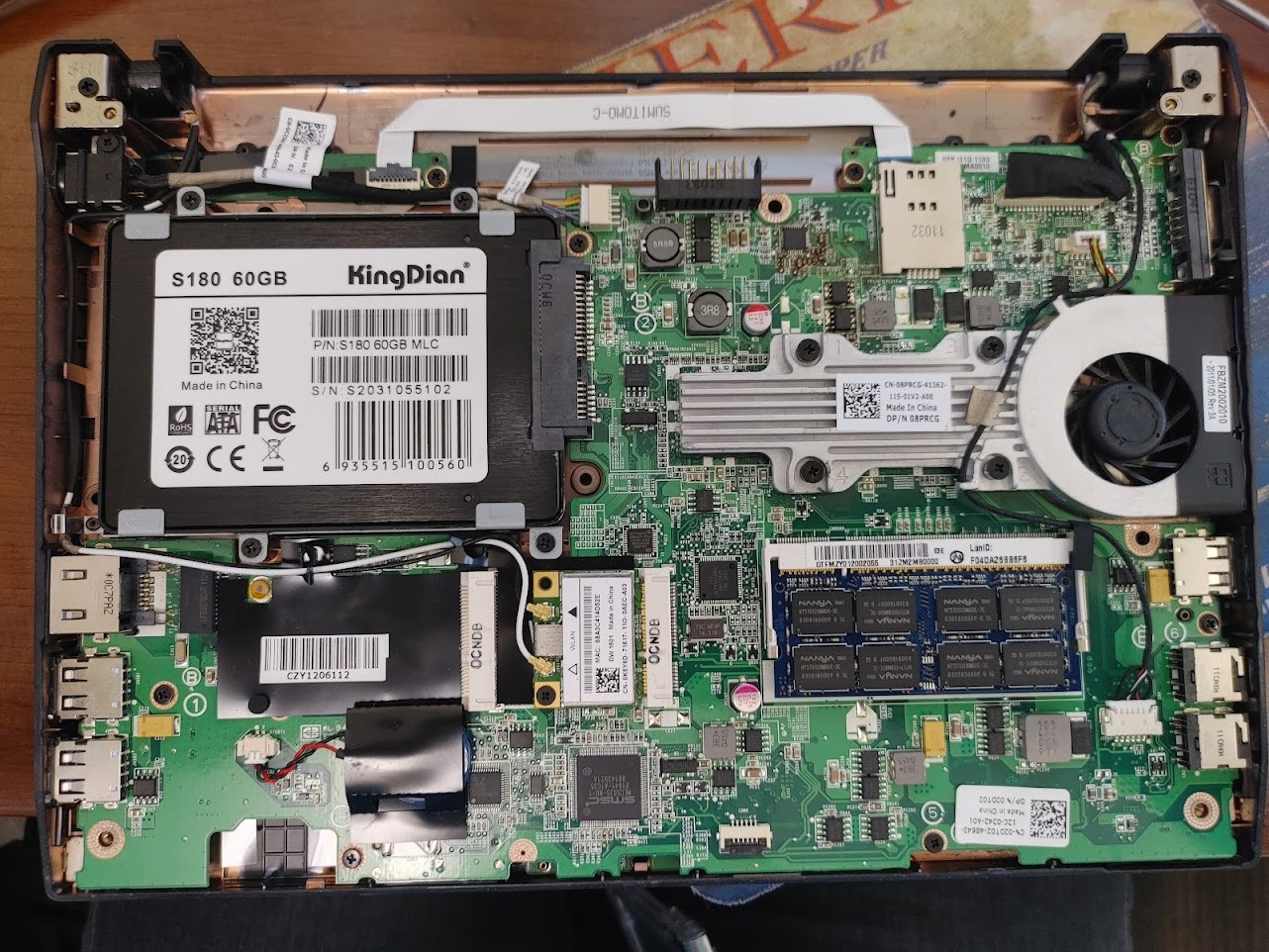
This, by the way, is the “after” photo, if you didn’t immediately notice the SSD. But, for the purposes of making this an interesting narrative, let’s just look past this as I run through what’s been done. First up, out came the spinning rust and in went a basic SATA SSD, of which I keep a stash on hand for random stuff like this, as even a cheap, bog-standard SSD will knock the pants out of any mechanical hard drive for speed and power usage, plus when I say cheap I really mean cheap. I’ve gotten multiple of these for under $10, and for some as little as $4 on eBay or in other random deals. Usually these simple ones are 60, 120, maybe 240gb, enough for an OS and some software but not so big that it feels wasted in a nugget, and cheap enough that the project expense won’t break the bank. Next up was upgrading the stock 1GB stick of DDR2 ram to 2GB, the maximum that’s supported not just by the laptop’s motherboard but by the CPU architecture itself. I also repasted the CPU, something I insist on doing every single time I open an old laptop for the first time, even though it’s not the most necessary, but because it’s technically best practice, and also feels like the right thing to do.

Hardware-wise, that’s it. We’re left with the fastest, most optimized Atom N470 netbook possible. Everything else we want to do will need to be done with software to make the most of these paltry specs.

The choice of operating system was a difficult one. While the Atom N470 is technically a 64-bit cabable CPU, it’s only just barely, to the point where a lot of modern software flat out refuses to run due to missing instruction sets. A lot of that is due in no small part to its age – it is, after all, a CPU from 2010 – but that alone doesn’t explain it as some of the Intel Core CPUs from the same era hold up far better in the current day. And here lies the unique quirks of Netbooks and Nuggeteering: Netbook CPUs don’t work the same as regular laptop CPUs. They’re cut down to run at lower voltages and lower wattages, to achieve that battery life over a comparable laptop while putting out less heat (since wattage is both the electricity consumed and the heat expelled), at the rather substantial cost of performance. There’s no one smoking gun that they remove, either, it’s a lot of corners cut and “minor” features removed which all add up to a very slow experience.

But I digress. We’re talking about operating systems. When this thing was brand new, Windows 7 was still in its first lap around the sun, XP was at peak juggernaut status, Vista was, well, Vista, and 2010 was set to be the year of the Linux Desktop for real this time. That helps us narrow down things to try installing on here. XP is always a strange giggle to fire up again, moreso given that my muscle memory of XP is more-or-less gone at this point, but that also means that dealing with fiddly laptop drivers (read: hell) in an OS that hates connecting to the internet. And in my recent experience doing some legacy shenanigans, Windows 7 is dramatically easier to get going with (thanks to some extremely dedicated nerds backporting patches), in some ways even moreso than when it was new. But I’ve done plenty with Windows 7, even running it as a primary OS either at home or at work until around the pandemic, so it’s not nostalgic so much as it’s what I think of when I think about Windows.

I guess that leaves Linux, then. And it’s not a bad choice here; the Latitude 2110 (and many of the Latitude 21XX series netbooks) offered Linux installed from the factory, usually Ubuntu. In fact, I recall several of my friends in high school rocking Ubuntu on netbooks from Acer or Asus or Toshiba back in the day, and I myself first got serious about using Linux around the same time. Linux it is, then.

Next question: which distro? No, shut up, I’m not installing Arch on a netbook… yet. I already did an Arch install on my X230. And no, not Gentoo either. I’m having fun with old laptops, not torturing myself. The choices are going to be restricted to the Greater Deb-untu ecosystem. Debian, Ubuntu, Linux Mint, etc. These have the right combination of easy-enough to install, with light desktop environments available out of the box, strong support for random hardware (especially wireless networking!), and plenty of documentation online for solving any weird problems that pop up.

Narrowing things further is the desktop environment, and out of the gate, I’m ruling out my beloved KDE because it’s just not going to be happy with only 2gb of RAM. GNOME is out too not just because it’s hungry for RAM now too, but also because current GNOME sucks. This project is likely going to require something even lighter than the normal lighter options, where stock XFCE might be pushing things.

My first attempt at booting a live installer is Debian XFCE to see what happens, and it’s slow. It takes more than 10 minutes to finish booting into the live environment. This is that 2GB of RAM crying out in pain while this silicon Frito converts electrons into lukewarm keyboard keys. This thing is not happy. I hard reboot to the Debian Installer to try and conserve resources, but it’s still a challenge. I’m running off ethernet in my old office (a windowless former conference room lovingly christened “The Bunker”) to try and get an OS installed as easily as possible, but it’s a slideshow. I get to the actual meat of the installer, give it literally hours to try and finish, but when I leave to catch the bus to my series of 3 trains home at 5:30, it’s still running. I leave for the weekend, and on Monday morning, I discover that the NugBook has hijacked every DHCP lease and IP address for the building, knocking everyone offline in the process. Oops!

After helping m’colleague un-fuck the DHCP problem I caused, I try firing up the installed OS, and find that surprisingly, it’s OK. It’s not as bad as I expected it to be, it’s usable, it gets online, but the idle RAM usage is high and the desktop environment lags too much to not annoy me. I’m used to slow tech. I love slow tech. I love slow tech more than I reasonably should, and evangelize it to others as I think it’s legitimately better to use. But this copy of Debian with XFCE is not doing it for me. Too much of a headache, it’s not fun. Time to find something better.

Another quick tangent, on why it’s good to use slow computers: Slow computers build patience and character. Instant gratification, whether through shopping on Amazon Prime, streaming media with Netflix or whatever, high speed mobile data connectivity, any of it, it causes impatience and breaks the brain’s ability to cope with boredom. Having to wait for your computer to do things, whether its starting up or opening Discord, this is good. Same reason why I rarely use instant streaming. I’d rather acquire and organize any TV or movies or music I want, with the deliberateness and consideration that it takes, than click a button and stream anything immediately. Faster isn’t always better, and instant is rarely good. If you don’t believe me, take a break from immediacy for a week, and see how much more you appreciate everything you do. If you’re really feeling bold, swap a laptop for your smartphone when you’re doing things around the house. Having to take the time to get a laptop out and open and turned on, you’ll spend far more time doing something fulfilling or meaningful, and less time doomscrolling. Trust me. We used to live like this, and we lived happier. I’m already happier putting my phone down and rocking nugget laptops instead.

Back to the OS hunt, and for this, I turn to one of the best websites for anyone looking to play around with Linux: DistroWatch.com. This place has been around seemingly forever, it’s filled with information on nearly every Linux distribution to ever exist, and has – by far – the best search function for finding the right distro, even including BSD, Solaris, and other even weirder things! Using this happy little tool, I punch in OS Type = Linux and Category = Netbooks, and mash go. Out pops five results: Puppy Linux, Bodhi Linux, Lubuntu, wattOS, and Runtu. Puppy and Lubuntu, I’m already well familiar with. Puppy is fantastic and delightful. It runs on actual garbage (I’ve done it!), can exist entirely from a live USB without requiring an install, and is the fastest and snappiest OS I’ve ever used, ever. It’s extremely limited in what it can do for a permanent OS, but for what it is, it’s amazing. Not super suitable for this project, but thought I should mention. Lubuntu is a flavour of Ubuntu using the LXQt desktop environment, and would be extremely promising, if not for a grudge I have with Ubuntu’s mothership. If this post weren’t already sufficiently rambly and verbose, I’d dive down that tangent, but that one can be saved for a latter day. That said, the grudge also rules out Runtu (which is also primarily aimed at Russian language support anyway), leaving us with two things to try: Bodhi Linux and wattOS.

Bodhi gets first crack, and I go through my normal process of downloading the ISO, dropping it on a bootable USB, firing it up, and… nothing. The thing gets stuck perpetually loading. I try again with different versions and different ISOs from the website and the best I get is an extremely glitchy live experience that seems to not properly recognize the laptop bits of the NugBook, namely the trackpad. Next!

wattOS is interesting. At its core, it’s a stripped down version of good ol’ Debian running LXDE desktop, designed to be as efficient and simple and fast as possible. And it is! Not only does it boot pretty quickly, it feels pretty good to use! Since it’s Debian based, that means bodging in random nonsense works just as it would in Debian or Ubuntu or my good friend KDE Neon, so signs are promising. And yet. I start using it more heavily, watch the RAM usage climb, and start to think “we can go lighter!”. So, back to DistroWatch. This time, instead of Netbook specific, we’re going for Old Computer specific.

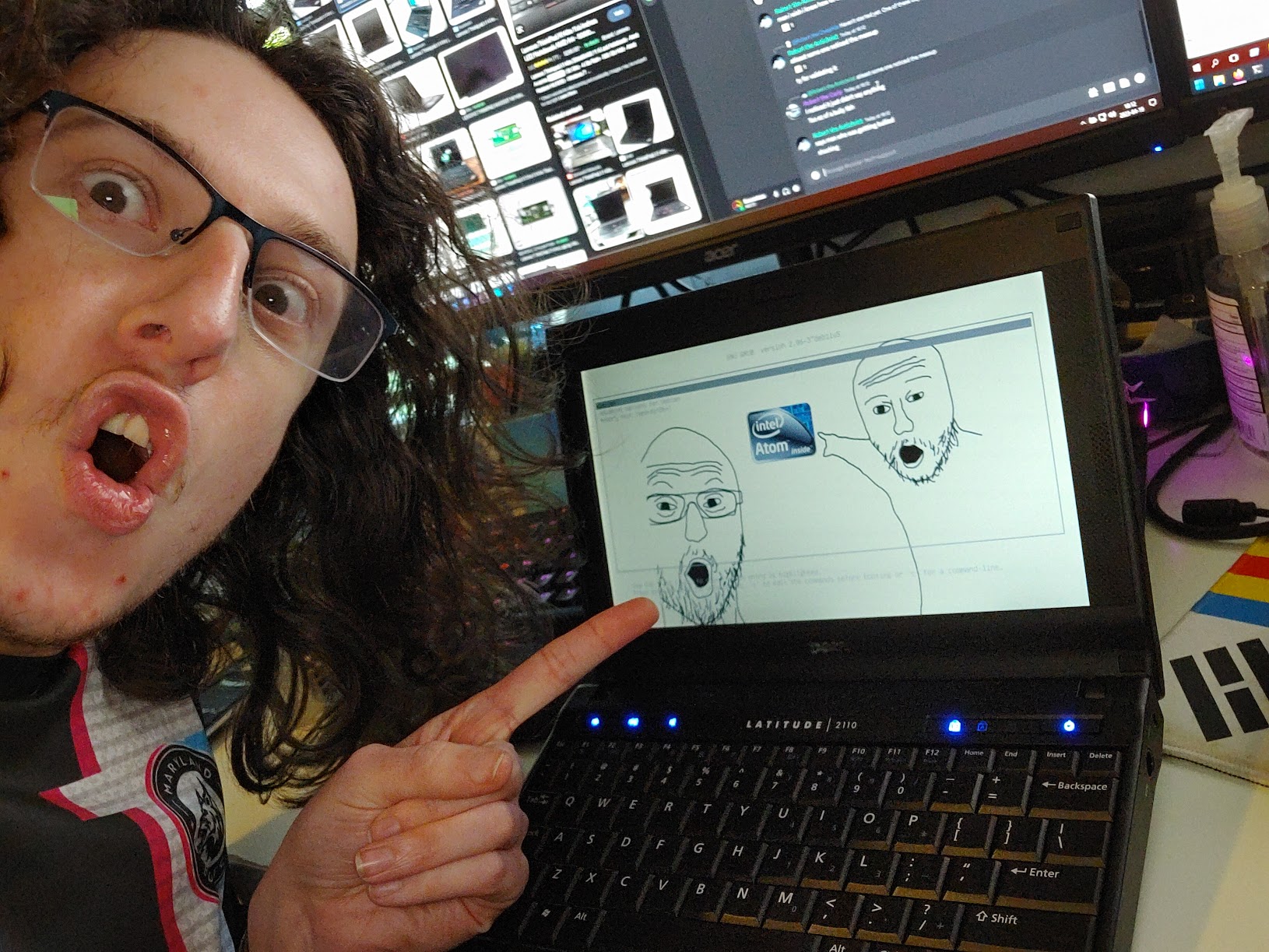
Right away, I find antiX, a distribution that prides itself on running on Pentium III machines from the 1990s with 256mb of RAM. Perfect. antiX achieves this by using extremely streamlined window managers rather than a full desktop, allowing for a lot of mix-and-match configuration to get it dialed in. I fire it up, and sure enough, it’s great, it’s actually fast on the NugBook, and this laptop has become pleasant to use. It’s still slow browsing the web (or more accurately, attempting to), and trying to get Discord to work on it led to me getting API rate limited, but it does in fact work. Last thing to do is to make it mine with a bit of customization.

Perfection.

New year, new project: ThinkPad T530

I’ve always been a fan of ThinkPads, dating back to growing up and seeing some of the late-90s/early-00s models around my Dad’s IT colleagues. They’re utilitarian in a way that reminds me of 1980s consumer electronics, like hi-fi components, and I’ve always been nostalgic for that Sony/Kenwood sort of look.

I’ve actually ‘owned’ two previous old ThinkPads, actually: an extraordinarily thick, circa-1997 380D with an original generation Pentium CPU, and a relatively-modern-ish T500, both pulled out of the e-waste garbage at work. Given that neither will really run a modern OS all that happily (and one doesn’t support Windows versions after like, Windows 98SE), they’re fun novelties but not really practical to use regularly.

ThinkPad 380D. Somehow heavier than it looks.

So instead, after getting more sold on ThinkPads and the tinkering possibilities by my girlfriend, I went on eBay and found a T530. It was in solid physical shape, firmly middle-of-the-range for what Lenovo offered, and at a decent price. I threw out a bid, and ended up winning it for $127.50 of my hard-earned dollars, with an additional $28.80 for package and posting from Pennsylvania and $12.50 for the alphabet.

It arrived an understandable amount of time later, as listed, and I was very pleased. Spec-wise, out of the box, it was equipped with the following:

  • CPU: i7-3320M (dual core Ivy Bridge)
  • RAM: 4GB DDR3L-1600 (OEM)
  • SSD: 120GB SATA ADATA SU800
  • 1600×900 15.6″ LCD
  • Wifi: Anatel 1×1 B/G/N Wireless (OEM)
  • ODD: CD/DVD Burner
  • Original (dead) battery
Pre-tinkering, from the original eBay listing. (biggitybiggims on eBay)

To be honest, I bought it mostly for the chassis and motherboard since those are the hardest/most annoying to source and swap. Getting the 1600×900 screen instead of the (substantially worse) 1366×768 panel was also nice. But pretty much everything else was getting pulled before long.

So, after unpacking and firing it up for the first time, I ran a few tests to make sure everything was working as expected, and then was hand-held through how a tool called 1vyra1n works. It’s basically a BIOS ‘jailbreak’ that grants access to every possible feature available, not just the ones Lenovo wants end users to have. Neat!

Then it was time for upgrades.

First came a SSD swap, pulling out the SATA drive and sticking a 256GB Samsung PM871 mSATA drive in one of the open mini PCIe slot. Out came the basic OEM ram, and in went a 2x8GB kit of properly nice Crucial Ballistix Sport memory. Not just 4x the capacity, but running at a higher clock speed with lower latency. Nice.

Next came a proper OS. This is a Lenovo ThinkPad, and while it was shipped with Windows, had a Windows sticker on the bottom, and has the Windows logo on the keyboard, you don’t run Windows on a ThinkPad. That’s not what they’re for, and if I wanted to run Windows on a laptop, I already have a Surface Pro with Windows 10.

No, this thing got Linux, and in my specific case, it got KDE Neon. It’s basically Ubuntu with the latest and greatest KDE desktop environment and programs. I’ve been a KDE fan forever, and I like getting the shiny new KDE features, so rock on. And since it’s built off Ubuntu (which is already built off of Debian), it’ll run damn near anything that’s been ported to Linux. It also lets me get all fun with the theming and customizations, which of course I did immediately.

Happiness is a customized KDE desktop.

But all of those are still fairly basic, routine upgrades. Those aren’t weird.

The real fun began with the CPU upgrade. Now, one could just go look at the CPUs the laptop shipped with, find the top-tier chip, and buy it off eBay. One could do that and have a very normal, reliable, consistent experience. But that’s extremely boring. Instead, I went on AliExpress and ordered an Intel engineering sample of the i7-3720QM. The finished, actually-released-by-Intel 3720QM is at least twice the power of the original chip, mainly due to the fact that it has four cores, not two. But the one I have is technically Intel’s confidential property from when the 3720QM was still in development. I don’t think they particularly mind that I have it now, given that the final product was publicly released 9 years ago and has long since been discontinued, but it might technically have been stolen property-adjacent. Also it’s not fully guaranteed to work the same as the final product given that it’s a testing sample made while the CPU was in development. But really, that’s a far better story and far more fun.

CPU arrived one standard AliExpress wait later, and it worked exactly as advertised by the vendor in China. Neat!

Next came a few touch-ups to deal with a few of the issues any second-plus-hand laptop would have. The battery was the original battery it came with, and was in bad shape as any 9-year-old laptop battery likely is. Amazon to the rescue with a reasonably-priced equivalent. The laptop was also missing two of its rubber feet and the trackpad sticker was worn out, which again were easily handled thanks to Mr. Bezos’ Rube Goldberg Machine of Suffering.

Next to go was the wifi card, which was fine but basic, the lowest-tier OEM part Lenovo ever used. Instead, I went for an Atheros AR5B22 card. It’s the same spec of B/G/N wifi, but uses fully FOSS firmware (meaning no need for proprietary blobs to work in Linux) and runs a good 5-10% faster than the original card. For $10 or less, it’s totally worth it.

The most recent major component that needed replacing was the keyboard. The one it shipped with was in rough shape. It was bent, the bezel was falling off, and the keys had their coating almost completely gone, making them feel slimy and unpleasant. Any random 30-series ThinkPad keyboard is compatible, and getting a high-grade USA layout keyboard from eBay is quick, easy, and cheap, but again, that’s boring.

No, it’s far more fun to import a backlit dual English/Korean keyboard from AliExpress. Which, of course, I did.

One more standard AliExpress wait later, and the Meme ThinkPad is nearing completion.

There are a few things left I’d like to work on. I have a random 500GB 7200rpm hard drive in here for additional storage which I’d really like to replace with something faster (either hybrid SSHD or SSD) and bigger (1-3TB would be nice), but the storage market is fucked because of Chia Coin mining. So that’s on hold until the dumber side of stupid crypto hype dies down. Instead, I’m going for a screen upgrade. For about $100, I can upgrade to a full 1080p panel with better dynamic range and marginally newer and nicer technology. Since $100 doesn’t go anywhere nearly as far as it should in the storage market at present, that’s a much better quality of life upgrade for the money. Plus, KDE supports proper fractional scaling so I can dick with those settings and upscale a bit. Perfect!

In the end, I’ve ended up with a $150 laptop with about $250 worth of parts in it that performs about as well, CPU-wise, as my current personal Surface Pro 6. Yes, I could have probably just bought a faster laptop for the money, but again, that’s boring and pedestrian and not fun. It’s far more fun to have a project computer that can get upgraded piece by piece into something nicer than it was when it was new, and having that in a laptop is actually practical.

So instead of having regrets, I have the opposite: a literally brand new ThinkPad X230. It’s the T530’s little brother, cramming much of the same features (sans optical drive) into a tiny little laptop. It’s delightful, and the ThinkPad nerds at large have already modded it to hell and back. I can put in ridiculously high-end screens and reworked motherboards and make it almost as fast as its full size sibling. But those parts are more expensive and trickier to get ordered, and they require far more work to install. So for now, I’m cutting my teeth with this one.

Don’t talk to me or my son ever again.

This thing has actually been in use more often than my Surface since I got it, and I love using it. I have my graphic design tools installed, I have Bitwig for working with audio and music projects, and OBS for some video capture. It’s not quite powerful enough to handle editing, but I have both a Surface Pro and a proper desktop that can handle that easily. 90% of what I want to do on a computer can be done happily on here, and it’s just more fun to be running a modded Linux laptop than something stock.

New on SocTakes: Illustrated history of MLS crests: Part II

Hello, Soc Takes crowd. It’s been a while, I know. The pandemic hit, sports got cancelled and my day job suddenly kicked into overtime. But now, the world is looking a bit more normal, and my soapbox needed a good dusting.

You may remember that last January, I wrote a post that was supposed to be the first post in a series on the history of MLS branding. Well, it was, and I guess now still is.

But I digress.

Since Part I was released last January (how time flies!), two more MLS teams have since rebranded, and don’t worry, I’ll definitely be getting to those. I have many, many thoughts on the current state of Montreal and Columbus. However, that’s a future post for future John to forget about and put off for an exorbitant amount of time.

This time, we’ll be looking at the teams that joined MLS between 1997 and 2010, the first major “expansion era” of the league.

Chicago Fire SC/FC

history of MLS crests
1997-2014

Chicago joined MLS as the first announced expansion team, to begin play during the 1998 season. Their inaugural badge got things very, very right. The shape is derived from that of the Saint Florian Cross, the symbol of the patron saint of firefighters, the 6 points are taken from the flag of Chicago, and the colors fit both the theme of the brand and those of the city itself. Honestly, it’s a fantastic logo, and it stuck around for a long time.

2015-2019

Chicago tweaked the team’s color palette for 2015, using slightly more muted shades of blue and red, while leaving the rest of the crest’s appearance unchanged. Honestly, it’s so subtle most people never even noticed it, and that’s some of the best reception a palette revision can have. It still looks clean, just a bit easier to work with across different forms of media, and maybe a bit easier on the eyes.

2020-Present

And then there’s this.

This is why I started this entire project to begin with. Ahead of the 2020 season, the Fire had announced a laundry list of changes that, overall, made the fans extremely happy. Joe Mansueto bought out Andrew Hauptman to take over the team, and then bought out the absurd lease at SeatGeek Stadium to allow the team to return to Soldier Field. The front office was overhauled, the team got a new coach, and things were looking brighter than they had in years. But then the team revealed the new branding. As previously described, the reaction was overtly hostile, and despite being in use for less than a full season’s worth of games, they’re already working on changing it again. Yikes.

But also, yes please, go back.

Miami Fusion FC

history of MLS crests
1998-2001

Remember when MLS had a team in Miami? What’s that, they do again? Yeah? Oh, well, remember the one they used to have?

Yep, the Miami Fusion were MLS’s shortest-lived (so far) team, playing for just 4 seasons out of Fort Lauderdale’s Lockhart Stadium, which is now home to the new Miami MLS team, Inter Miami CF. The irony of none of the Miami teams ever playing a game in Miami itself is lost on no one. Anyway. This badge featured a sunburst-inspired design and a very 90s cyberpunk-ish typeface that definitely didn’t look dated within 5 years. But, with MLS folding both Floridian clubs after the 2001 season, it didn’t even last that long.

CD Chivas USA

2005

Hey, remember the “remember the thing” joke from the Miami section about a defunct team playing in a market and with a similar role to a new team that’s really popular with all those celebrities?

Before there was LAFC, the other Los Angeles team role was filled by Chivas USA, named and branded to match its parent club, CD Guadalajara, better known as Chivas. The idea was to grow the Chivas brands on both sides of the boarder, while hopefully drawing well among the Mexican-American community in Los Angeles.

history of MLS crests
2006-2014

Chivas USA updated their palette in 2006, and for a while, Chivas USA actually out-performed the Galaxy and the cooperation between the Mexican and American clubs actually seemed to be working out. But everything gradually went completely pear-shaped, and culminated in a series of protests (including that time /r/MLS crowdfunded a plane to fly a LED banner above the stadium), and MLS announced in 2014 that they had seized control of the franchise, and sold the rights for a second Los Angeles team to the group that would later form LAFC.

Real Salt Lake

2004-2005

Announced alongside Chivas USA was Real Salt Lake, with MLS expanding to Utah. The brand saw its share of mockery early (what’s so “real” about Salt Lake?), but the logo in general was sufficient, if a bit mid-2000s direct. The club leaned into the crown imagery and the claret-and-cobalt color palette, and quickly built a strong and dedicated following.

history of MLS crests
2006-2009

For 2006, the club slightly tweaked the color palette (a recurring theme, yes), to get a bluer blue, and a softer gold. The change worked well, and the palette would continue after the logo was retired. Wearing this crest, Real Salt Lake won MLS Cup 2009.

2010-Present

In 2010, Real Salt Lake began dropping the club’s full name in favor of the RSL abbreviation, and with that, removed the full name from the logo, resulting in the modern yet familiar and oh-so-clean crest. The color palette was also tweaked a bit, and continues to see some light fluctuations year-to-year, but RSL’s branding has been consistent ever since, even applying to their Real Monarchs USL team, and formerly to the Utah Pride in NWSL.

Houston Dynamo

history of MLS crests
2005 (unused)

“Hey, everyone, look! John’s gonna mention the Earthquakes relocation again!”

Yes, yes I am. The Houston Dynamo weren’t founded in 2006, because there was nothing new to create. The team as a whole was moved from San Jose, CA, joining a long line of Californians moving to Texas because reasons. Originally, the team was to be known as Houston 1836, referring to the year of the city’s founding. However, because of the year coincidentally being when Texas declared independence from Mexico and fought a war for it (remember the Alamo?), there was a bit of controversy, leading to the name being scrapped very early on.

2006-2020

The team was instead named Houston Dynamo, referring to Houston’s long-standing ties to the energy industry, the defunct Houston Dynamos of the original USL (no relation) and Lone Star Soccer Alliance, and a nod to the Eastern European Dynamo sports clubs. Honestly, as much as I hate the team, its origins, and the city it calls home, it’s a clever brand. The logo is nothing particularly special, but it works, and feels sufficiently Houston that the team made it their own in due time.

2021-Present

Ahead of the 2021 season, the Dynamo announced a rebrand of their own, adding to the growing list of logo changes in recent years. In is a new hexagonal crest and interwoven letter mark, with inspiration drawn from the original 6 wards of Houston and the organization’s “founding” in 2006. Accompanying it is a corresponding hexagonal crest for their NWSL side, the Houston Dash. Honestly, they’re not bad. Black and orange are striking, and the Dynamo had been phasing out their use of blue more and more in recent years. Nothing spectacular, but it definitely works, and it’s honestly an improvement in my eyes.

Toronto FC

history of MLS crests
2006-2009

MLS announced it was taking off to the great white north in 2005, with Maple Leaf Sports and Entertainment bringing MLS to Toronto. The Toronto FC name and crest were revealed in 2006, and really nailed it out of the gate. The crest is undeniably Canadian, yet distinctly Toronto, fitting in perfectly alongside the city flag and crest.

2010-Present

For 2010, Toronto tweaked the color scheme, going for a darker shade of red. Nothing else has changed since, because frankly, nothing needs to. With this crest, Toronto grew into one of the strongest teams in MLS, winning a Canadian treble in 2017, and becoming one of the most recognizable brands in MLS in the process.

Seattle Sounders FC

2008-Present

Seattle was announced as an expansion team in 2007, and in line with every major Seattle soccer team dating back to the 1970s, they stuck with the Sounders name. The latest iteration of the Sounders boasts the strongest badge yet, featuring a spectacular silhouette of the Space Needle, and given the strength and quality of the crest, hasn’t been tweaked since. The blue, green, and white date back to the original team’s founding in 1974.

Philadelphia Union

2009-2017

Philadelphia’s team was announced in 2008, and the Union brand and crest were revealed in the Spring of 2009. The branding and crest are tied in heavily to Philadelphia’s role in early American history, with strong nods to the early Continental Army uniforms and Ben Franklin’s Join or Die cartoon. Another team that got things right early.

history of MLS crests
2018-Present

In 2018, the Union decided their badge needed to be brighter, shinier, a little simpler, shinier, and overall, just a lot brighter and shinier. The muted dark gold was replaced with a bright-and-shiny gradient, and the backdrop behind the shield was changed to just vertical stripes. Not entirely sure why they did this, to be honest, but fine, OK, it’s not bad. For whatever reason, this color palette never appealed to me as much as the original. It’s probably the very 2000s looking gradient. That said, though, the club has taken to using variant colors quite a lot, and some of their monochromatic variants have been sharp.

Vancouver Whitecaps FC

history of MLS crests
2010-Present

Vancouver joined MLS for the 2011 season, and like fellow Cascadian heritage brand Seattle, kept the name and color the city’s teams had used for decades. Also like Seattle, they nailed it with their crest out of the gate, featuring a striking symmetrical design of whitecapped mountains and ocean surf. It encapsulates Vancouver oh so well, and still looks just as amazing as it did when it was unveiled. They’ve never changed a thing either, because again, they haven’t needed to.

Portland Timbers

history of MLS crests
2011 (Unused)

Joining the trifecta of Cascadian teams, Portland was announced as an MLS expansion franchise just two days after Vancouver. And when the team revealed the logo above, the reaction was mixed. Quite frankly, I see why. The team had been known for simple, clean, and classic crests, and this one is just far too busy and 2000s. It’s jagged, the contrast feels a bit lurid, and it broke with a long established tradition.

2011-2015

So they changed it before the team even began play, and what an improvement it made. The unnecessary flourishes and jagged edges have been cleaned up, the color contrast is more pleasant, and it feels like there’s so much more room for the design to breathe. It wasn’t perfect, but it definitely made a lot of the fans happy.

2016-2018

Continuing to bring the MLS-era crest more in line with the team’s history, the Timbers dropped all text from the logo and extended the treetop lines to the edges. For such a subtle tweak, it worked so well, and made what was already a great, clean design even cleaner.

history of MLS crests
2019-Present

And finally, in 2019, the club swapped the yellow for classic Timbers gold, and darkened the green to more of a forest green shade, giving us the badge they continue using to this day. It’s among the best in MLS, and draws praise from soccer fans all over the world.

Montreal Impact/CF Montreal

2012-???

Montreal joined MLS from the revived NASL for the 2012 season, updating the Impact branding for their latest iteration. The crest just screams Quebecois to me, from the fleur-de-lis, the use of blue and white, and of course, the French motto “tous por gagner” – all for victory. Despite the slightly 2000s gradients, the crest was sharp, modern, and fit both the team and city perfectly.

history of MLS crests
???-2020

At some point between 2014 and 2020, Montreal began phasing out their original crest for a simplified, flatter design. Gone were the gradients and the motto, in were slightly muted colors. It worked just as well as the original, and retained the majority of everything that worked with the original.

history of MLS crests
2021-Present

Unfortunately, all good things came to an end for the 2021 season. The Impact changed their name to Club de Foot Montreal, which not only sounds stupid in English and in Quebecois French, but is also objectively worse. The distinct and unique crest was replaced with yet another roundel, bringing even more unnecessary homogeneity to the league, and a color palette already on the verge of being too muted now features even less contrast. Reaction was, in line with other recent rebrands, hostile, but it doesn’t seem like the club has any plans to undo the changes.


This concludes the intended portion of Part II of the illustrated history, but since the posting of Part I so long ago, one of the previously included teams has rebranded. So instead of wrapping up here, instead…

It’s time to talk about Columbus.

I attribute precisely three positive changes to the Columbus Crew under Anthony Precourt’s operation: the hiring of Gregg Berhalter as head coach/sporting director, the rebrand, and the sale to the current ownership post-#SaveTheCrew.

The logo unveiled in the Fall of 2014 was excellent. It still is, and the jerseys worn by the team still use it. They wore it as they won MLS Cup 2020, and the club looked to be set for success under new management. And then this happened.

I have several questions, and they’re all “why?” There’s no need for this, and every single person consulted by management agrees. We’ve seen some vitriol against rebrands in the past few years, from some annoyed Houston fans, to angry Impact fans, to the outrage over the Chicago Fire rebrand, but none of it compares to the abject fury among Columbus Crew fans at this. It’s entirely justified.

The team wants to build a globally recognizable brand that will become a historic name, and yet they’ve sacrificed a historic brand that had already built serious brand recognition in the process. All the goodwill built up by the Haslams and Dr. Pete during the #SaveTheCrew saga is at serious risk of evaporating. The team has already put out vague, corporate-speak apologies, and I’m betting that the pressure might be strong enough to actually get them to join Chicago in rolling back a rebrand. Add in the risk of legal issues (identified by fans consulted by the team back in January!) as a long-standing youth soccer team in Columbus, Nebraska, has been using the name for decades, and this rebrand seems doomed to failure from the start.

If MLS and its investors had one lesson to learn from the #SaveTheCrew movement, it’s that soccer fans in Columbus are not to be taken lightly.

This concludes, for real this time, Part II of the illustrated history of MLS crests. Part III will be a quick run through the brands adopted by the latest expansion teams. While there isn’t much to talk about since none of those teams have rebranded, there’s still a lot of interesting history of soccer brands in those markets that I’ll cover.

As always, thanks to Chris Creamer’s Sports Logos for the vast majority of the images used here. I love that site, and spend literally hours scrolling through the various logos and brands used by teams across the world over the years.

Hopefully, the next installment will take less than 16 months to get uploaded.

Follow John on Twitter: @JohnMLTX.

Support Soc Takes on Patreon for access to exclusive content and supporter benefits. Click here to become a patron today.

The post Illustrated history of MLS crests: Part II appeared first on Soc Takes.

from Soc Takes https://ift.tt/3uOs5O9
via IFTTT

New on SocTakes: USL Championship format yields early group standings

USL soccer will make its triumphant return, hopefully, beginning July 11 with a regionalized group system and a reduced schedule. Each team has been divided among eight groups, four for each conference, and will primarily be playing against teams in its own group. Each team will play up to 12 games against members of its group, with up to an additional four games against teams from outside the group but geographically related.

So, with that out of the way, let’s look at the groups.

Western Conference

Group A

  • Portland Timbers 2
  • Reno 1868 FC
  • Sacramento Republic FC
  • Tacoma Defiance

Group B

  • LA Galaxy II
  • Las Vegas Lights FC
  • Orange County SC
  • Phoenix Rising FC
  • San Diego Loyal SC

Group C

  • Colorado Springs Switchbacks FC
  • El Paso Locomotive FC
  • New Mexico United
  • Real Monarchs SLC

Group D

  • Austin Bold FC
  • OKC Energy FC
  • Rio Grande Valley FC
  • San Antonio FC
  • FC Tulsa

Eastern Conference

Group E

  • Indy Eleven
  • Louisville City FC
  • Saint Louis FC
  • Sporting Kansas City II

Group F

  • Hartford Athletic
  • Loudoun United FC
  • New York Red Bulls II
  • Philadelphia Union II
  • Pittsburgh Riverhounds SC

Group G

  • Birmingham Legion FC
  • Charlotte Independence
  • Memphis 901 FC
  • North Carolina FC

Group H

  • Atlanta United 2
  • Charleston Battery
  • The Miami FC
  • Tampa Bay Rowdies

Group standings

In the intro segment, you’ll notice the use of “up to” for the number of games. That’s because every team but Birmingham and Hartford have already played once, with San Diego and Tacoma playing twice before the season was postponed. As a result, those matches will either count as an in-group or out-of-group result for the new schedule. That means we actually already have some group standings.

I’m not going to flood this already lengthy article with embedded spreadsheets of every single group’s standings. I will, however, make a nice little table that includes the relevant information.

group standings
Games played against group and non-group opponents

This table shows which games played were against teams in the group (OPP) and other teams outside the group (OTH). Games highlighted in green were wins, yellow draws and red losses. From this, we can see that Groups A, B, F and H have already played one group game. Meanwhile, the majority of teams will only have three additional games against other opponents.

After the completion of the group stage, the top two teams in each group will then advance to a single-elimination bracket, reducing the playoffs from their originally scheduled 10 teams with a play-in round to eight per conference, essentially reverting to the playoff format last used in 2008.

The USL Championship format helps to reduce travel, but interestingly, they’re not going for the same single-site bubbles that MLS and the NWSL are planning, and given the recent spike in COVID-19 cases, could prove to be a more ambitious and potentially problematic system.

Regardless, the season is set to resume on the 11th, with announcements of group schedules expected this week. Stay tuned for more details as they arrive.

Follow John on Twitter: @JohnMLTX.

Support Soc Takes on Patreon for access to exclusive content and supporter benefits. Click here to become a patron today.

The post USL Championship format yields early group standings appeared first on Soc Takes.

from Soc Takes https://ift.tt/3dNQ1HO
via IFTTT

New on SocTakes: K League explained

k league

Image credit: K League 1

Since the United States and Canada are still under lockdown for the foreseeable future (and no, these soft reopenings in a few states aren’t a sign of things getting better, and are likely to cause even more problems), it’s been quiet around here. Even my in-progress “updating the pyramid for 2020” post has been shelved until we figure out what the hell soccer will look like come August.

So, with all that said, let’s talk about a league that I love that will actually start their season this week, the K League.

If you’re not as invested in Korean pop culture as either I or my colleague Colton Coreschi are, you might not be familiar with South Korea’s national soccer league. Here’s everything you’ll need to know about the K League, its teams, and how to watch.

THE LEAGUE

The K League is technically two linked leagues forming the first and second tiers of the South Korean pyramid. The league was originally founded as a five-team professional competition back in 1983, reorganizing the largely semi-pro/amateur league featuring company-owned-and-operated teams.

The league went fully professional for the 1987 season, shrinking back from a high of eight clubs in 1984 and 1985 back to just five, but by 1995 had regrown to once again reach eight member clubs. Since then, the league has continued to gradually expand and grow, reaching 10 teams in 1997, 12 in 2003 and its peak of 16 teams by 2011.

Late in 2011, the Korea Football Association announced plans to launch a national second-division league for 2013, complete with promotion and relegation beginning at the end of the 2012 season. Teams applied for spots in the new second division K League Challenge with six granted entry, while the top flight was renamed the K League Classic.

For the 2012 and 2013 seasons, two additional teams would be relegated from the first tier in an effort to balance the two leagues and limit each to 12 clubs and evaluate the viability of the six recently admitted teams. Following some financial struggles on the part of semi-pro teams making the jump, the decision was made not to integrate the semi-professional levels with the K League’s promotion and relegation structure.

For the 2018 season, the leagues were renamed to eliminate the Classic/Challenge confusion, with the top tier becoming K League 1 and the second K League 2. Further down the pyramid, ahead of the 2020 season, the various semi-pro and amateur leagues were reorganized and renamed, forming the K3 through K7 Leagues above the regional amateur competitions. Promotion and relegation was also implemented between the K3 League and K4 League, and from K5 down to K7 — all very structured and logical.

Currently, there are still 12 teams in K League 1, while K League 2 has remained steady at 10 teams since 2017. In K League 1, each team normally plays a 38-game unbalanced season featuring three games against each team plus an additional split-table final five games, while the K League 2 normally features a simple 36-game balanced schedule with four games against every team.

The top team in K League 2 earns guaranteed promotion, while the bottom team in K League 1 is relegated. The next three best teams in K League 2 then hold a distinctively Korean climbing-the-ladder playoff. Third and fourth place have a two-game series with the winner advancing to face second place. Following another two-game series, the winner advances to face the 11th-place team in K League 1. The winner of that two-game series gets the spot.

In South Korea, much like in the United States, soccer isn’t the biggest game in town, and the country is firmly a baseball nation. K League attendances look similar to those in MLS or the USL, and players in the top flight earn wages comparable to veteran MLS talent in the $150,000-$200,000 territory.

One more note before we dive into the 22 teams: in Asia, particularly Korea and Japan, it’s common for a sports team’s name to be based more on the corporate owners or sponsors with regional indicators given secondary importance. With that, onto the clubs.

THE CLUBS

For this, since there’s a lot, I’ll be running quickly through each club and its history, in alphabetical order, starting with League 1.

K League 1

Busan IPark

Busan IPark is one of the three remaining teams from the original five back in 1983, and with that comes a history of success, although following the collapse of Daewoo in 1999, the club has struggled. The club was bought by IPark Construction in 2000, which later merged into HDC Group, who haven’t been as willing to spend money as Daewoo was previously. This decline culminated in Busan’s relegation in the 2015 season, followed by three-consecutive failed runs in the promotion playoffs. Last year, Busan put together one of its strongest campaigns in recent years, finished second, and beat Gyeongnam FC 2-0 over two legs to win promotion back to the top flight.

Daegu FC

Daegu FC is one of the recent success stories of a small community club turning things around. After years of lower table finishes from 2003 through 2012, the club was relegated in 2013. In 2016, they put together an incredible season to finish second and were promoted as the best eligible team in the table. Since then, attendance has been climbing, the club has improved its position each of the past three seasons, and they won their first trophy in 2018. They also routinely sell out their new, more intimate stadium. As a community-owned team, the mayor of Daegu serves as chairman with the local populace able to buy in as members. They’re no longer the only government-owned team, but they were the first.

Gangwon FC

Gangwon FC is the first of the “country” teams, playing in the rural and sparsely populated Gangwon Province. Owned by the provincial government, the team usually falls in the bottom half of budgets with one of the smallest markets in Korean sports. Despite early struggles and a relegation in 2013, the club has been back in the top flight since 2017 and has been a reliable mid-table team ever since. Gangwon has one of the smaller fan bases in the league, but they’re fiercely loyal, taking a lot of pride in their rural provincial identity.

Gwangju FC

Gwangju FC has been a quintessential yo-yo club since their debut in 2011. They were relegated in 2012, promoted in 2014, relegated again in 2017, and just recently promoted back after winning the 2019 K League 2 title. So far, their best top-flight finish is eighth, back in 2016. After cycling through five managers across their first seven seasons, former international Park Jin-sub has brought some much-needed stability to Gwangju, and things are finally looking up for the club.

Incheon United FC

Incheon United is an interesting team, known more for a series of controversies, strange managerial decisions and last-minute survival runs than any major results. After finishing a disastrous 12th out of 13 in their first season, the club pulled off a dramatic turnaround under caretaker-turned-full-time-manager Chang Woe-Ryong, finishing second in 2005. They have never made it back to the top three. They made the FA Cup Final for the first time in 2015, losing to FC Seoul. Since then, they’ve finished either ninth or 10th the last four years. Entering their 17th season, they’re already on their 10th full time manager. Despite all that, they’ve never been relegated, and still manage to draw decently well.

Jeonbuk Hyundai Motors FC

  • Founded: 1994 (as Chonbuk Dinos)
  • Home Stadium: Jeonju World Cup Stadium (42,477)
  • Owner: Hyundai Motor Company
  • Manager: Jose Morais
  • League Titles: 2009, 2011, 2014, 2015, 2017, 2018, 2019
  • FA Cups: 2000, 2003, 2005
  • Last season: 1st in K League 1

Jeonbuk were well known for years as a solidly above-average team for much of the late ’90s and into the 2000s. They won a few FA Cups, finished in the top five a few times, and were a good if unspectacular team. Then, ahead of the 2009 season, they reinforced their midfield and signed a man named Lee Dong-gook from Seongnam. Lee too had been good but not great, and yet something crazy happened. Lee and Jeonbuk went on a tear, winning two titles in three years, and became the most dominant team in K League history. Since 2009, their worst finish has been third, they’ve won the league seven times in 11 seasons and wrapped up their third-consecutive title last year. This has led the smaller-market provincial side to build one of the biggest fanbases in the country, and Jeonbuk is easily the early favorite for the 2020 season.

Pohang Steelers

  • Founded: 1973 (as Pohang Steelworks FC)
  • Home Stadium: Pohang Steel Yard (17,443)
  • Owner: POSCO
  • Manager: Kim Gi-dong
  • League Titles: 1986, 1988, 1992, 2007, 2013
  • FA Cups: 1996, 2008, 2012, 2013
  • Last Season: 4th in K League 1

Pohang Steelers are one of the oldest and most consistent teams in the league. Dating back to the factory team era, Pohang have the very apt name of being run for their entire history by POSCO, formerly known as Pohang Iron and Steel Company. They’re a blue collar team from a blue collar town with a blue collar industry, and it permeates their culture throughout. Despite that, they’ve remained remarkably consistent, most recently winning a double in 2013. They’re also the most successful Korean team in the AFC Champions League, winning it on three occasions. They’re not nearly as rich compared to the Hyundai-backed giants, but they consistently punch above their weight.

File:Sangju Sangmu FC.png

Sangju Sangmu FC

  • Founded: 1984 (as Sangmu FC), Refounded 2011
  • Home Stadium: Sangju Civic Stadium (15,042)
  • Owner: Sangju City Government and Korea Armed Forces Athletic Corps
  • Manager: Kim Tae-wan
  • League Titles: N/A
  • FA Cups: N/A
  • Last Season: 7th in K League 1

To explain Sangju Sangmu, I first need to explain the South Korean conscription policy. Due to the fact that South Korea is still technically at war with their northern neighbor, every single adult man must perform compulsory military service, for a time frame ranging from 18 months for active duty soldiers, up to three years for people like lawyers or doctors. Athletes are not exempt unless they meet strict criteria for international achievements, which most don’t. Therefor, the South Korean military runs professional teams in each sport for athletes (even eSports!), with Sangmu serving as the military team in the K League. Each year, 15 young athletes join the team for a two-year loan, concurrent with their military enlistment, and once they complete their mandatory service, they’re free to return to their original clubs. This means that Sangmu doesn’t really focus on its identity or competing for trophies much, and they usually find themselves in the bottom half of the table.

Seongnam FC

  • Founded: 1989 (as Ilhwa Chunma)
  • Home Stadium: Tancheon Stadium (16,146)
  • Owner: Seongnam City Government
  • Manager: Kim Nam-Il
  • League Titles: 1993, 1994, 1995, 2001, 2002, 2003, 2006
  • FA Cups: 1999, 2011, 2014
  • Last Season: 9th in K League 1

Seongnam have moved around a good bit since their launch, as part of the K League’s campaign in the early ’90s to distribute teams outside of just the Seoul core. Before their move, they won three in a row, and then after their first move to the city of Cheonan, they won three in a row again. Since then, they’ve been sold from their corporate founders Ilhwa to the city of Seongnam, becoming another community owned team under the Seongnam FC name. Results have been mixed, with an FA Cup win in 2014 and a second-place finish in 2018 interspersed with a narrow escape from relegation in 2016. They have been able to build a more consistent name for themselves as a Seongnam-specific team, capturing that specific satellite city of Seoul, but sill struggle for attention against the nearby giant in FC Seoul.

FC Seoul

FC Seoul are the most popular, best-drawing team in the country, with a long history dating back to the mid ’80s, and yet despite their support and their owner’s unusually deep pockets, success hasn’t been consistent for the team. The team was a pawn for years during the merger of Goldstar and Lucky to form LG, and then the separation of GS Group as a separate entity in the mid-2000s. Since then, chairman Huh Chang-soo, owner of GS Group, has been reluctant to spend money on his team, leading in 2018 to FC Seoul facing its first relegation playoffs. Chairman Huh has been accused of meddling in team affairs and managerial decisions, much to the fanbase’s chagrin. That said, they’re still a consistent threat even with their relatively small budget.

Suwon Samsung Bluewings

Suwon was created specifically by Samsung to be their team right by several of their major headquarters, and with that came a lot of money. The big spending saw Suwon win two titles early, but since then, success has been a lot more sporadic and the corporate owners have tightened the budget. This has left the Bluewings competing more for the Korean FA Cup in recent years, winning two of the past four, and simply hoping for the best in the league table. That said, they remain one of the more popular teams in the country, and are the second biggest team in the Seoul area.

Ulsan Hyundai FC

The other Hyundai-backed team, Ulsan Hyundai hasn’t been nearly as absurdly dominant as their corporate cousins, with the dubious honor of more second-place finishes than any other team at eight. They have won their two championships, and they’re rarely out of the top six, but there’s been a bit of a little brother vibe compared to Jeonbuk. The Ulsan faithful however have consistently turned out for their team for years, and they routinely rank in the top four in attendance. Given how agonizingly close Ulsan came last year, literally losing the title by a single goal scored, don’t count them out.

Follow John on Twitter: @JohnMLTX.

Support Soc Takes on Patreon for access to exclusive content and supporter benefits. Click here to become a patron today.

The post K League explained appeared first on Soc Takes.

from Soc Takes https://ift.tt/3dslMGK
via IFTTT

New on SocTakes: Big year ahead for NPSL

NPSL
Photo credit: NPSL

The NPSL is set for one of its biggest, longest and most exciting years yet, with a number of changes coming as discussed in a call with NPSL treasurer and Virginia Beach City FC owner Steven Wagoner.

For starters, the league’s grand fall-spring extended season originally announced last November is coming, with announcements expected as the NPSL’s summer season grows closer. The season is expected to begin roughly a year after the launch of the Members Cup, starting sometime between mid-August and early September. The current plan looks much larger than last year’s Members Cup, with plans for regional conference play much like the current NPSL summer format. The major determining factor over which teams will participate is whether there are enough involved to create a regional full-season conference. According to Wagoner, enough teams have expressed interest for the league to launch this year, with play set to begin this fall.

The new season will continue to be amateur, with a greater focus on expanding rosters beyond college athletes. While previous proposals from the NPSL have included professional spin-off tournaments, the departure of several prominent teams to NISA has led to a refocusing on the same sort of system already in place for the NPSL. Applicants are already being vetted and accepted internally, with stricter standards in place for full-season teams compared to summer-only ones. The intention remains for the full season to be an option for teams that choose to participate rather than a change in focus for the league as a whole, although teams that join the full season will still participate in the shorter summer seasons.

While the league initially planned to launch the extended season this upcoming March, departures of several Members Cup teams to NISA along with a desire for more thorough vetting and a larger initial launch has led the league to push the launch until after the conclusion of the 2020 NPSL summer season. As such, the inaugural extended NPSL season is expected to conclude after the opening rounds of the 2021 Open Cup.

Expect more announcements on the extended season closer to May, with teams announced over the summer and the schedule released closer to August.

As for the NPSL’s 2020 summer season, the full schedule is expected near the end of February or beginning of March, with several conference schedules already released.

Follow John on Twitter: @JohnMLTX.

Support Soc Takes on Patreon for access to exclusive content and supporter benefits. Click here to become a patron today.

The post Big year ahead for NPSL appeared first on Soc Takes.

from Soc Takes https://ift.tt/2ujXuxL
via IFTTT

New on SocTakes: Soc Takes Pod Ep. 63: American amateur soccer rundown

Soc Takes Pod co-hosts Colton Coreschi and John Lenard pick up where they left off in Episode 62, this time sizing up all the recent amateur soccer happenings stateside as well as the 2020 edition of the U.S. Open Cup.

Support Soc Takes on Patreon for access to exclusive content and supporter benefits. Click here to become a patron today.

The post Soc Takes Pod Ep. 63: American amateur soccer rundown appeared first on Soc Takes.

from Soc Takes https://ift.tt/39unVzV
via IFTTT

New on SocTakes: Soc Takes Pod Ep. 62: American soccer roundup

The Soc Takes Pod returns for the new year with co-hosts John Lenard and Colton Coreschi providing an American soccer rundown on the men’s side. Listen in as they bring you up to speed on all the significant offseason happenings in MLS, the USL, NISA and more.

Support Soc Takes on Patreon for access to exclusive content and supporter benefits. Click here to become a patron today.

The post Soc Takes Pod Ep. 62: American soccer roundup appeared first on Soc Takes.

from Soc Takes https://ift.tt/2GsKhVQ
via IFTTT