Rambling

A Rant: Sony didn’t need to ruin the PlayStation Classic, and it could have been great

Look at this nugget.

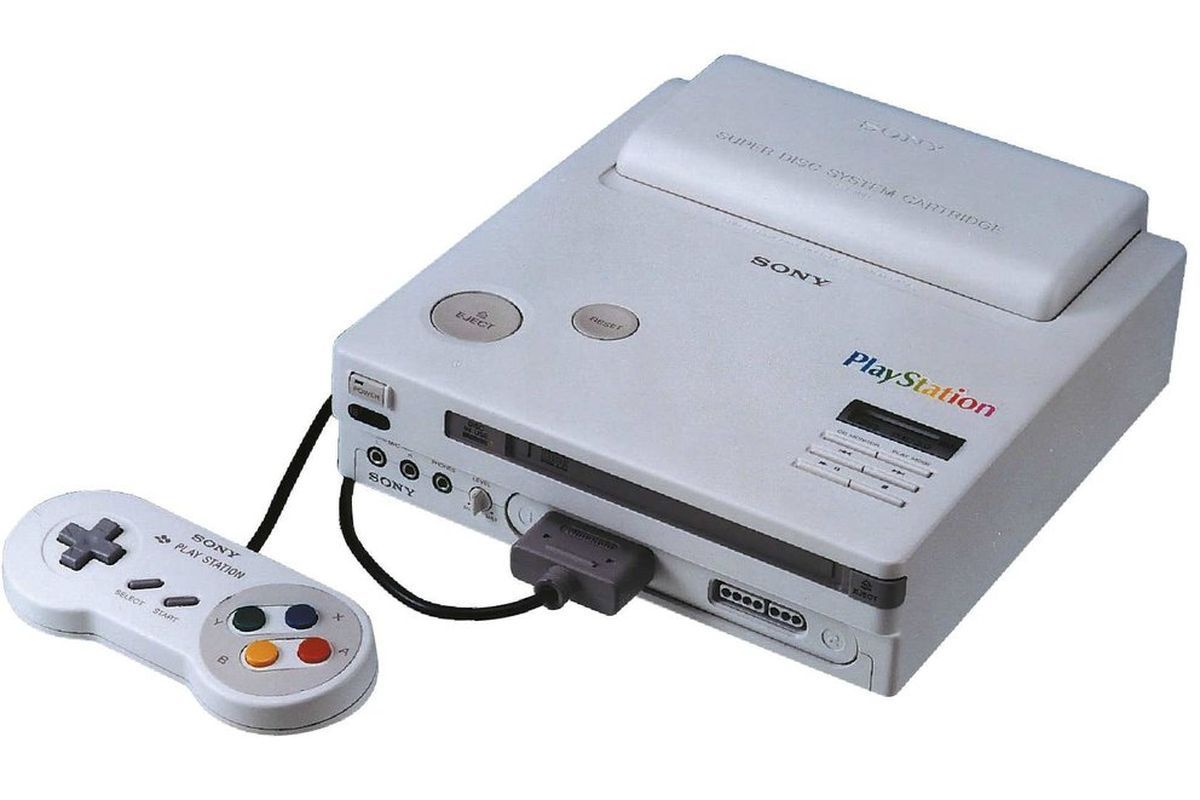
Ah, the PlayStation. Sony’s debut in the world of video game hardware thanks in no small part to a colossal fumble by the once and future kings Nintendo. It sounds like apocrypha, but the old legend is true and we have the proof, thanks to Ben Heck getting his hands on some prototype hardware. Once the final product was released, first in 1994 in Japan and 1995 most everywhere else, it rapidly turned the Nintendo/Sega duopoly into a bona fide three horse race, and would eventually lead Sony to beating Sega out of the market entirely, but that’s yet another story for another day. Maybe when I talk about my custom Dreamcast, we’ll go there.

Anyway.

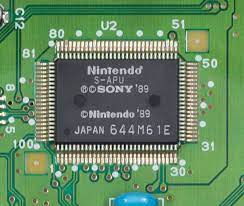
Sony hit it out of the park with the original PlayStation, thanks to Ken Kutaragi’s choices to combine what Sony learned from the MSX with their early and thorough understanding of CD technology and his own experience working with Nintendo as far back as the early days of the Super NES. Did you know that Ken Kutaragi designed the SPC-700 sound chip for Nintendo for the SNES? Now you do! With all of that knowledge and experience wrapped into the PlayStation, it actually doesn’t come as much of a surprise that it was a hit. The lower MSRP compared to the Sega Saturn (not to mention being far, far easier to develop for), the included ability to play the then-still-nascent audio CDs, and Sony courting third-party developers out of the gate with extremely favorable terms had the PlayStation flying off the shelves, and by the end of 1999, it had become the best selling home console in history, and only trailed the Game Boy range for consoles as a whole.
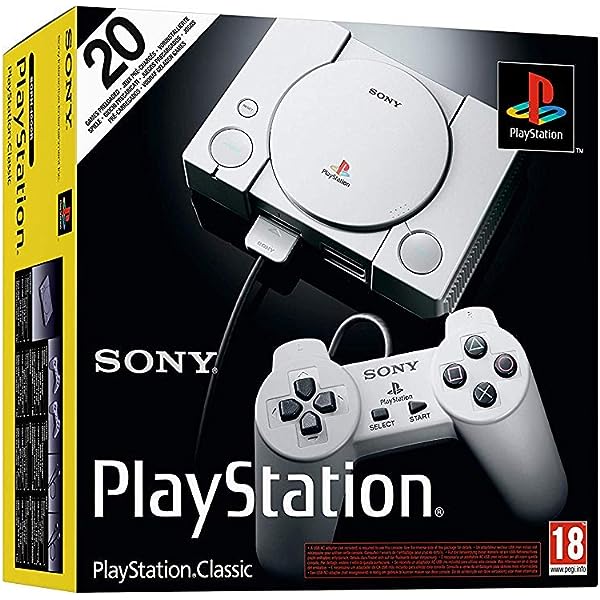
Fast-forward to the late 2010s, and nostalgia is new-in-box, in stores now. Nintendo have dropped miniature, modern recreations of their NES and SNES, complete with built-in (emulated) games, recreated controllers, save states, and HDMI output, to massive hype and fanfare. Sony decides, reasonably, to get in on the same idea (as will Sega, SNK, and NEC, with the mini Genesis, Neo-Geo, and TurboGrafx-16 respectively over the coming years), and puts a plan together for a nostalgia-tinted celebration of the glorious 32-bit era. And there was very much rejoicing! Sony had already won over fans the world over by making not just the PlayStation 2 but also the PlayStation 3 backwards compatible with PS1 discs and memory cards. With the PSP and later the PS Vita, Sony would further support the PS1’s library by releasing emulated versions of games digitally through the PlayStation Store. Sony’s reputation for respecting the fans of their debut platform was unquestionable. Or so we thought.

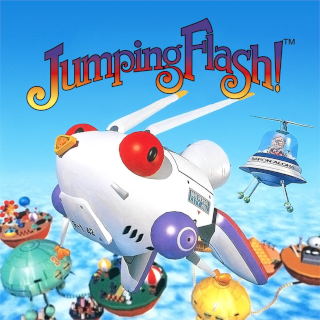
When the first 5 of the planned 20 included games were revealed in September of 2018, the reception was… mixed. Three of them, Final Fantasy VII, Tekken 3, and Ridge Racer Type 4, made perfect sense. FF7 and Tekken 3 were the 2nd and 5th best selling PS1 games of all time, and Ridge Racer (between the original and Type 4) might not have sold as many copies but had just as loyal a following. The other two, Wild Arms and Jumping Flash, drew more confusion than anything, as both had fallen well out of the common canon for the PS1’s library. Neither is a bad title, just, they’re not the sorts of games people think about when they think PS1. But, that’s only the first 5, and you can’t expect them all to be bangers and classics, right?

Right?
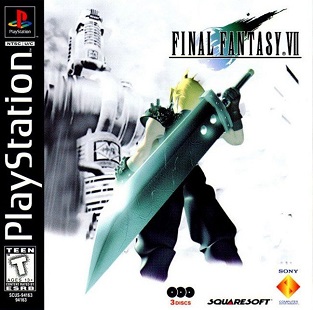
The final list dropped a month later, and the reaction went from lukewarm-leaning-positive to downright cross. Sony went from 2 games from the top 20 best sellers among the first 5, to 4 games from the top 20 best sellers among the entire final lineup. Only two more top 20 titles made the cut, those being Metal Gear Solid (#10 all time) and Resident Evil Director’s Cut (#17). Some of the other choices made perfect sense, like the inclusion of Rayman (#21) and Oddworld: Abe’s Oddyssee (#23). Both of those sold well over 3 million copies (which thanks to the PS1 selling around 100 million units, means we can just use percentages to estimate the saturation of the games in the market), meaning that most people nostalgic for the PS1 at least knew about them, if not owned them outright. Totally sensible. Syphon Filter (#52) makes an argument for inclusion off its stellar reception and status as the launching point for a long-lasting successful franchise. Not the worst pick, but hey, I had a copy of it as a kid, I’m one of those people nostalgic for it, and even if I wasn’t, it’s still a good game. We’re still making some sense.

What was far less sensible was the rest of the lineup. The next highest charting games to be included were Battle Arena Toshinden (#85) and Cool Boarders 2 (#87). I had never heard of Battle Arena Toshinden before despite having played multiple other Tamsoft games (and I’m not alone on either point), and Cool Boarders 2 was more famous for living in the shadow of a much more popular series about “boarding”. The only other included games that sold more than a million copies (i.e. 1% of the PS1’s audience) were Intelligent Qube (#100), Twisted Metal (#107), and the aformentioned Ridge Racer Type 4 (#111). That still leaves 8 games included that fewer than 1% of PS1 owners saw fit to purchase.

Oh, no.

I could go on further about how bad the included games list is, but honestly, I don’t feel like it, because pretty much every other game they included was included because it’s part of a successful franchise that got big long after it dropped, or because that game got a remake/port/etc that blew up later, which is pretty much the same reason with the serial shaved off. Not much else to say.

Instead, let’s get angry. I’m going to list off just a few of the bestselling games that Sony didn’t include. Gran Turismo and Gran Turismo 2. The Crash Bandicoot trilogy. The Spyro trilogy. The Tomb Raider trilogy. The Tony Hawk’s Pro Skater trilogy. Right there, that’s 14 games that I had as a kid that all kick ass. That’s a PS1 core library, right there. And that’s excluding a lot of things from JRPGs to Hideo-games, Need for Speed to Parappa, and don’t get me started about MegaMan Legends.

Sony knows this. These games have been re-released on other PlayStation services, and nearly all are currently available (with the exception of THPS and Gran Turismo) right now as PlayStation Classics. Sony is selling these games now, and was selling these games in the same state as emulated files in their ecosystem when the PlayStation Classic launched.

Let me make absolutely certain I make this clear. On the day the PlayStation Classic released in 2018, one could have spent less money to get a dozen more iconic classic PlayStation games than what was included from Sony themselves, on a PS3 or PS Vita.

Oh, and that brings me to another point of annoyance, the price. The MSRP for the PlayStation Classic was $99.99. Yeah, that’s $5 per game, which sounds reasonable in the context of the PlayStation Store downloadable titles, but compare that to the NES Classic ($59.99, 30 games) or the SNES Classic ($79.99, 30 games), and Sony’s decision is baffling. If Sony did something radical with the hardware, maybe the price tag could be justified. But they didn’t. The internal specs are comparable to those of a Raspberry Pi 3, which was widely available at the time for around $35. Even if one were to go to a store like Micro Center, buy a full Raspberry Pi 3 kit, two basic USB controllers, and a 16gb microSD card for storage, they’d have spent less money for a more capable device.

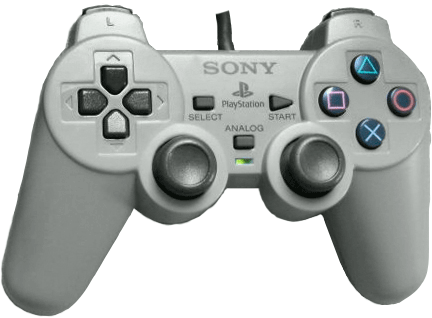
Right, the controllers! Sony didn’t include a throwback to the original DualShock controller, or even its more primitive cousin, the Dual Analog controller. They included two USB-based replicas of the original, all-digital PlayStation Controller. No analog sticks, despite the bulk of the games included supporting them.

But wait, it gets worse! 8 of the 20 games included were actually the PAL versions, not the NTSC versions. If you’re unfamiliar, as TV went colour in the 1950s and 1960s, two different standards for colour broadcasting were developed. (There’s also the Franco-Russian SECAM which is a whole other story but it doesn’t matter here, I’m just pedantically defending against other pedants). NTSC was created for the North American market and later got exported to Japan, whereas PAL was a European standard from the start. The details and differences don’t matter much here, except that the refresh rate for the screen and the inherent frame rate of the game are both derived ultimately from the root frequency of local AC power. In most NTSC regions, the AC frequency is 60Hz, which leads (thanks to some very strange and fascinating math) to an inherent analog refresh rate of 59.94Hz, and timing built around a 30fps framerate. In PAL regions, the AC frequency is usually 50Hz, which gives us a 50Hz analog refresh rate and a framerate of 25fps. For some scenarios with gaming, the games were re-compiled to run faster so that the 25fps gameplay on PAL hardware wouldn’t feel slower, but most weren’t. And for those 8 games on the PlayStation Classic, they’re running at 83.3% speed, making them feel sluggish and laggy. All of these games had native NTSC versions, and on an emulator going through HDMI output, there is literally no need to use the PAL versions at all. There’s no more analog signal or processing going on here, it’s all purely digital. This is extremely, confusing and frankly unacceptable.

It’s also not even the only reason why games feel sluggish on the thing. Sony’s software is running a version of the open-source emulator PCSX-ReARMed, a perfectly cromulent choice, although many features like rewinding or network play, or most of the tweaks and settings used on similar hardware (like the aformentioned RasPi3) are absent. This has led to the community finding ways to get better performance and more features out of the device using custom firmware, something that shouldn’t be functionally required for a product with a $100 MSRP.

And yet, I bought one. Why? Because this thing flopped so hard that within months it was floating around for $30, before a final price cut to $20 at some retailers. I paid $25 at Nebraska Furniture Mart, and yet I still don’t feel like I’ve gotten my money’s worth from the stupid nugget. It’s one of two of my 7 classic mini consoles owned (NES, SNES, Genesis, TG16, Neo-Geo, Commodore 64, and this) that isn’t currently wired into my overkill home entertainment center, mainly because I haven’t been assed to get the thing modded and happy. I’m also planning to stick some extra cooling on the primary SOIC (System-on-a-Chip, combo of CPU and GPU and other things into one chip) as I’ve heard that a basic-ass Raspberry Pi heatsink can make it even happier once it’s modded.

Back to the central point of this rant. Sony knew these things when they developed this product. They knew they had the licensing rights to digitally distribute much more iconic classic games as they were selling and distributing them at the time on other platforms. They knew what games people most often paid to download. They had the NTSC versions, and they had the staff with more knowledge of PS1 emulation on hand to make something better.

And they didn’t.

And it flopped.

And it’s Sony’s own damn fault.

On Driving and Writing

One of the oddest things I’ve noticed is how much a long drive does for my creativity. Seriously, I’ve had moments during my old commutes from Dallas to Fayetteville where I’d have to stop for a while to just sit and write. I’d usually also use that time to eat something as well.

I’d get an idea on the highway, start developing it in my head, and as soon as I was able to stop, I’d be able to throw a good 400-500 words together in half an hour, easily. Maybe it’s because I’m not using my writer brain when I’m driving, or because my brain is thinking about writing to keep me awake and focused, or what. I don’t really know.

However, this has led to an interesting thing where, whenever I’m feeling stuck on something, I’ll get in the car and just drive somewhere. I’ll pick a coffee shop or restaurant or something of note that’s half an hour to an hour’s drive away, and just go. It’s been unusually helpful for some of my projects where I’m not making any progress, or for where I have a rough idea for something but don’t really know what to do from there.

So, to anyone who happens to be reading this stuff, you might consider trying this. I’ve had similar experiences with public transportation, so I don’t think driving is a requisite task, but for me, I spend a good 5-7 hours in the car each week. Anyway, just something I’ve been thinking about and felt like posting.

The Past 10 Days

“John, where have you been the past two weeks?”

Good question, website. The short answer is traveling.

Back in June, my Front Porch Soccer cohost Ian invited me to join him at the MLS All-Star Game in Atlanta, where he would be one of many MLS and MLS-adjacent media people in attendance. When he’s not staying up late drunkenly discussing soccer jerseys with me, he’s doing video-related work for MLS. While we were recording, I found a flight to Atlanta from Dallas for $109 round trip. That’s basically unbeatable. At that point, my mind was made.

I flew to Atlanta last Monday night (30 July) having used the weekend prior to make progress on a few ongoing projects and actually take a break from my normal schedule grind. Monday night I met up with Ian and his wife Kelsey at the hotel in Atlanta, which was actually the first time he and I had met in person. We’ve known each other for literally years, but only through the magic of the internet. I always love it when I meet an internet friend in person and the sorts of conversations and antics pick up immediately, and we spent the evening drinking rum and cokes and talking. The next day was the primary media day at the MLS All-Star Game digital HQ in downtown Atlanta, so we spent a few hours there. I got to meet Simon Borg along with a number of MLS digital media people who I’ve followed online. Very fun. That night was the Special Olympics Unified game, Homegrown All-Star game, and the big crazy party. Due to the continuous thunderstorms in Atlanta coupled with typical Atlanta traffic, I elected to watch the two games online instead of in person, and went to the party. What. A. NIGHT.

Here’s a brief list of people I encountered or talked with at that party: Alexi Lalas, Claudio Reyna, Jason Kreis, Diego Valeri, Dave Sarachan, the guys at American Soccer Analysis, Columbus Crew owner Anthony Precourt, and of course, Matt Doyle. We (Ian, Kelsey, and I) ended up playing mini-golf in this theme park party venue with MLS’s top immigration lawyer. Very, very cool. There was also an open bar containing jack and coke slushies, wine slushies, and all sorts of other amazing inebriants. By the end of the night, I stumbled out of the car back at the hotel and Ian escorted my drunk self to my room. I woke up the next day at 2pm.

Wednesday was the All-Star Game itself. Honestly, while I enjoyed the hell out of the game, and would definitely go to another one, it wasn’t the best part of the experience. But I must say, what a lovely stadium, and the rumors about concession prices are true. Just for signing up as a designated driver, I got free soda for the entire game.

Thursday is where things went awry. I was feeling the exhaustion of a very busy week, but my flight back to Dallas was leaving at 7:25. For some reason, I had that down as 7:45, and scheduled accordingly. Long story short: I missed my flight, paid $75 to Delta just to get past security, called my dad in a panic, and wound up on an entirely different flight plan. Instead of flying Atlanta to Dallas to Grand Rapids, Michigan, I would be flying from Atlanta to Chicago and then to Grand Rapids. I spent a little over three hours in the Atlanta airport. In Chicago, the gate agent informed us, the gathering masses, that the airline would be offering vouchers worth $360 for anyone willing to take the next flight from Chicago to Grand Rapids. Ten minutes later, that number jumped to $750 and I took it. That voucher alone more than covers the cost of my panic flight in Atlanta and the entirely new flight plan. I felt like the god of air travel was giving me some positive karma back. I then spent around 4 more hours sitting around O’Hare waiting for that later flight, and didn’t arrive in Michigan until 6:30PM (more than 6 hours later than intended). Whatever.

We were in Grand Rapids for two nights for my cousin’s wedding, which was another excellent day, and we spent the rest of our time there touring their unusually prolific and exceptional craft breweries. I found one particular beverage, the Nitro Rubaeus from Founders, incredible. It’s technically beer, but doesn’t taste like beer, and I normally hate beer.

From there, it was on to Chicago for Saturday through Tuesday evening. In Chicago, we saw Hamilton, did some shopping, ate pizza at Giordano’s, and did the typical tourist things. I particularly enjoyed the Shedd Aquarium and the Art Institvte, and I went and lectured Anish Kapoor’s shiny metal bean on abuse of intellectual property agreements. While in Chicago, my body decided to being rebelling against me in stages. My preferred walking/hiking shoes (Salomon brand) had nearly three years of life on them, and the thunderstorms in Atlanta were the final straw. I ended up chucking them in a skip downtown and told my family to pack a pair of Van’s for me. This was a mistake. In Chicago, those Van’s were absolutely murder on my feet, ankles, and knees, and the strain of the excessive walking inflamed my hips to the point where I had to loosen my belt. I also managed to contract some sort of plague. Chicago started getting a fair amount of rain on Monday, and our flight back to Dallas on Tuesday was delayed from 8:45 to 9:59. We didn’t land at DFW until after midnight.

I woke up Wednesday morning still feeling that plague. A quick check with a thermometer revealed a fever right around 100 degrees to go along with my aching bits, cough, headaches, and sinus nonsense. I spent all day on the couch in front of my new birthday present TV (post on the new setup coming soon). This is actually the first I’ve written since my layover in O’Hare last Friday. I’m definitely not back to 100%. Maybe somewhere around 66? Regardless, I’m not going to attempt much work for the next few days while my body properly recovers.

Anyway, that’s where all I’ve been.

How A Piece Is Written

Good morning, website.

It’s currently 4:26 AM on Monday, July 30. I’m set to fly to Atlanta in roughly fifteen hours. My brain is refusing to go to sleep, and now my knee is bothering me enough to make lying in the dark unsustainable.

Let’s try and persuade my brain to shut down for a while by pulling some thoughts from there.

I’ve wanted to discuss in some fashion how exactly I write the things I write. I’ve (mostly) standardized my process at this point depending on the sort of piece, and I keep four quasi-categories into which nearly everything I’ve written in the past year falls.

The first step, before anything is categorized, is initial concept. Each of the three primary ongoing outlets/projects (Soc Takes, this website, the YouTube channel) has a document in that folder into which all of my ideas get thrown. The Soc Takes file is the longest at the moment, which is to be expected. Whenever an idea strikes me that seems interesting or entertaining enough to pursue, it gets added to the list. The list is further broken into four sections: concept, for early thoughts with no notes taken; planned, for pieces that have notes and data but nothing yet written; draft, for pieces that are actively being written; and edit, where finished drafts are mostly ready for publication and I’m not likely to make any additional changes. I also keep a fifth section for published pieces mainly as a list to reference recent or ongoing projects. That section gets trimmed as needed.

Right now, there are ten items in concept, two in planned, two in draft, and two in edit. Some pieces in concept might stay there for months, and others are simply scrapped altogether if I find that someone else has answered the same question.

As for the four categories, I group my pieces into research articles, wherein I’m finding and logging data (think Project 50/50 or the USL Progress Reports) and typically start in Excel; narrative articles, that typically begin with handwritten notes; rhetorical question pieces that are nearly exclusively opinion pieces where the conclusion isn’t the focus so much as the problem I’m debating; and rant pieces where I sit down and complain about something irritating me.

The rant pieces are the quickest to write and typically the shortest. A prime example of this is “Why is there still no Women’s Open Cup?” That piece, from start to finish, took maybe an hour. I sit down with either WordPress or FocusWriter on one screen and a web browser on the other, do enough research as I’m writing to illustrate my point, and wrap things up. One draft, edit as I go.

Rhetorical pieces generally take a bit longer, and I’ve tended lately to survey people online for their thoughts as I’m writing. The most recent example of this category is my piece on VAR usage and officiating. While it is branded as an opinion piece, I’m not positioning my thoughts as the solution so much as discussing what could be a better idea moving forward. That piece in particular took around two hours start to finish, and was written mainly as a reaction to the World Cup.

Narrative style pieces take the longest to write, usually as a byproduct of what I’m documenting. A good example is the Supporting Local Soccer series, the latest installment of which can be found here. That piece, along with the others in the series, began as shorthand notes taken on my phone during the game itself and from a rough outline written up later. Turning stream of consciousness notes into something cohesive takes more time, I’ve found, and that piece was in progress for weeks. It’s not difficult to write so much as time-consuming, requiring more involved editing and organization as I write than others.

The research pieces take the greatest amount of time from concept to edit, simply due to the amount of data I tend to work with. The USL Progress Reports, for instance, required quite a bit of data collection that then needs to be incorporated into a spreadsheet in which I run my calculations. These are honestly a lot of fun to write, and are the most educational to me personally. These always begin in Excel, and typically stay there until I have enough data to start writing something. Usually, once I start to see something interesting, I’ll write out an introduction and finalize a title for the project. I’ve taken lately to writing as I research, so that I’m splitting work evenly between Excel and writing.

Most of the time, I’m working on the ongoing research pieces, of which there are several in progress. I have one on MLS that began slightly as a joke but I’ve since decided to take seriously enough to log literally hundreds of games. It’s probably not necessary, but at the very least the data I’ve found is interesting. Another on the USL has led to 6 of 8 years worth of data logged in Excel. These won’t be finished any time soon, but are always fun to work on.

Whenever I get sick of processing data, I’ll switch to something completely different. Supporting Local Soccer in particular has been a welcome respite from thousand-row spreadsheets, although those take substantially more effort on the writing end. Every so often, something starts off as one category before growing into something much more in-depth that takes it into research territory, and I’m usually much happier with the end result. The rant pieces are almost never planned or scheduled, and simply happen as I get irritated about something.

For Supporting Local Soccer, every piece begins as notes on my phone which are then copied to my server. After that, I’ll take an hour or so to start elaborating on my thoughts and adding clarifying information to the raw notes. From there, it’s all about writing and organizing, and expanding from bullet points into a cohesive piece.

Anyway, this is already nearing 1000 words, so I’m calling this one done.

Broken

I’m writing this not for anyone’s benefit but my own. Certain recurring thoughts and emotions have stuck in my mind for weeks now. Whenever this happens, I’ve found catharsis through writing, and I’m hoping to achieve a similar result with whatever this ends up being.

I wouldn’t say I expect to feel any better or even necessarily different, but I hope that the way I’m processing and coping with this might change for the better.

I was broken up with back in May. We had celebrated our fifth anniversary together roughly two weeks prior.

It caught me almost completely by surprise. Not entirely, thanks mainly to lingering paranoia lurking perpetually somewhere in my head. But still, it was a shock.

I’m still reeling.

After a few days of the initial shock and numbness wearing off somewhat, I started feeling more normal. Normal isn’t really the best word, but I felt something akin to my typical baseline. Almost fine. Functional, if a bit detached.

I don’t know what exactly has happened, but the past week it’s hit me, hard. Wednesday morning in particular was bad. And now I don’t feel anywhere near normal.

Maybe it’s guilt, maybe it’s depression, maybe it’s shock.

The only word that comes to mind to adequately describe my current mental state is “broken”. I’m not functioning correctly. My sleeping patterns are even worse than normal. My usual aches and pains have intensified in all the wrong ways.

I still haven’t contacted her in any means since that day. I’ve wanted to, but I don’t know if I’m emotionally capable right now. And these past few days have only increased the desire to re-establish contact amidst my declining emotional state.

Broken.

I’ve barely been able to make myself productive this week. I’m in my head confronting these negative emotions to such an extent that simply writing a purely factual article has been borderline impossible. I only worked two days the past week for a total of 16 hours across all different jobs.

I’ve had to shelve several active projects that up until recently had been progressing at an acceptable pace. I’ve simply lost the will to continue that work. A few of them, I’m not sure when I’ll start up again. That’s partially why I started the YouTube channel, to give me something different to think about. It’s much easier to narrate a process I’ve done for years than to actually be creative and original.

I’ve made jokes about not knowing what to do with myself, but they’re not really jokes. I sincerely don’t know what the hell to do now. What used to be normal for me has abruptly ended, and I’m struggling to fill that void.

I want to be angry, because I’m good at angry. Angry has a direction and a cause. But it’s not happening. I’m not angry, I’m broken.

I’ve alternated between blaming myself and feeling empty. It’s the slightest things that have set me off. A particular song, a momento on my desk, a thought of a past vacation.

I’ve had friends willing to accept the cascade of nonsense I’ve thrust on them and the socialization has been nice. Yet, it’s not helped my emotional state. I don’t know how I’m supposed to reassemble my reality nor what this refurbished reality might be.

I’ve made some incredibly stupid decisions this week, which have done absolutely nothing positive for me and have likely caused further stress. I’ll regret them eventually. Probably.

For now, it seems the best I can do is to force myself to do something productive, and hope that my periodic bursts of sanity and stability last long enough for a tangible outcome.

Even as I’ve felt stable enough to accomplish something, i’m struggling to keep my thoughts organized. Simple tasks are suddenly a lot less simple. This post alone has taken the better part of an hour to write.

I really, really don’t want to be “that guy” on the internet. I’m not looking for attention or even reassurance. This, to me, is more about aggressively typing my problems into the void on the off chance it flicks some sort of chemical switch in my brain. The possibility of it helping in the slightest is worth the amount of whatever my current definition of effort happens to be.

I said as it happened that I’ll be fine. Probably. Eventually.

But right now, I don’t know where I am or how to get to wherever “fine” is. And I don’t even know how to define “fine” for me anymore. This is what I mean by broken.

My brain and I had a tenuous at best relationship before all of this happened. I don’t even know if I have the necessary coping mechanisms for this.

I started a project in Inkscape to preoccupy myself, and halfway through, I stopped. I lost the desire to finish it, because whatever sense of accomplishment or satisfaction I get from finishing and publishing a project hasn’t been worth the increased cost of energy to do just about anything productive.

I don’t know what to do to conclude whatever this is, so I’m just going to stop now. It’s 1:30 AM and I’m drained.


This is all just stream of consciousness, and I hope it’s coherent enough. If you’ve read this far down, I appreciate it, and if you want to talk to me, there are easy ways to get in touch. I’ll probably respond too.


Three laptops? And a Surface?

“John, why on earth do you have three laptops AND a Surface Pro? And why are you writing this instead of that other, more time sensitive thing?”

On the latter, I need a break from Excel for a few minutes.

On the former, it’s pretty simple actually.


Right now, I have three laptops that are actively in use at home. And by that, I mean that all three get used at least twice a week on average. All three of these laptops are Dell, and all have been refurbished and restored from non-working, literally in the pile for recycling, to fully functional.

In order of increasing usage, I have a Latitude E6530, which has a 15 inch class display and a full number pad. This one is used for testing anything weird and experimental. I’ve had so few issues getting just about anything running on that generation of laptop, and it’s currently running a desktop port of Android called Phoenix OS.

The next-most used laptop is a Latitude 5450, which is a generation or two newer but lacks a backlit keyboard. It’s my Linux laptop at the moment, upgraded to 16gb of memory. It’s been positively rock solid running Linux Mint for weeks now, and is helping me to test for a future all-in on Linux again. I actually used Linux almost exclusively for most of high school, back when getting certain laptop functions working (cough cough Toshiba) was a pain in the ass.

The other laptop is the E6430 writing laptop, that once again is what I’m using to post to this website. It lets me watch stuff on my Surface Pro, which has a much nicer screen and actually decent speakers, while I’m writing. I’ve been using this thing almost every single day to keep working from bed or to move around the house. It even has its own dedicated MX Master.

So yeah. Quick little thing about work again. Work work work.


Ok, now back to my actual work.

Aperiodic Tech Update and Workflow

Hello, website. It’s been a while.

Three years ago, I posted on here about the current state of my workflow, and the pending changes to my standard arsenal of equipment I was considering at the time. I’ve been thinking a fair bit about that post since then, considering potential updates, and an explanation of where I’m at now.

I’ve made some recent (like, arrived hours ago) purchases that has expedited the process substantially, and since I’m calling it a day (or night, I suppose) much earlier than usual, I’ve decided to sit down and write this out.

Back then, I had decided on a Surface Pro 3, a new desktop PC, and a Droid Turbo as my three primary pieces of hardware. How well did that plan pan out?

As it happens, remarkably well!

I built my desktop PC, nicknamed Zerua (Basque for “sky”), in August of 2016. I actually have a full parts list and description up on PCPartPicker right here. That system has served me well for nearly two years with nothing more than a handful of minor issues, and I couldn’t be much happier with the end result.

On the Surface front, I ended up not purchasing a Surface Pro 3, simply because it had been replaced by the (far superior) Surface Pro 4 when I actually had the money to spend. My chosen configuration includes an i7 CPU, 16GB of memory, and a 256GB SSD. This one is named Azalera (Basque for “surface”). This too was purchased in the summer of 2016, and that computer has served me remarkably well. In fact, much of my workflow (and the contents of this post and my bag) revolve around that device.

I bought that device to serve as a take-everywhere, do-almost-everything computer, and I’ve used it for exactly that. Many of my published pieces for SocTakes, the WPSL, Dallas Sports Fanatics, and more were entirely written on there. I’ve used it to record podcasts and work on vector art from just about everywhere I’ve been. It goes to work with me daily, and currently sees more use (in terms of time) than my desktop.

And so, my work bag, a grey Ikea Upptäcka messenger bag that has sadly been discontinued, is full of wonderful things related to getting work done wherever I happen to be.

Starting off simply, I have this ProCase Surface Pro sleeve that I purchased over a year ago, and it does exactly what one might think. Despite repeatedly knocking around my bag, my computer is unscathed. No complaints. On the Surface itself, I have a dbrand skin (or skins, really) covering everything on the front and back that isn’t a screen or camera. I have the blue carbon color on the front bezel, upper back, and logo, and the black carbon on the lower black. This is all continuing the theme started with my desktop build. The vinyl skins have survived a reasonable amount of abuse with only minor nicks and scratches, none of which breached through to the device itself. Perfect.

In the sleeve, I keep a Surface Pen. This feature was a massive selling point of the Surface for me. I received a Wacom tablet as a gift in late 2015, and by the summer of 2016, it was at my work desk full time. Turns out, using a pen in place of a mouse is really, really nice. There’s the added benefit of less hand and wrist strain, too. The Surface Pen isn’t quite as nice as Wacom, but it’s definitely good enough for what I need. I’m normally using it when I want to handwrite outlines or notes, or sketch out design ideas. I actually have one for my bag, one for my office at work, and one that stays at my desk at home.

Last summer, I found myself working on more vector projects than normal upon joining the Dallas Beer Guardians’ design committee. My one complaint with the new Surface Pen, the inclusion of only one side button, made working in Inkscape frustrating. On my desk at home, I have a six-button gaming mouse mapped to my most commonly used Inkscape functions. I needed to replicate that as best I could with something portable (read: wireless), comfortable, and programmable. I ended up purchasing a Logitech MX Master wireless mouse that has worked out beautifully. I’ve actually even upgraded the gear bag mouse to the newer MX Master 2S, which is even better. The original MX Master I purchased now stays in my office for that computer for when I don’t want to use my Wacom pad. I even have a third that stays at home for using my “writing laptops”.

Quick aside, the “writing laptop” is a Dell Latitude E6430 I’ve restored and refurbished from scrapped parts. It runs Windows 10 with my standard writing software FocusWriter, Excel, Firefox, OneDrive, and that’s it. I use this when I want to sit and write without having access to any of the distractions found at my desk, or when I want to write while watching something on my Surface. I’m actually writing this post on there right now.

Back to the bag.

With my Surface, I keep a standard wall charger with a longer AC cable. Battery life on the Surface is good, and I can usually eke 5 or 6 hours out of a single charge if I’m not running anything intense. But for days when I want to hole up in a coffee shop and make flags all afternoon, it’s not always enough.

In the past, I kept an Anker battery bank in the side pocket to recharge any USB-based devices on hand. I’ve just today swapped it with my latest purchase, this battery pack from a company called Gissaral. This one can actually recharge my Surface fully, twice, without needing a power outlet. So far, it seems to do what I’ve expected, and I really hope this pans out. I desperately want to be able to work for hours on end without electrically tethering myself to a wall.

Elsewhere in my bag, I have my Sony DSC-W830 camera that I bought for $50 from the Denton Camera Exchange. It’s nothing special, but does better than the average smartphone and has proper optical zoom. I keep a Rhodia No. 16 dotPad for analogue handwritten notes and sketches, along some variety of fountain pen (currently a Platinum Cool). There definitely are times where I want to physically write or sketch things, and this is the best possible way to do that.

In the cell phone department, I’m actually using a Droid Turbo. I upgraded to an LG V20 last year, but recently shattered the screen, and have been unable (read: too cheap) to get it repaired or replaced yet.

The e-reader discussion is interesting.

The features I was looking for were a front-lit screen, physical page-turning buttons, and a MicroSD slot for expandability. At the time, Barnes & Noble was offering the Nook GlowLight (not to be confused with the older Nook Simple Touch with GlowLight), which had physical page-turning buttons but no MicroSD slot. I bought one, and very soon after, scratched the screen. When front-lit screens scratch, the result is a hairline spot of maximum brightness. It’s absurdly distracting, and made the device borderline unusable. So, I went on ebay, and bought the aforementioned Nook Simple Touch with GlowLight. It had everything I was looking for, but with wonky, uneven lighting, and turned out to be even more fragile than the successor. And then I received the Nook Glowlight+ as a gift at Christmas. It has touch-sensitive page-turning buttons and lacks a MicroSD slot, but otherwise works remarkably well. It’s even water-proof, allegedly. This has served me well for over a year and a half. Maybe I’ll upgrade to the new(ish) GlowLight 3 which features the return of physical buttons, or maybe I’ll end up with a Kindle. But in all honesty, I don’t have that much reason to complain or desire a replacement. I’ve even found the lack of expandable storage entirely unnoticeable.

I think I’ve rambled enough here.

Looking back at that post, I find it interesting just how many predictions on devices worked out almost exactly as intended. I’m very pleased with my current technological situation, and have been for nearly two years now. I just need to get that phone replaced.